

French Bedside Nightstands
French bedside nightstands bring continental elegance to a bedroom, offering practical surface space alongside refined period design.
French Bedside Nightstands
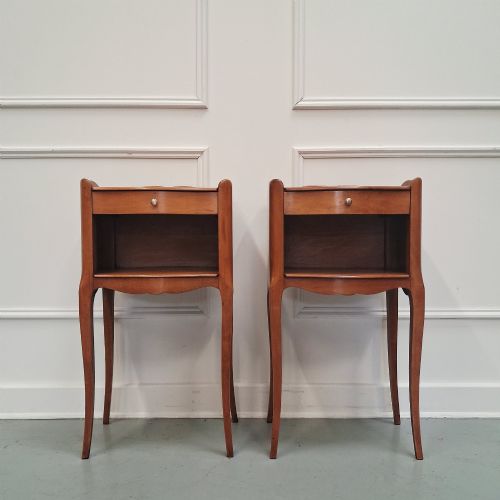
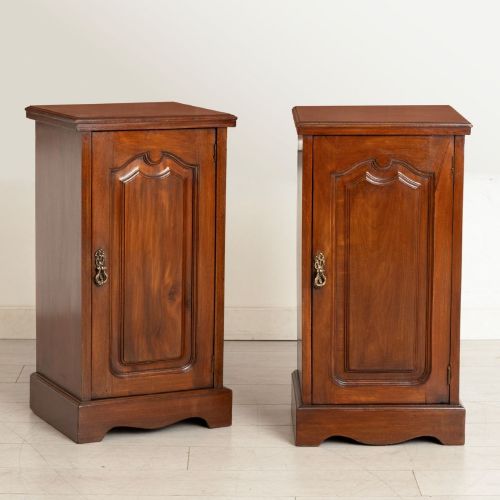
French bedside nightstands encompass a variety of forms designed to sit beside a bed, including bedside tables, bedside cabinets, side tables, side cabinets, commodes, and bedside chests. These pieces emerge primarily from the nineteenth century, the Edwardian era, and the decades leading up to 1930.
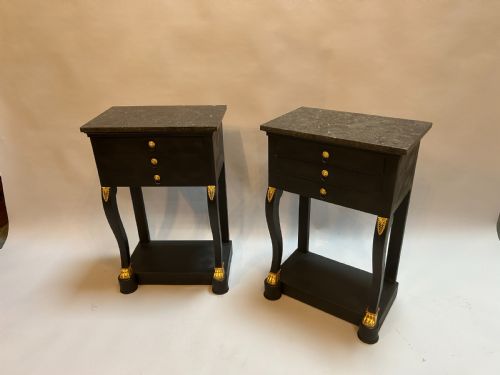
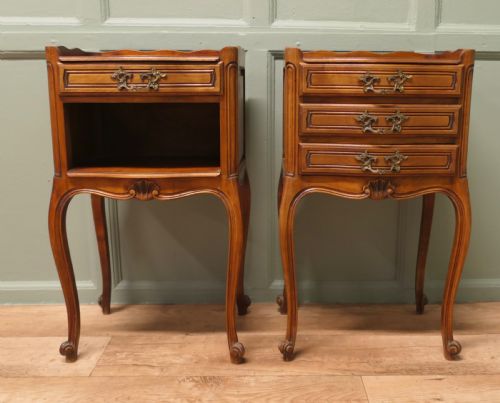
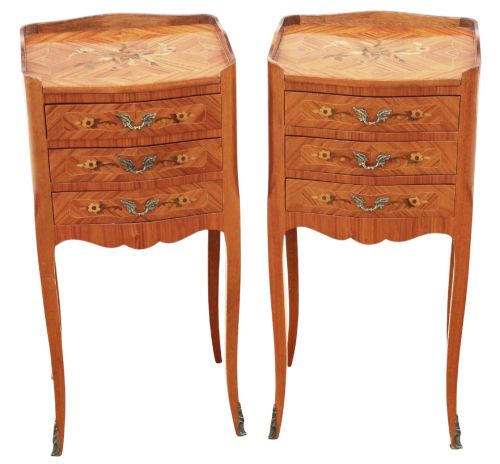
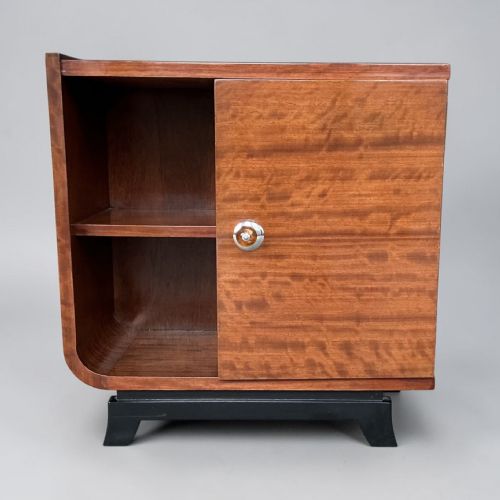
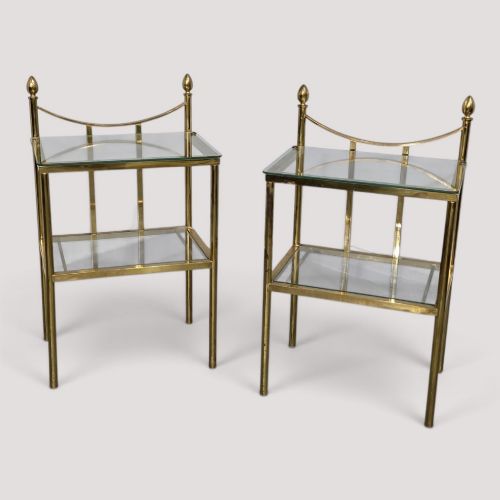
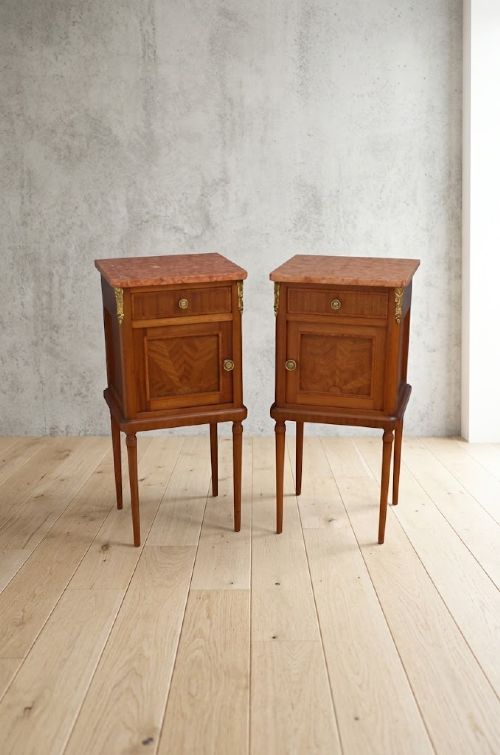
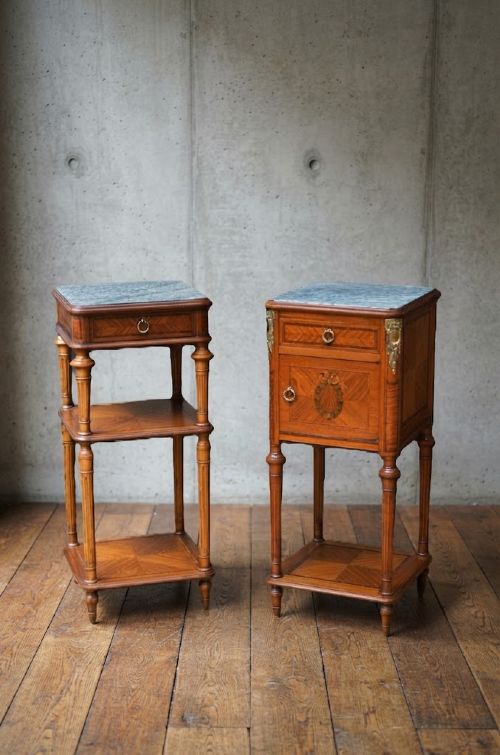
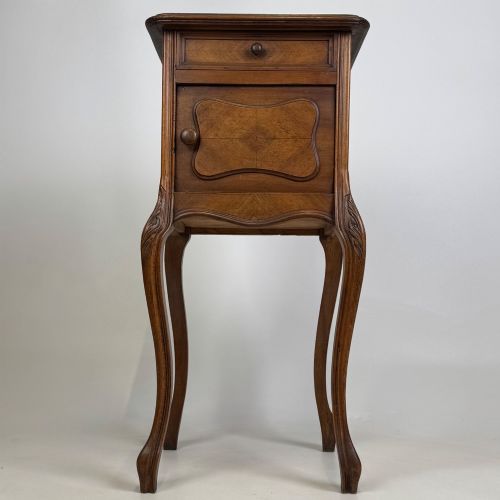
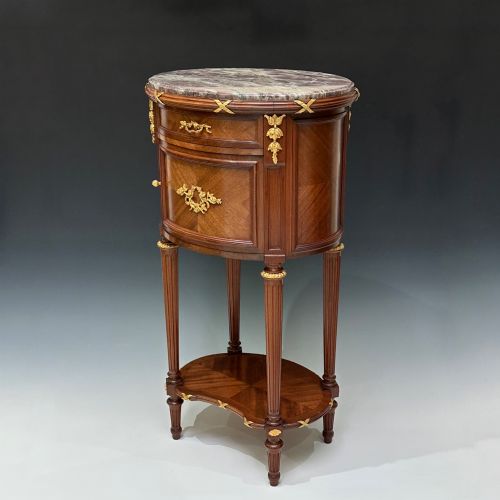
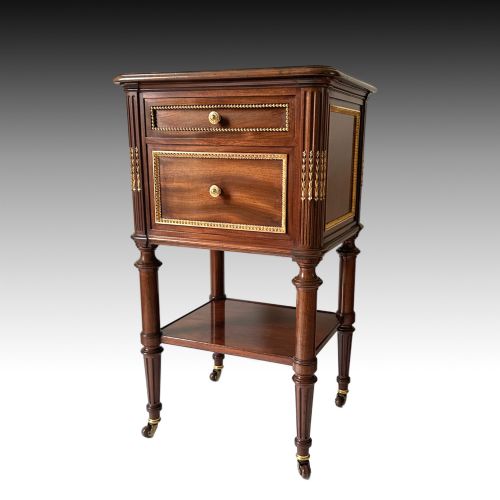
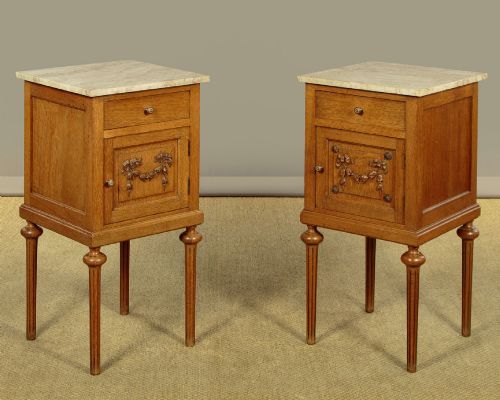
Buyers frequently encounter pairs matching this description, constructed in styles such as French Provincial, Louis XV Revival, Louis XVI Revival, and Art Deco. The selection ranges from compact cupboards with single drawers to taller marble-topped chests and circular inlaid designs.
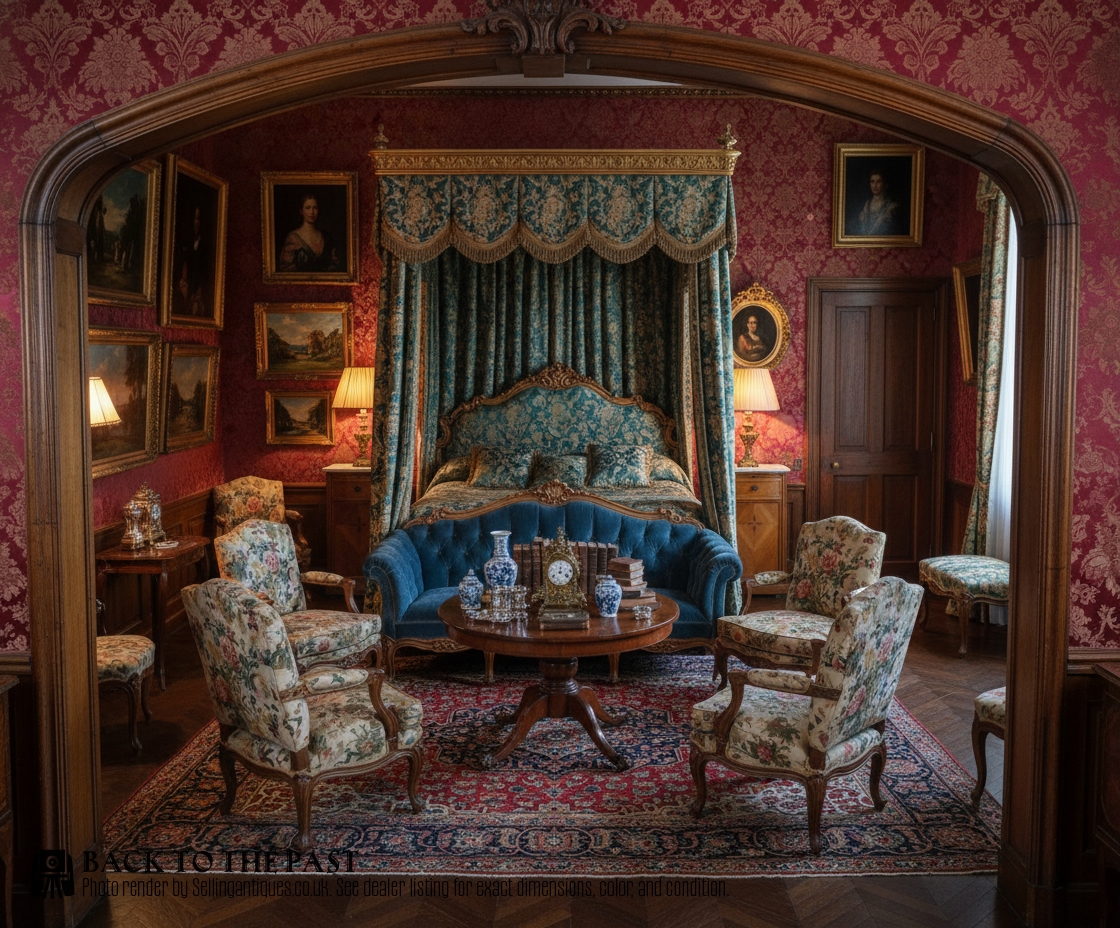
Originating from France or following traditional French aesthetic guidelines, these nightstands serve both functional storage needs and decorative roles in traditional or eclectic bedroom schemes.
How they were made
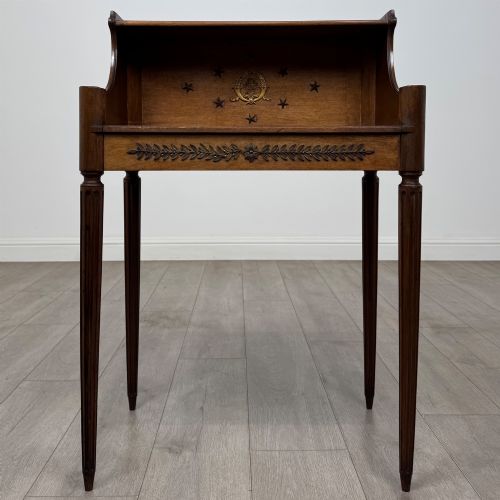
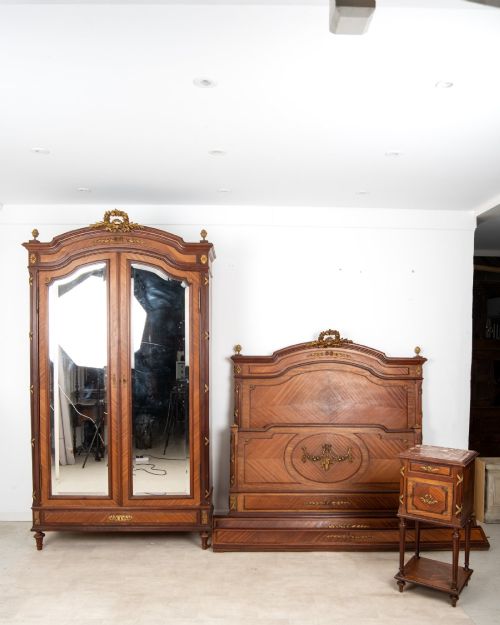
Cabinet makers utilised a range of timbers including walnut, mahogany, oak, cherrywood, satinwood, fruitwood, rosewood, and kingwood. Marquetry and parquetry inlays frequently decorate the surfaces of these cabinets, adding geometric or floral patterns.
Many pieces incorporate inset marble tops, often paired with cast or chased ormolu mounts and brass details. Turned legs, carved wooden elements, and side lockers complete the construction methods recorded in the period pieces.
Listings for French bedside nightstands span pieces from the 1880s through to the 1930s, constructed in oak, walnut, mahogany, and kingwood.
What varies in quality
Quality in these nightstands rests on the crispness of the carving, the precision of the marquetry or parquetry inlay, and the weight and detail of the ormolu and brass mounts. Superior examples display tighter joinery and more carefully selected timber grains.
The integration of materials also dictates standard, such as the thickness and veining of the fitted marble tops compared to simpler timber surfaces. Proportions remain important, with finer pieces maintaining neat lines and balanced drawer or cupboard alignment.
François Linke
The French Bedside Nightstands Glossary
- Ormolu
- Gilded bronze mounts applied to furniture for decoration. This technique adds metallic contrast to timber surfaces.
- Marquetry
- Decorative veneer applied to furniture in patterned wood designs. It often depicts floral or pictorial scenes.
- Commode
- A low chest of drawers or cabinet. In a bedroom context, it provides enclosed bedside storage.
- Etagere
- An open piece of furniture with shelves. It provides vertical display space rather than concealed storage.
French Bedside Nightstands: Frequently Asked Questions
What styles are common in French bedside nightstands?
The listings show pieces spanning Louis XV and Louis XVI revivals, alongside French Provincial and Art Deco aesthetics. These styles reflect the prevailing decorative tastes of the nineteenth and early twentieth centuries.
Buyers will find that revival pieces typically feature curved cabriole legs and ornate ormolu, while Art Deco items lean towards geometric forms and simpler surfaces.
Are these nightstands usually sold as pairs?
Many of the listed pieces appear as matching pairs, which suits symmetrical bedside placement. Single cabinets also feature frequently in the selection.
Collectors seeking balance on both sides of a bed will find multiple matching sets originating from the same period.
What materials were used in their construction?
Timbers such as walnut, mahogany, oak, and kingwood form the primary structure of these cabinets. Many examples incorporate contrasting wood veneers and decorative inlays.
Upper surfaces frequently feature fitted marble tops or polished brass elements, combining utilitarian durability with decorative refinement.
How do I care for a marble-topped nightstand?
Marble surfaces require gentle cleaning with mild soap and water to avoid dulling the polish. Acidic liquids should be kept away from the stone to prevent staining.
Wooden frames benefit from regular dusting and occasional polishing appropriate for the specific timber finish.