

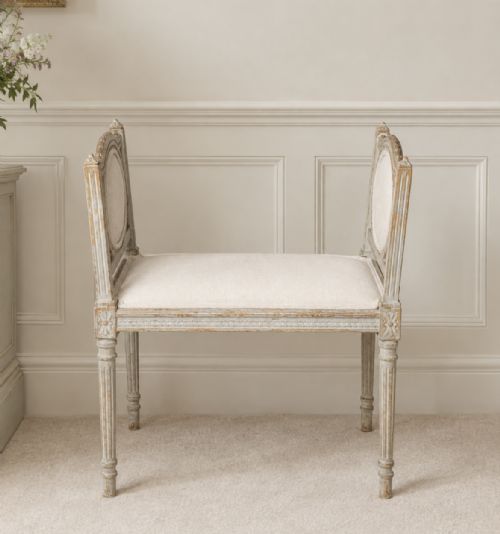


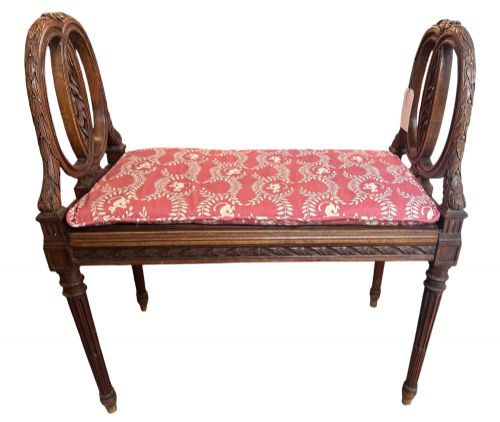


French Bedroom Bench
A french bedroom bench brings classical elegance to a room, offering a seat at the foot of the bed or beneath a window.
French Bedroom Bench
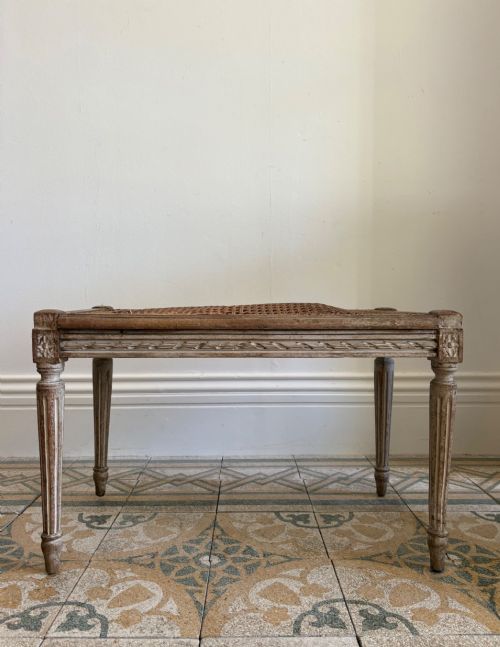
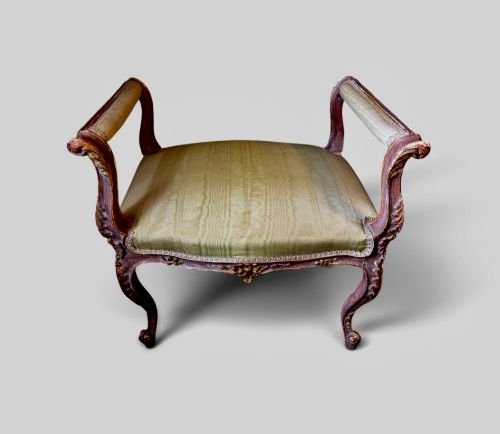
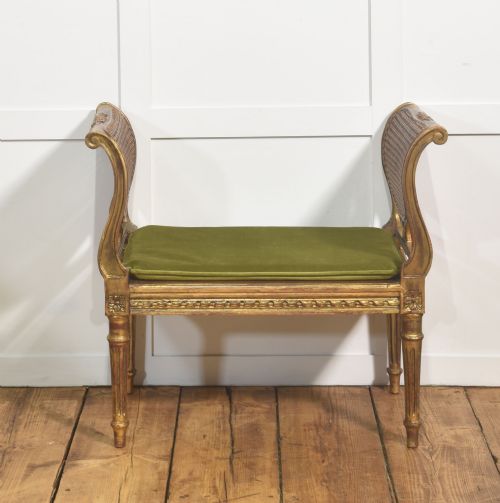
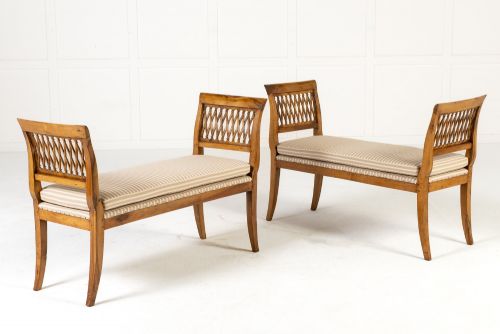
When you search for a french bedroom bench, you encounter various seating forms designed for private quarters and reception spaces, including window seats, stools, and small settees. The pieces appearing in this category span the nineteenth century and the early decades of the twentieth century, reflecting classical European forms.
You are most likely to meet window seats and elongated stools featuring carved wooden frames and upholstered or caned tops. These low seats serve practical functions at the foot of a bed or beneath a window while adding distinct period character to an interior scheme.
The selection encompasses diverse stylistic influences such as Louis XVI, Régence, and Rococo Revival, alongside Victorian interpretations and Regency designs. Walnut, beech, and giltwood form the structural foundation of these varied pieces.
Assessing quality in period seating
The standard of carving defines the distinction between standard production and exceptional craftsmanship, with hand-carved detailing displaying greater depth and precision than simpler moulded work. The crispness of the foliage, scrolls, and fluting indicates the skill of the artisan who shaped the timber.
The integrity of the frame construction and the quality of the materials, whether solid walnut, beech, or gilded wood, determine the resilience and longevity of the seat. Original surface treatments, such as patinated paint or aged gilding, hold higher appeal than later repaintings.
A tiny fringe of velvet tassels on an eighteen-eighties salon sofa survives to remind us that Victorians loved a dangling trim.
The French Bedroom Bench Glossary
- Giltwood
- Timber treated with gold leaf or metallic powder to create a lustrous golden surface. This finish appears frequently on formal seating from the eighteenth and nineteenth centuries.
- Canework
- Woven cane material used to form seats and backrests on light furniture frames. It provides a flexible and breathable surface that lightens the visual weight of the piece.
- Cabriole leg
- A furniture leg that curves outward in a convex arc and tapers inward in a concave arc, ending in a pad or scroll foot. This form derives from classical animal leg shapes.
- Window seat
- An elongated seat designed specifically to fit the architectural recess of a window. These pieces typically feature low upholstered tops and decorative wooden frames.
French Bedroom Bench: Frequently Asked Questions
Where should I place a window seat?
These pieces suit positions beneath low windows, along hallways, or placed at the foot of a bed in a principal bedroom.
Their compact proportions allow them to fit into narrow circulation spaces without blocking natural light or movement.
What is the difference between a stool and a duet stool?
Standard stools provide single seating capacity, whereas duet stools are constructed with elongated proportions designed to accommodate two people simultaneously.
Both forms appear frequently in nineteenth-century bedroom and salon settings.
Can I use velvet upholstery in a modern interior?
Velvet provides a rich texture that complements both contemporary and traditional rooms, offering visual warmth and tactile contrast.
Many period benches retain or have been updated with velvet covers featuring decorative trims like tassels.