


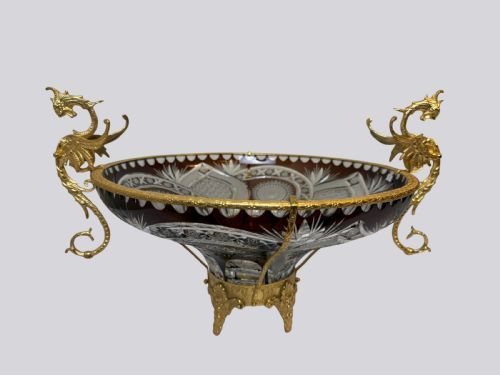

French Fruit Bowl
A French antique fruit bowl serves as a brilliant table centrepiece, bringing nineteenth-century metalwork and crystal together to hold fruit or stand alone.
French Fruit Bowl
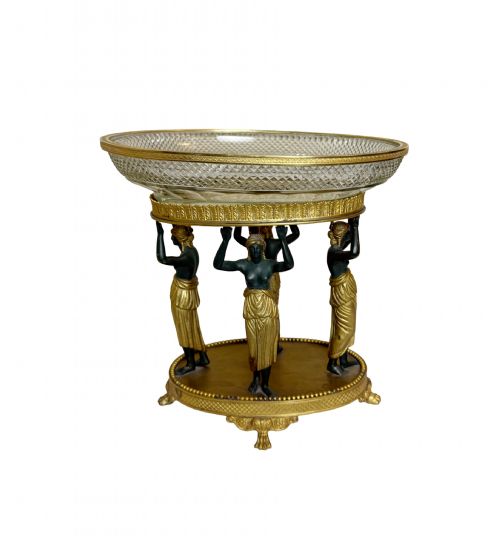
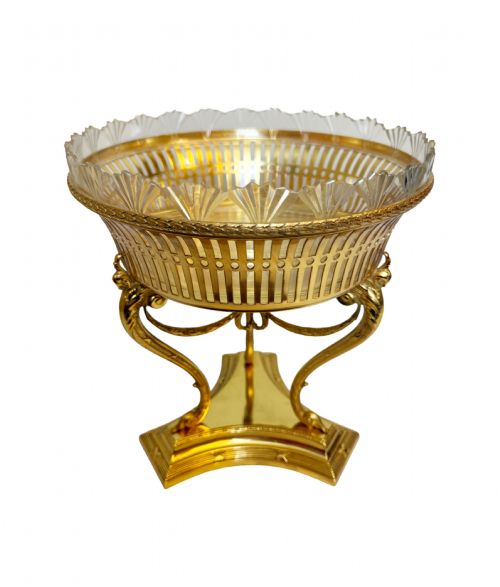
A french antique fruit bowl usually takes the form of a heavy centrepiece, tazza, or pedestal bowl designed to anchor a dining table or sideboard. These decorative vessels emerge primarily from the nineteenth century and the early decades of the twentieth century, reflecting shifting tastes from Empire symmetry to Art Deco geometry.
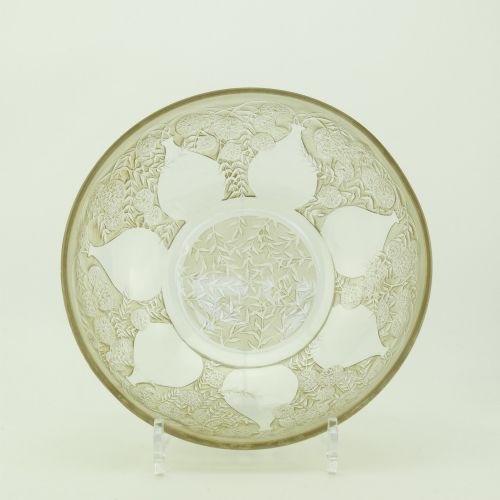
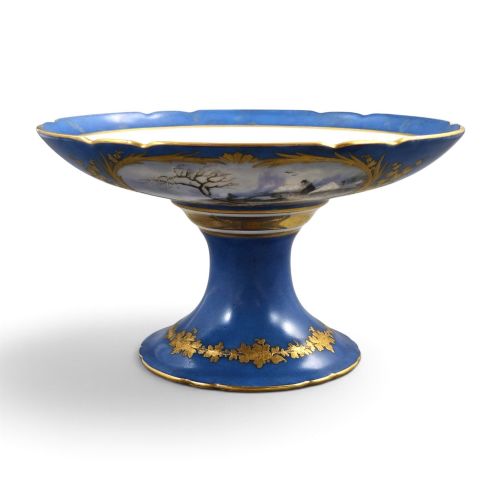
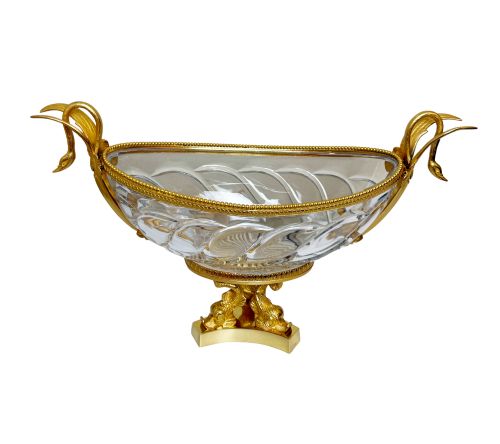
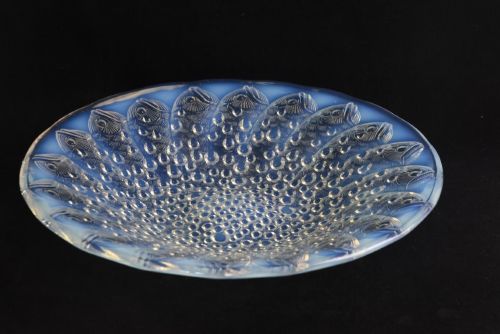
The objects span porcelain baskets, porcelain comports, and glass vessels secured in metal mounts. Buyers encounter porcelain from Sèvres and Samson alongside opalescent glass by René Lalique and heavy cut crystal paired with gilt bronze.
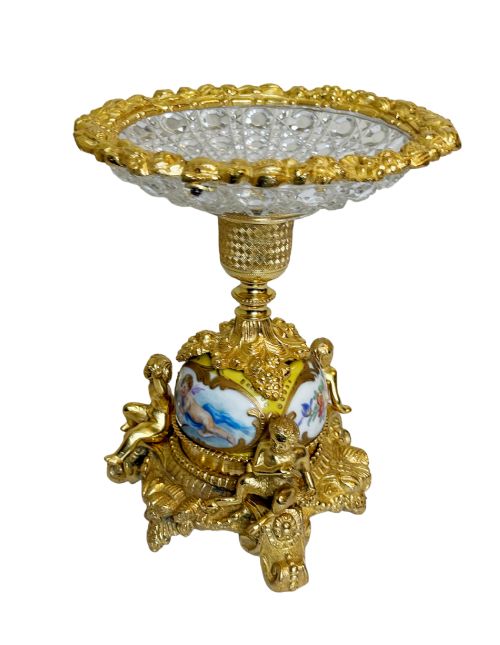
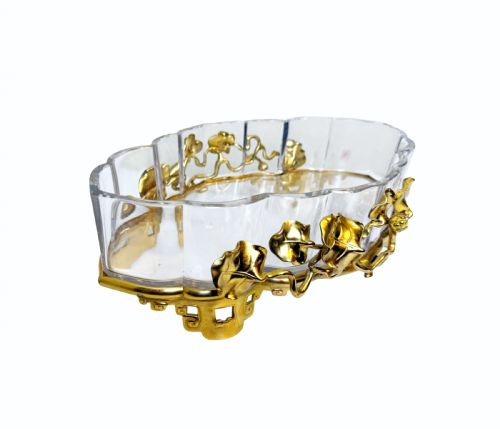
Many items function purely as ornamental centrepieces rather than utilitarian kitchenware. They display winged cherubs, mermen, or floral motifs cast in bronze and ormolu, supporting bowls of crystal or coloured glass.
How they were made
Gilt bronze, ormolu, and silvered bronze form the structural mounts and stands for these vessels. Founders cast these metals using traditional methods before applying fire gilding or silver plating to the surfaces.
Vessels combine heavy cut crystal, opalescent glass, and porcelain. Artisans blew or pressed the glass, sometimes adding enamelled flower decorations, while potteries painted and glazed porcelain bowls before mounting them in metal frames.
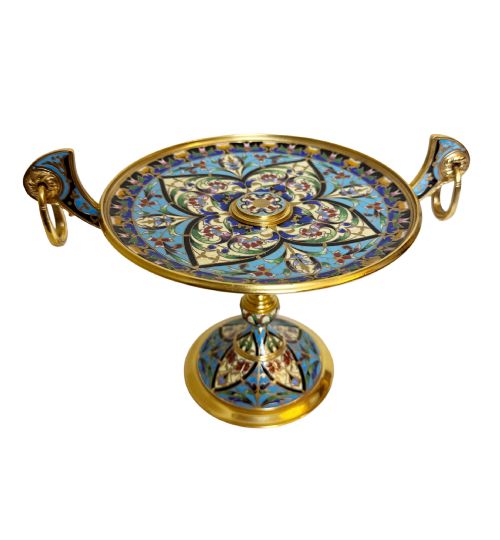
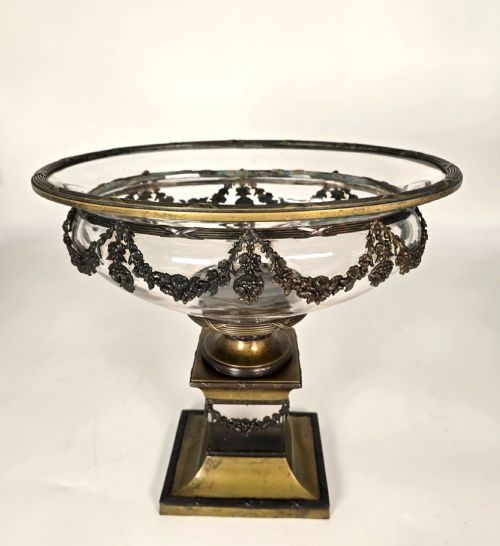
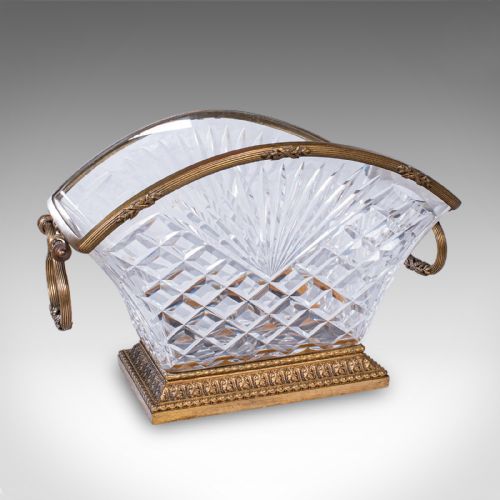
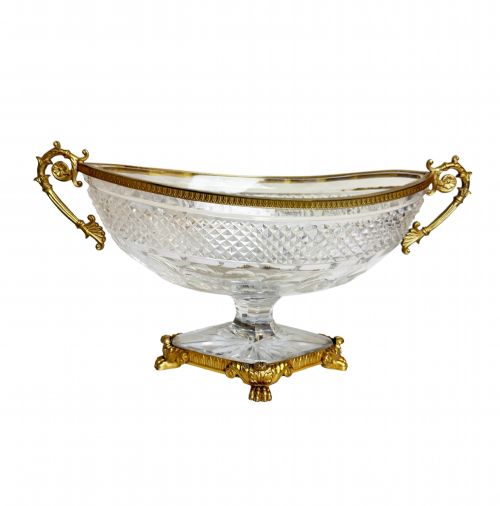
Object forms on this page include pedestal bowls, comports, tazzas, and structural centrepieces mounted with bronze cherubs and mermen.
What varies in quality
The standard of a french antique fruit bowl depends on the crispness of the bronze casting and the depth of the chasing. Finer mounts display sharp details in figures like cherubs and mermen, whereas lesser pieces show soft edges from worn moulds.
The material combination dictates the overall merit of the piece. Heavy hand-cut crystal and signed glass works by makers like Lalique sit at the higher end, alongside porcelain bearing detailed hand-painted scenes or armorial motifs.
Rene Lalique·Sevres·Christofle·Samson Of Paris·Baccarat
The French Fruit Bowl Glossary
- Tazza
- A shallow bowl raised on a high foot or pedestal. This form originates from ancient drinking vessels and serves as a display piece in nineteenth-century dining rooms.
- Ormolu
- Finely ground high-carat gold applied to a bronze base using a mercury amalgamation technique. This process creates a durable golden finish characteristic of French decorative metalwork.
- Comport
- A pedestal dish used for serving fruit or sweets at the table. These pieces often feature porcelain bowls supported by ceramic or metal stems.
- Champlevé
- An enamelling technique where troughs or cells are carved into a metal surface and filled with vitreous enamel before firing. This method decorates bronze mounts and tazzas.
- Opalescent glass
- Glass that diffuses light to display milky or iridescent colours, shifting in tone depending on the angle of illumination. Makers such as René Lalique utilised this effect for moulded bowls.
French Fruit Bowl: Frequently Asked Questions
What was a French centrepiece used for?
These large vessels occupied the middle of the dining table during formal meals. They held fresh fruit, sweetmeats, or bread, functioning as visual focal points for diners.
Over time, many transitioned into pure decorative objects for sideboards and mantelpieces, prized for their sculptural mounts and coloured glass.
How do I identify an Empire style bowl?
Empire style pieces draw on classical Greek and Roman motifs. Look for symmetrical designs, gilt bronze framing, and architectural elements such as winged figures or classical handles.
These objects typically date from the early nineteenth century or later revivals, maintaining a heavy, monumental presence on the table.
How do I clean an antique gilt bronze mount?
Dust the metal gently with a soft, dry brush to remove surface particles. Avoid aggressive cleaning agents or metal polishes that can strip the original fire gilding or ormolu.
For glass or porcelain inserts, lift them out of the metal frame if possible and wash them in lukewarm soapy water before drying thoroughly.