





French Academic Bronze Statue
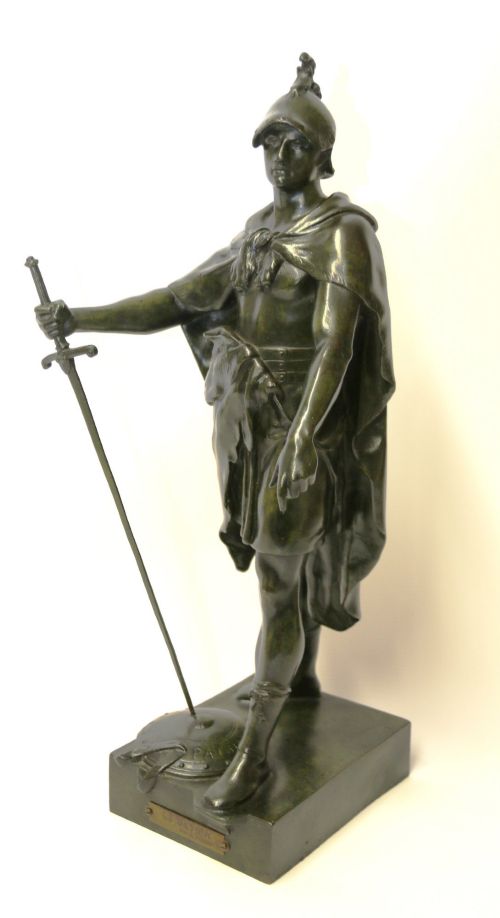
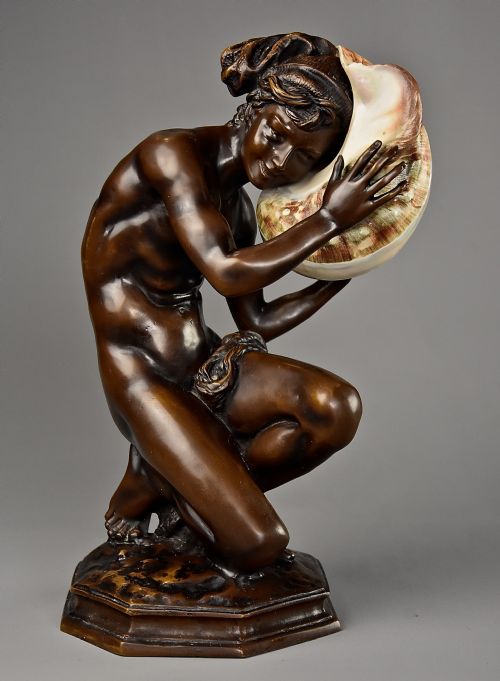
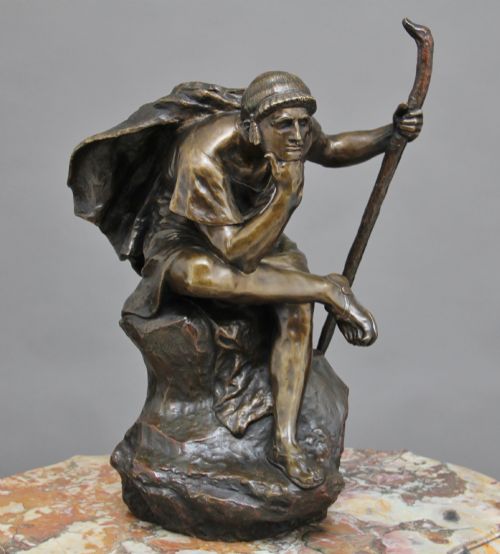
When you search for a french academic bronze statue, you are looking at nineteenth-century sculptural works cast by skilled founders in France.

French Academic Bronze Statue
A french academic bronze statue represents the rigorous training of the nineteenth-century Parisian art schools, depicting classical figures, historical characters, and literary subjects with precise anatomical accuracy.
You will most frequently encounter nineteenth-century interpretations of mythological heroes, soldiers, musicians, and allegorical characters produced during the Victorian era and the decades leading to nineteen thirty.
These pieces appear in various forms, including freestanding figures, sculptural groups, busts, and functional items such as lamps incorporating bronze elements on marble bases.
How They Were Made
Foundries utilised traditional lost-wax casting and sand-casting techniques to shape molten metal into complex figures, capturing intricate details of drapery and musculature.
The resulting metal surfaces received diverse finishes, ranging from dark patinated bronze and patinated metal to bright gilt bronze and rich multi-toned surfaces often paired with marble plinths and frosted glass.
Listings feature nineteenth-century French bronzes alongside patinated metal and gilt variants mounted on marble plinths.
What Varies in Quality
The distinction between tiers rests upon the precision of the chiselling and chasing applied to the raw casting after it left the foundry, where master hands defined every muscle, feather, and fold.
Signatures of renowned sculptors and foundry marks from established Parisian houses elevate a piece, reflecting the original artistic intent and the commercial prestige of the workshop.
Émile Louis Picault·Jean-Baptiste Carpeaux·Julien Lorieux·A. Mercie·Emile-Coriolan Guillemin·Charles Anfrie·Edouard Drouot·S. Kinsburger·Jean Jules Salmson·Claudius Marioton·Auguste Moreau·Charles Arthur Bourgeois·Lucien Madrassi·Antonin Mercié·Barbedienne·Adolphe Jean Lavergne·Raoul Francois Larche·Houdebine·Ernest-Eugène Hiolle·Devaulx·Albert Carrier-Belleuse·Emile Laporte·E. Laurent·Math. Moreau·Adrien Gaudez
The French Academic Bronze Statue Glossary
- Patina
- The surface coloration and sheen developed naturally with age or applied chemically by the foundry. It protects the underlying metal and enhances the visual depth of the sculpture.
- Chasing
- The painstaking process of refining a raw bronze casting using small punches and hammers. This technique restores crispness to details lost during the casting process.
- Lost-wax casting
- A historic method of creating metal sculptures from an original model coated in wax. The wax melts away to leave a precise channel for molten bronze.
- Terracotta
- A fired clay medium frequently used by nineteenth-century sculptors to model their initial studies. Many bronze editions were cast directly from these detailed clay models.
French Academic Bronze Statue: Frequently Asked Questions
What is academic sculpture?
Academic sculpture refers to works produced under the influence of the official European academies of art during the nineteenth century. These pieces adhere to strict classical standards of composition, technique, and subject matter.
Such works often draw inspiration from classical mythology, history, and allegories, executed with high anatomical precision.
How do I clean a bronze statue?
Dust your bronze statue gently using a soft, dry microfibre cloth or a clean artist's paintbrush. Avoid water, abrasive cleaners, or polishes which can strip the original patina.
Applying a very light coat of microcrystalline wax occasionally helps protect the metal surface from airborne moisture and dust accumulation.
Are these pieces signed?
Many nineteenth-century bronzes bear the cast signature of the sculptor on the base or integral plinth. Foundry stamps and cachets may also appear alongside the artist's name.
Signatures confirm the design attribution, though founders sometimes reproduced popular models in multiple editions over subsequent decades.
What are marble bases for?
Marble plinths provide visual weight and stability to heavy bronze figures while adding a contrasting textural element of stone. Red marble and dark polished varieties were favoured by nineteenth-century makers.
They elevate the sculptural composition and protect the supporting furniture surface from direct metal contact.