



French 19th Century Lantern
A french 19th century lantern brings architectural presence and ambient light to hallways and stairwells, forged in bronze, brass, and tole.
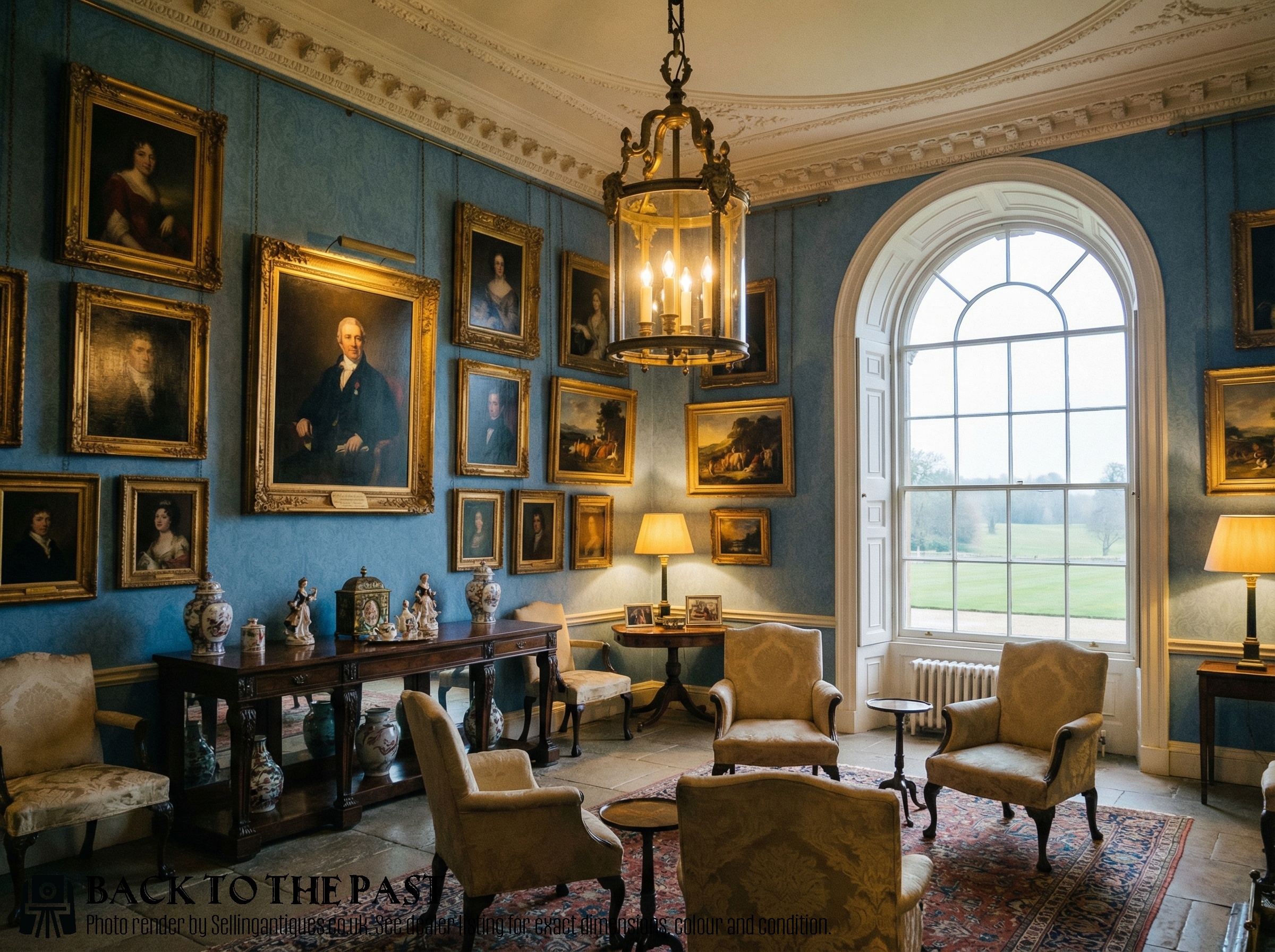
French 19th Century Lantern
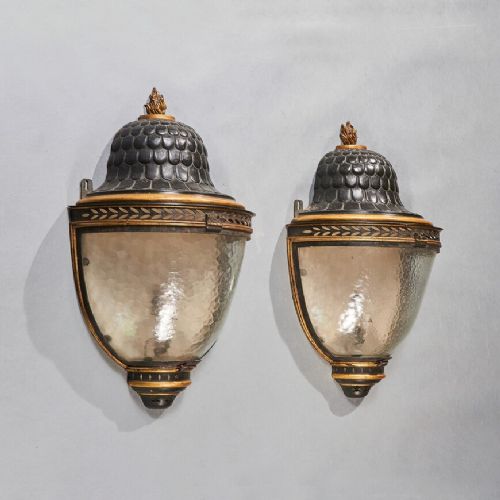
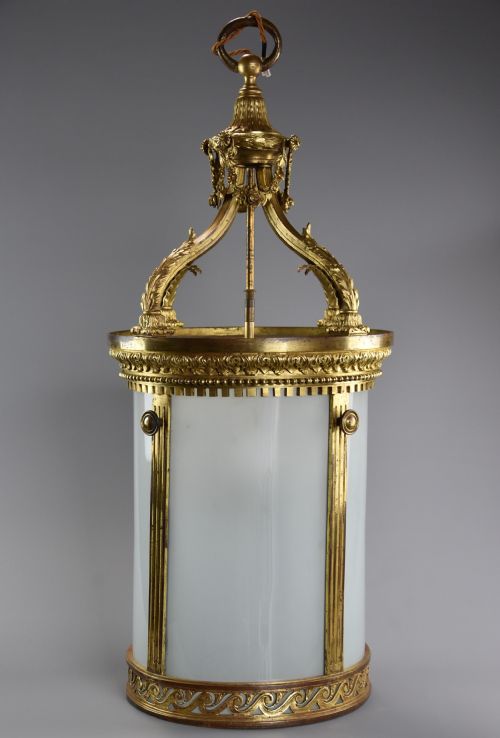
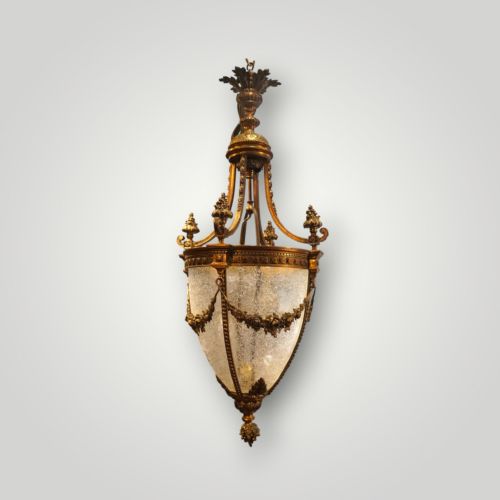
A french 19th century lantern typically takes the form of a hanging hall lantern, ceiling light, or wall sconce designed to illuminate grand interiors. The evidence shows pieces spanning the nineteenth century, including specific dates such as eighteen-eighty and eighteen-ninety, alongside Edwardian examples.
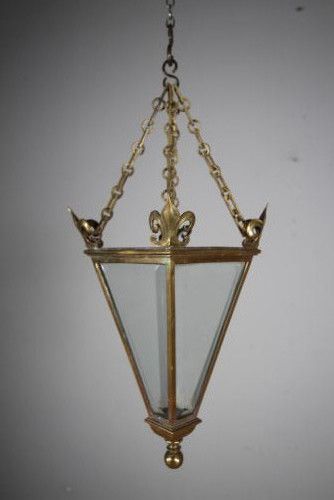
Hanging hall lanterns and ceiling lights dominate the selection, often taking circular or hexagonal shapes fitted with glass panels. Wall lanterns and carriage lamps also appear, providing candle or early electric illumination for interior walls and passages.
Stylistic influences draw heavily on French Neoclassical, Louis XVI, and Regence design motifs, reflecting historical revivals popular across the period. These pieces originate from French workshops and Parisian makers, utilising traditional metalworking and glass-cutting methods.
Materials and Construction
Makers constructed these lanterns using cast gilt bronze, gilt brass, plain brass, copper, and tole peinte, often applying parcel gilding to highlight raised ornament. Metal frames were assembled in sections to support glazed panels of clear, frosted, or etched glass.
Ornate models incorporate detailed cast elements such as ram heads and rococo scrollwork, welded or mechanically fastened to the primary frame. Glass panels were hand-cut to fit hexagonal or circular apertures, secured by glazing bars within the metal structure.
French 19th Century Lantern Retail Price Guide 2026
Typical asking prices for french 19th century lantern among the pieces listed under this phrase on Sellingantiques today, from the lower quarter to the upper quarter. They describe what is for sale here now, not the wider market.
Materials documented across the archive include gilt bronze, brass, copper, tole, and frosted or etched glass.
Distinctions in Execution
Quality rests in the crispness of the metal casting and the depth of the gilding applied to the bronze or brass surface. Finer examples display sharply rendered architectural details and substantial metal weight rather than lightweight stamped construction.
The choice and treatment of glass elevate certain pieces, particularly where panels feature fine etching or convex curvature. Original patination on the bronze and brass surfaces also marks a superior standard of survival over stripped or heavily polished alternatives.
The French 19th Century Lantern Glossary
- Tole peinte
- Painted sheet metal, commonly used in nineteenth-century lighting for decorative wall lanterns and shades. It offers a contrasting matte finish against gilded bronze elements.
- Parcel gilt
- The practice of gilding only specific portions of a metal object to create contrast with the base material. This technique highlights raised cast details on frames and mounts.
- Regence
- A French design style bridging the classical and rococo periods, characterised by symmetrical curves and early shell motifs. Later nineteenth-century lanterns frequently revived these eighteenth-century forms.
- Convex glass
- Curved glass panels that project outward from the lantern frame, diffusing light through a rounded surface. This feature appears on select hall lanterns to soften the internal glow.
French 19th Century Lantern: Frequently Asked Questions
Where were these lanterns hung?
These lanterns were traditionally placed in high-ceilinged entrance halls, stairwells, and long corridors where a strong vertical light source was needed. Their enclosed glass design protected the internal flame or candles from draughts.
Today, they serve the same architectural purpose in modern interiors, functioning as statement overhead lighting for vestibules and landings.
How do I identify a Louis XVI style lantern?
Louis XVI style lanterns rely on classical symmetry, straight architectural lines, and restrained ornament such as beading, urns, and acanthus leaves. They contrast sharply with the asymmetrical curves of later rococo revivals.
Examining the cast mounts and overall geometric proportion helps distinguish this neoclassical aesthetic from earlier or later decorative schemes.
What glass types are common?
Listings feature clear, frosted, and etched glass panels, alongside specialised convex glass that bows outward from the frame. These panels were fitted into hexagonal or circular metal structures to enclose the light source.
Etched and frosted variations soften the internal bulbs, while clear glass maximises light output in darker hallways.
Are these lanterns wired for electricity?
Most surviving examples have been adapted over time to house electrical lamp holders for modern domestic use. The conversion typically integrates wiring through the central hanging loop or top crown.
Buyers should inspect the internal electrical fittings upon acquisition to ensure they meet current safety standards for ceiling installation.