
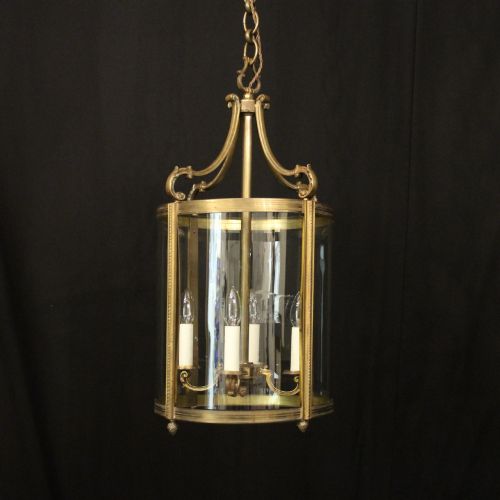

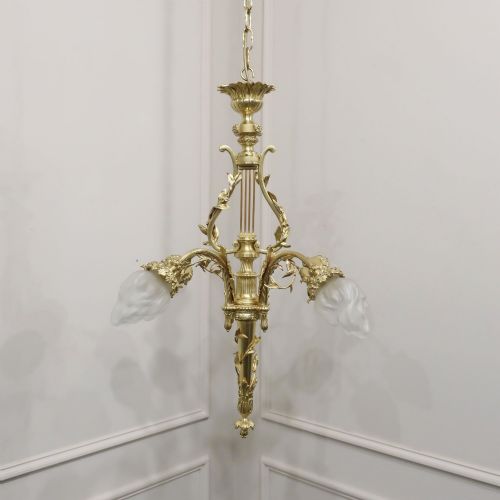
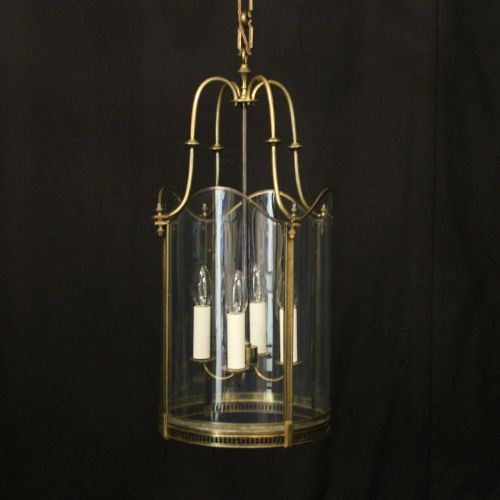
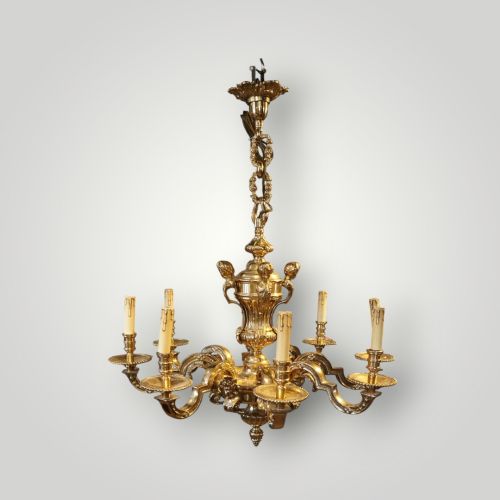
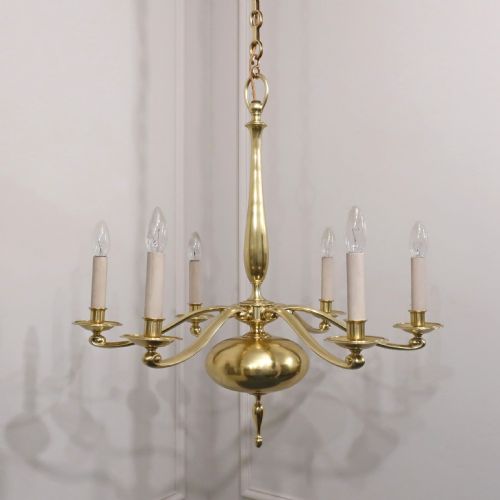
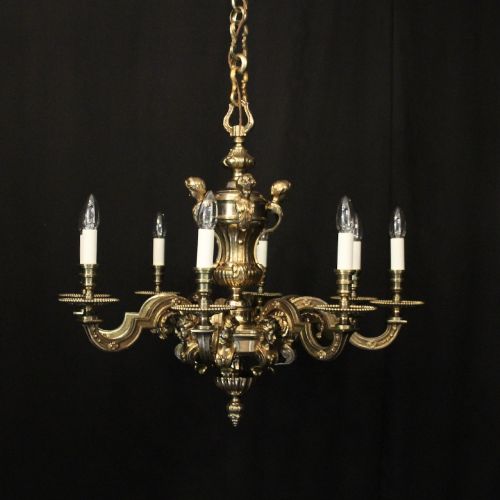
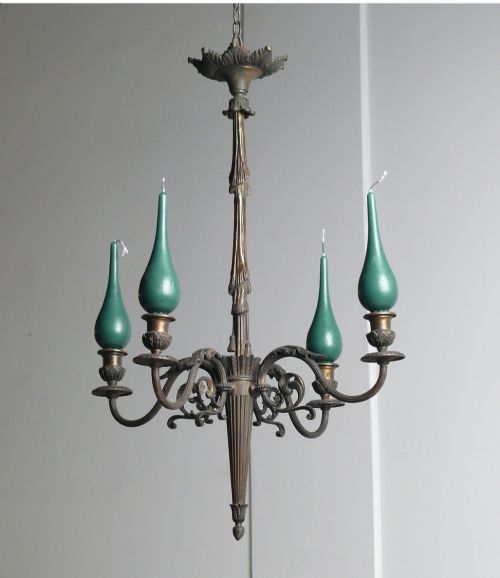
Bronze Hanging Pendant Light
A bronze hanging pendant light brings warmth and period character to an interior through substantial metalwork and glass.
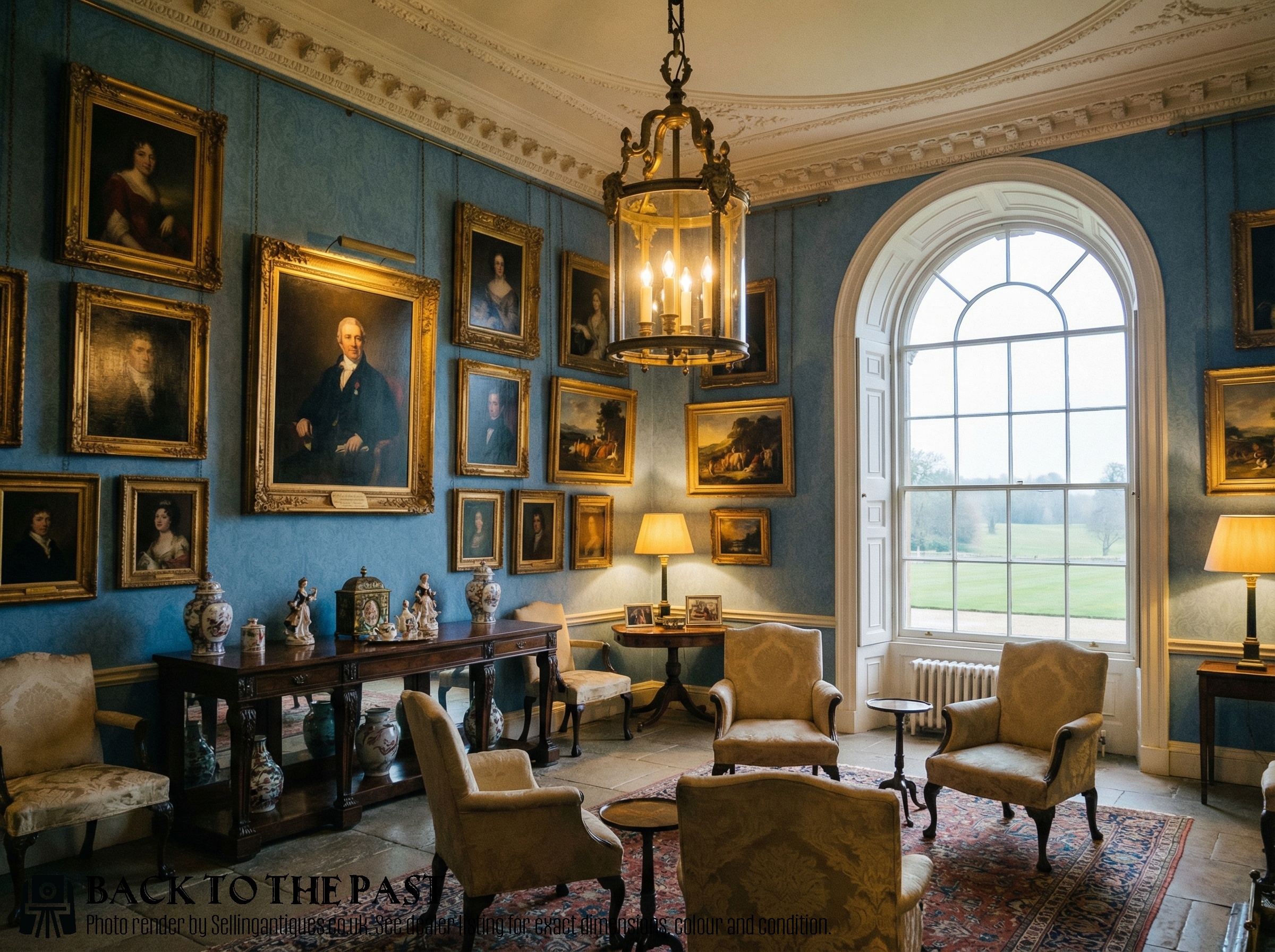
Bronze Hanging Pendant Light
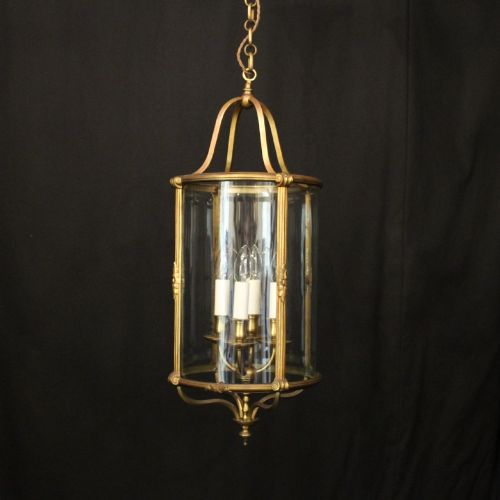
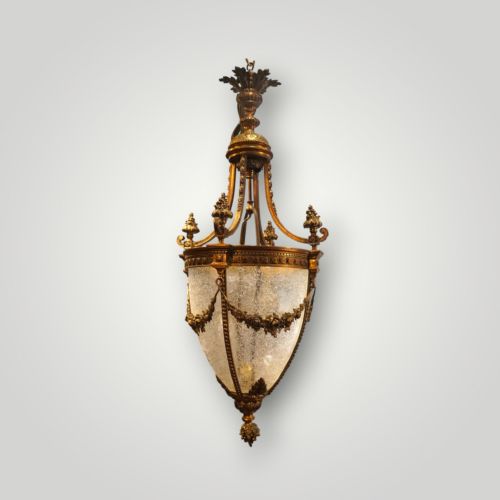
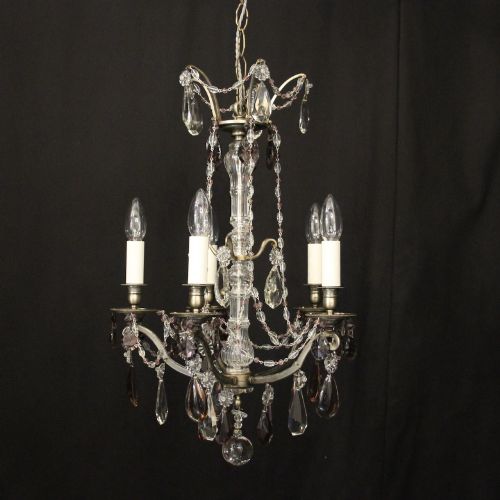
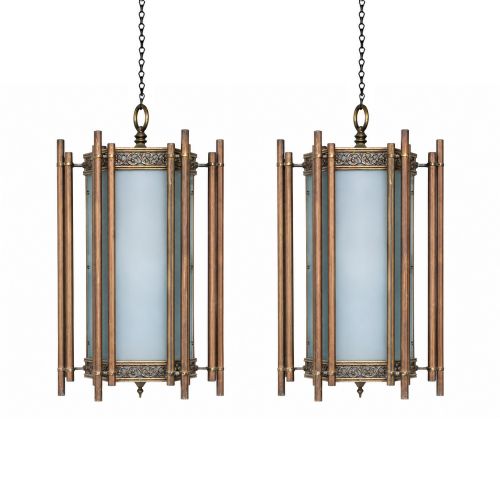
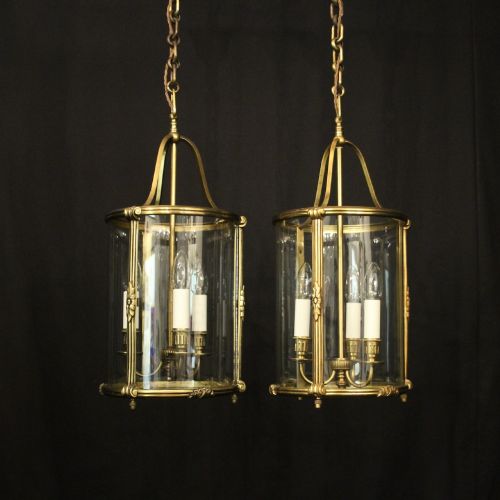
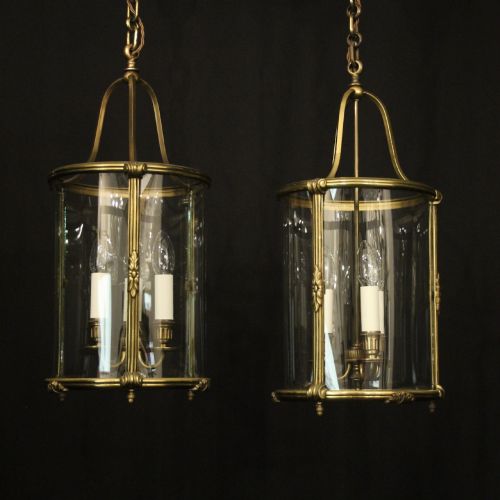
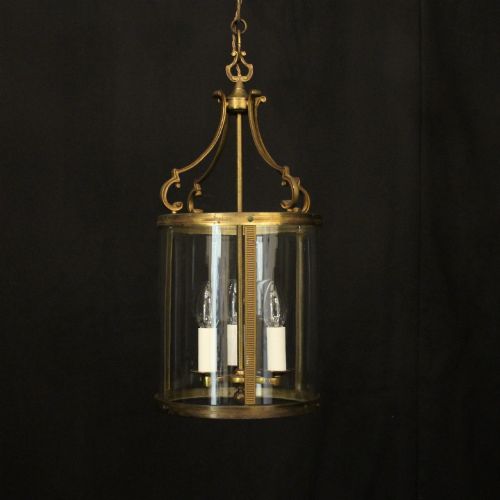
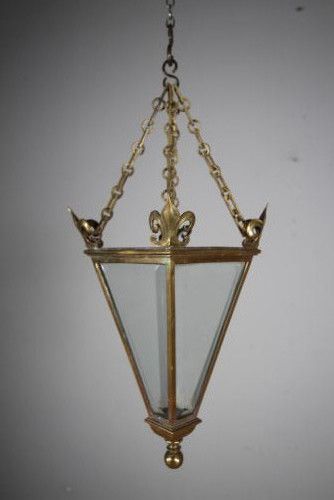
A bronze hanging pendant light unites decorative metal framework with illumination, spanning forms such as hall lanterns, chandeliers, and ceiling lights. These fixtures emerge predominantly from nineteenth-century workshops and twentieth-century decades up to the nineteen-thirties.
The selections here lean heavily toward French designs, including gilded hall lanterns, Empire chandeliers, and neoclassical lyre configurations. Alongside these French pieces, British and American examples appear in styles ranging from Victorian to Art Deco.
Buyers encounter single-light pendants alongside multi-tiered chandeliers carrying up to eighteen lights. Enclosed glass lanterns and open-frame pendant lights populate the category in equal measure.
What varies in quality
The definition and depth of the metal casting dictate the visual strength of the piece, separating crisp, detailed chased work from softer production. Gilt surfaces vary from thick, enduring applications to thinner layers that show wear over time.
The selection and cut of the glass panes or crystal drops influence the overall refinement of the fixture. Bevelled edges, heavy convex glass, and intact crystal fruit clusters denote higher levels of original craftsmanship.
Some nineteenth-century lanterns were originally lit by candles before later conversion to electricity.
G.E.C
The Bronze Hanging Pendant Light Glossary
- Gilt Bronze
- Bronze metal coated with a thin layer of gold or gold leaf to produce a bright, enduring finish. This technique appears frequently on nineteenth-century French lighting.
- Hall Lantern
- An enclosed ceiling fixture designed specifically for entryways and corridors. These typically feature glazed glass panels held within a metal framework.
- Convex Glass
- Glass panes curved outward to catch and reflect light from multiple angles. This type appears commonly on antique lantern frames.
- Slip Shade
- A moulded glass shade designed to slot directly into a metal ceiling light fixture. These are characteristic of Art Deco lighting designs.
- Crystal Drop
- Cut glass pendants hung from the arms or crown of a chandelier to refract light. They range from simple prisms to coloured fruit motifs.
Bronze Hanging Pendant Light: Frequently Asked Questions
How do I hang a heavy bronze pendant light?
Suspension requires fixing directly into ceiling joists or installing a substantial metal hook capable of supporting the combined weight of the metal frame and glass panels.
Wiring must run safely through the suspension chain or rod to connect with the internal lamp holders.
What periods do these pendant lights cover?
The available lighting spans from the nineteenth century through the Victorian era and into the early twentieth century. Pieces from nineteen-ten to nineteen-thirty often reflect Art Deco or late neoclassical influences.
Earlier nineteenth-century examples lean towards French Empire and rococo styles.
Are these lights suitable for low ceilings?
Most pendant lights and chandeliers hang down on chains or fixed rods, which can position them too low for standard modern room heights. Hall lanterns and flush ceiling lights offer more compact vertical profiles for restricted spaces.
Checking the total drop measurement against your ceiling height ensures adequate clearance.
How do I clean gilded bronze and glass?
Gilded surfaces require gentle dusting with a soft, dry cloth to protect the thin gold layer from abrasion. Chemical cleaners strip the gilt finish entirely.
Glass panels and crystal drops can be removed carefully and washed in warm soapy water before being dried and reattached.