
Traditional Hall Hanging Lantern
A traditional hall hanging lantern sets the tone for an entryway, casting light through glass and metal to welcome visitors into a home.
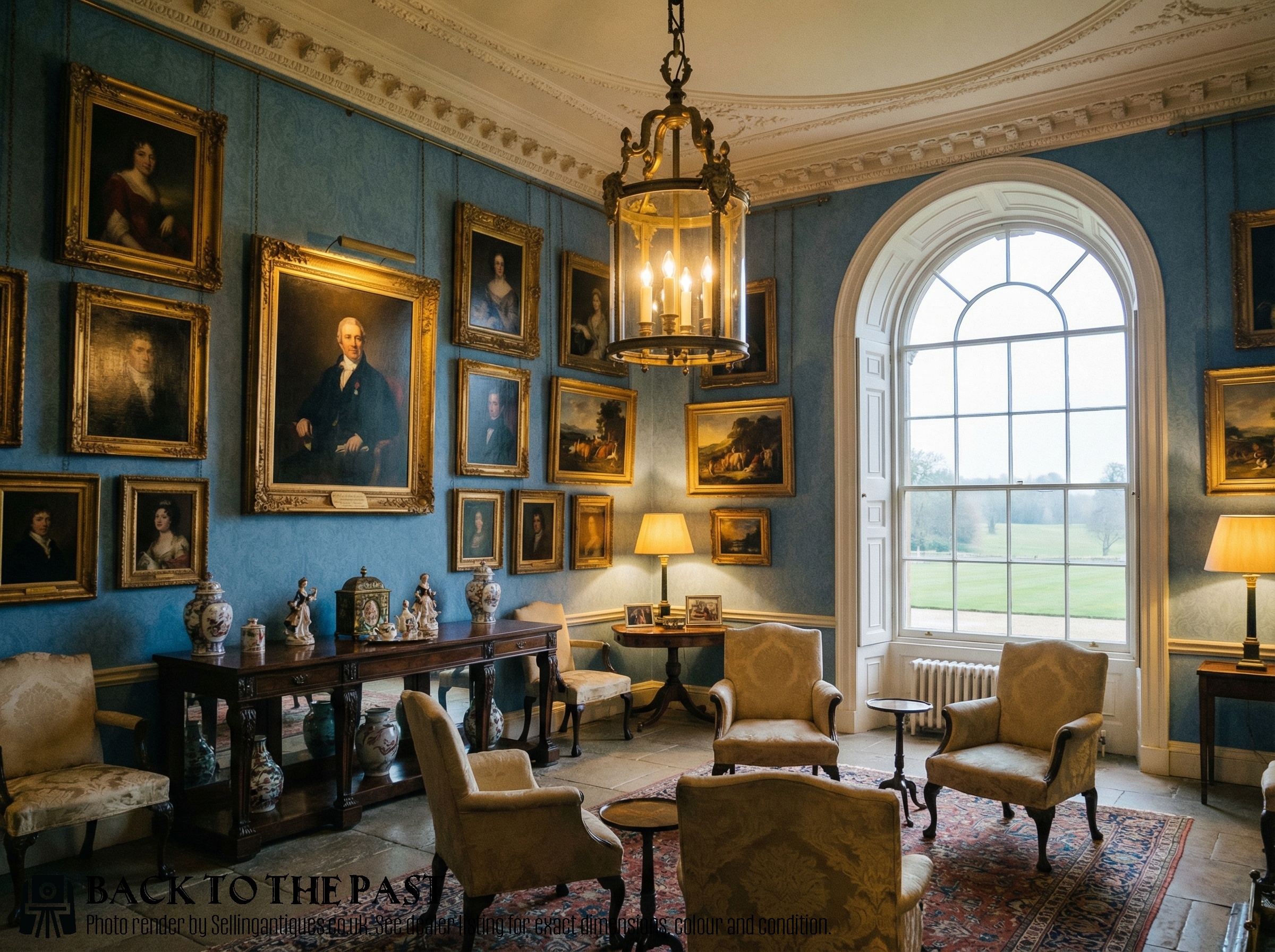
Traditional Hall Hanging Lantern
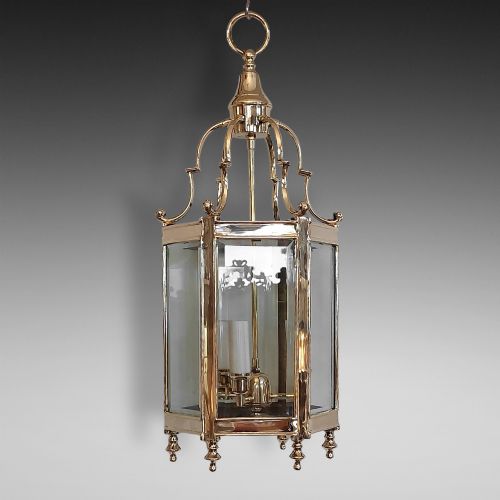
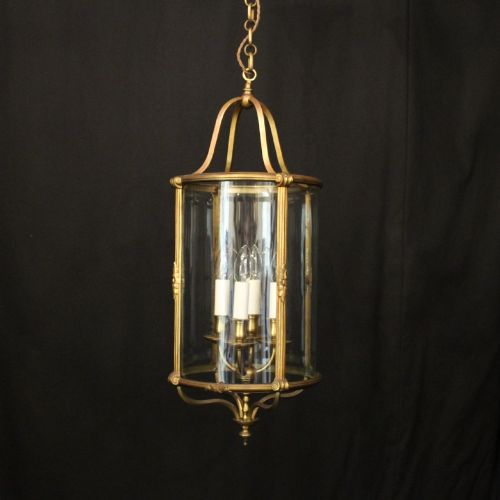
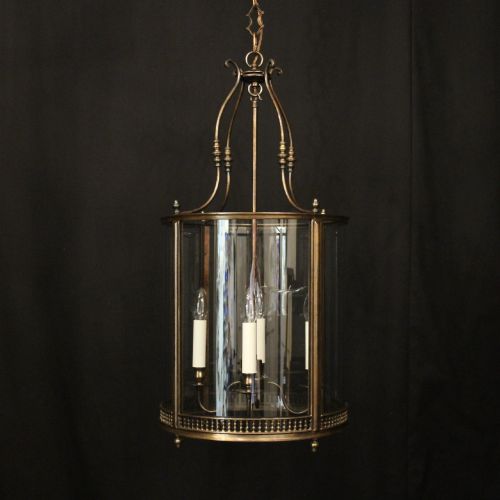
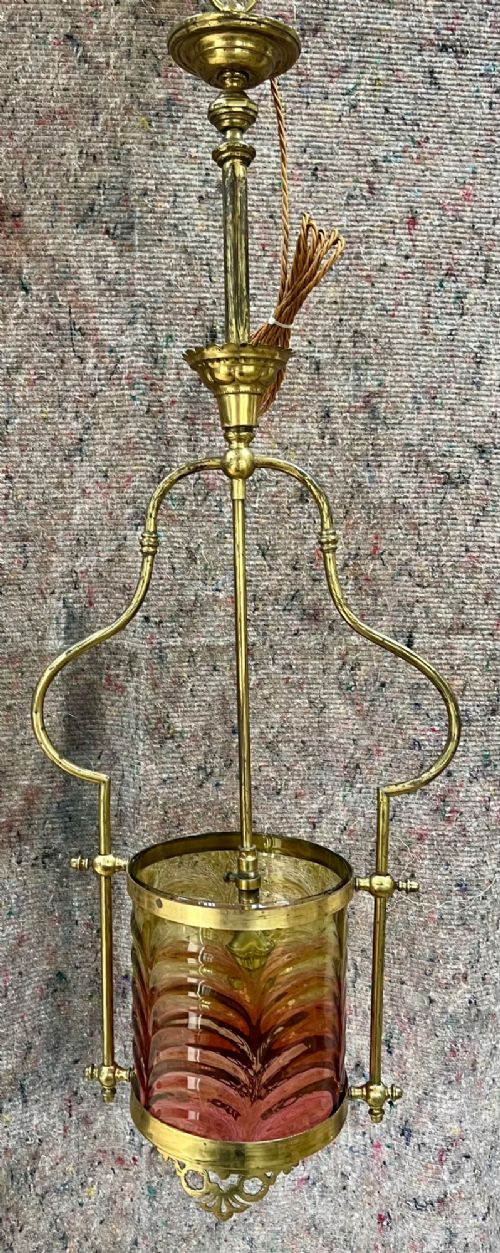
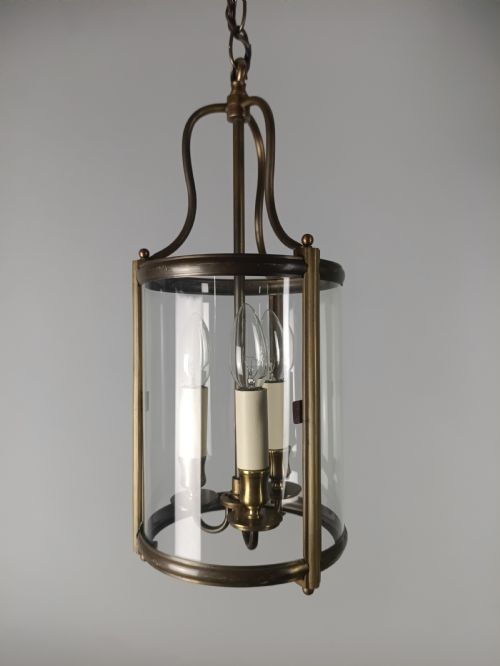
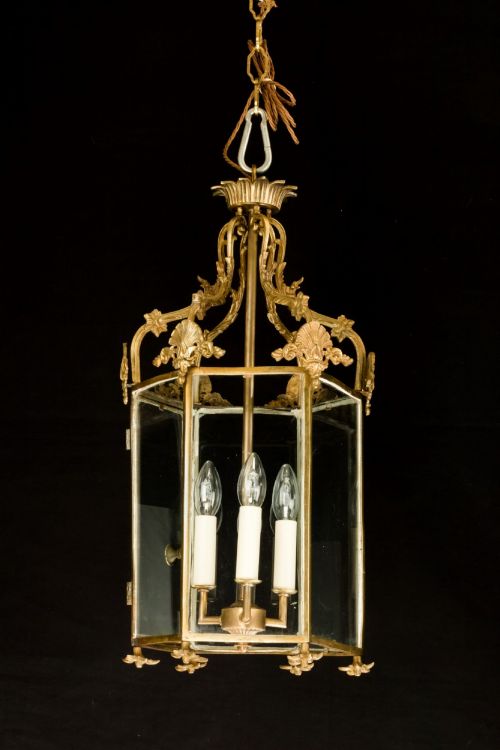
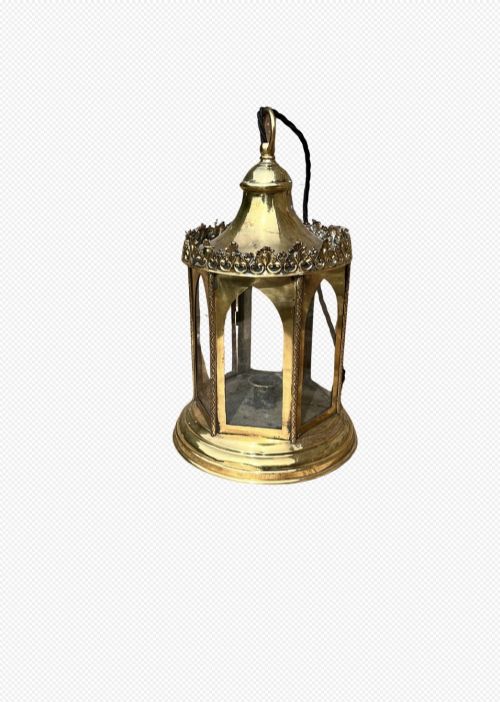
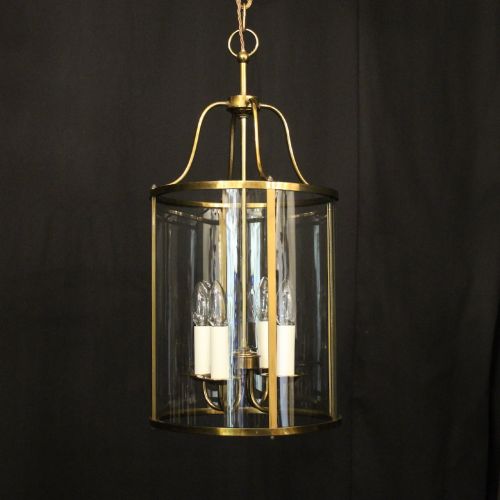
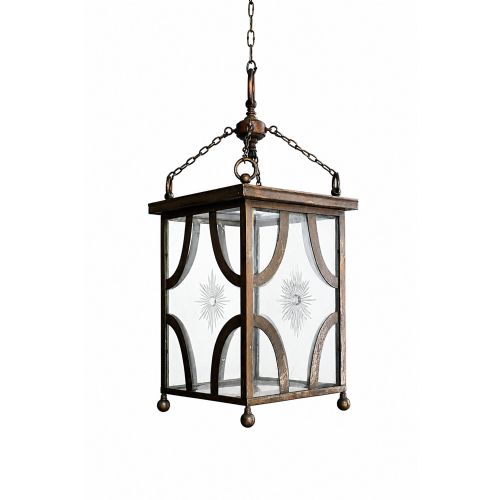
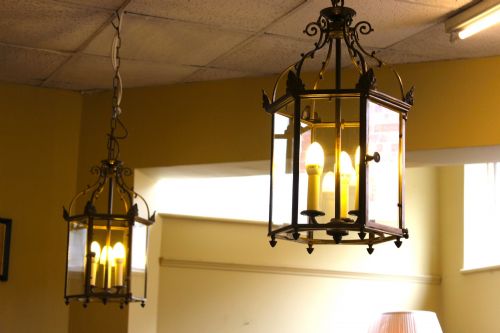
A traditional hall hanging lantern provides overhead illumination in entranceways and corridors, taking forms such as hexagonal frames, round lanterns, and multi-light pendants. These fixtures emerge across the nineteenth and twentieth centuries, spanning periods from Victorian and Edwardian eras up to the nineteen-thirties.
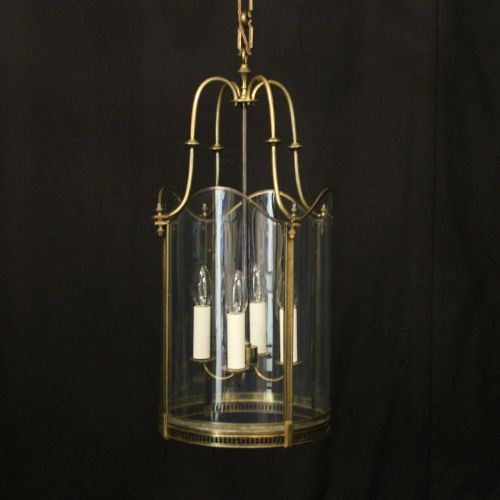
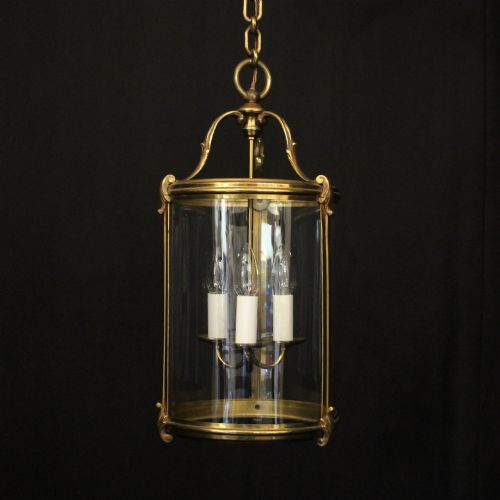
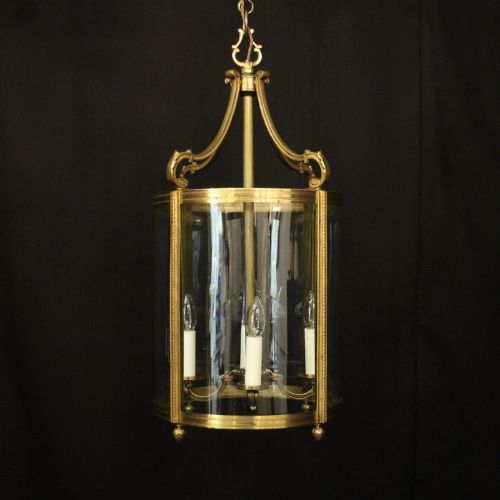
The selections available here rely heavily on English and French designs, ranging from simple brass configurations to ornate French chateau and neoclassical styles. Buyers frequently encounter Edwardian brass lanterns and French gilded convex examples among these listings.
Makers utilised various object types including ceiling lights, hall lanterns, and pendant lights to suit domestic architecture. The scale moves from compact hallway pieces to large multi-light fixtures designed for high ceilings.
Materials and construction methods
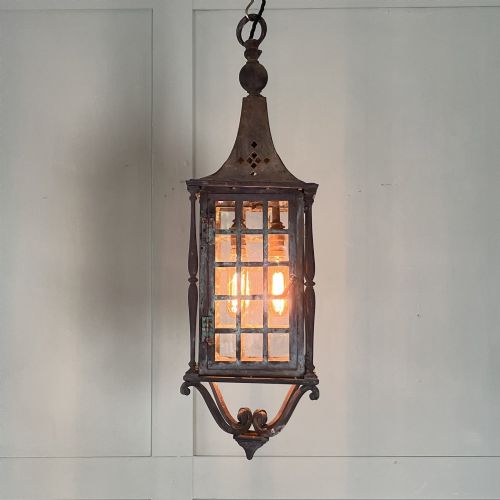
Metalworking forms the structural core of these pieces, employing brass, wrought iron, bronze, and gilded bronze to shape frames and mountings. Artisans joined these metals into hexagonal, round, or multi-sided geometries, often applying gilt finishes for decorative effect.
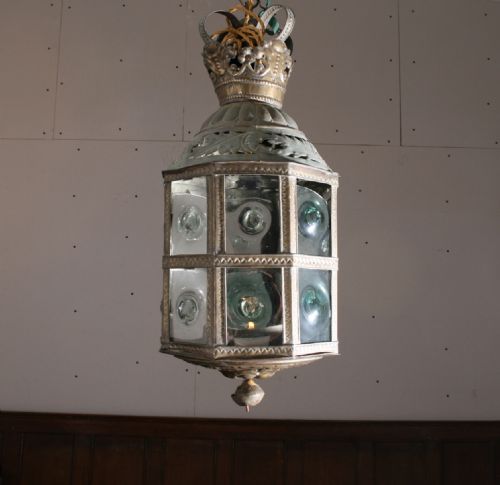
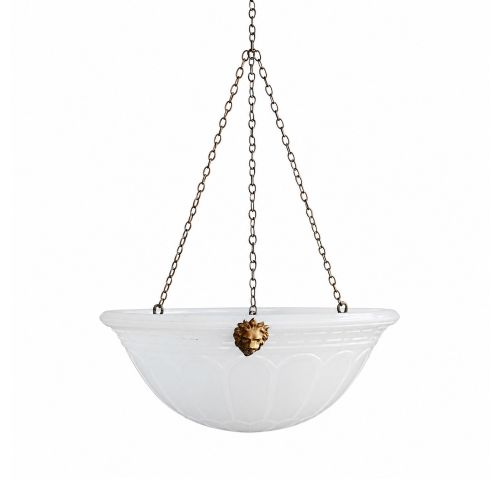
Glass panels enclose the frames, incorporating hand-blown bullseye glass, bevelled glass, and moonstone panels to diffuse the internal light. These transparent and translucent elements were fitted carefully into metal channels to secure the fixture.
Current listings feature pieces spanning the nineteenth century through to the nineteen-thirties, constructed from brass, bronze, wrought iron, and glass.
Assessing quality and craftsmanship
The refinement of the cast bronze or brass metalwork dictates the visual impact of the lantern, where crisp detailing in neoclassical mounts or intricate wrought iron scrolling separates standard items from superior works. Heavier gauges of metal and substantial scale contribute to a more imposing presence in an entrance hall.
The choice and treatment of the glass panes also influence the standard of the piece, with bevelled edges and hand-blown bullseye formations offering greater depth than plain flat glass. Original gilding and integrated multi-light internal fittings further distinguish the finer examples.
The Traditional Hall Hanging Lantern Glossary
- Convex glass
- Curved glass panels that project outward, frequently utilised in French hall lanterns to soften the internal light diffusion.
- Bevelled glass
- Glass panes with angled edges cut and polished to a specific bevel, creating prismatic light refractions.
- Bulls eye glass
- Circular blown glass featuring a prominent central node or concentric ripples, adding texture and distortion to the illumination.
- Gilded bronze
- Bronze metal treated with a thin layer of gold leaf or gilt finish, providing a durable and luminous metallic surface.
Traditional Hall Hanging Lantern: Frequently Asked Questions
Where should a hanging lantern be placed?
These lanterns function best suspended in entrance halls, stairwells, or high-ceilinged corridors where adequate clearance allows the piece to hang freely.
Positioning the fixture centrally ensures the light distributes evenly across the immediate architectural space.
How do I date a traditional hall lantern?
Dating relies on stylistic markers such as neoclassical motifs, arts and crafts simplicity, or Edwardian brass framing techniques.
Comparing the metal composition, glass type, and construction joins against known period examples helps narrow the decade of manufacture.
Are these lanterns electrified for modern use?
Many examples arrive wired for electrical use, accommodating internal bulb fittings behind the glass panels.
Buyers should consult professional electricians to ensure older wiring meets current domestic safety standards upon installation.
What styles are common in these lanterns?
Common styles encompass Victorian, Edwardian, Gothic Revival, Arts and Crafts, and French Neoclassical designs.
French chateau and grand regency aesthetics also appear frequently, often featuring gilded bronze and convex glass formations.