



Freestanding Swing Mirror
A freestanding swing mirror offers adjustable reflection through a pivoted plate, bringing useful proportion and period timber to a dressing space.
Freestanding Swing Mirror
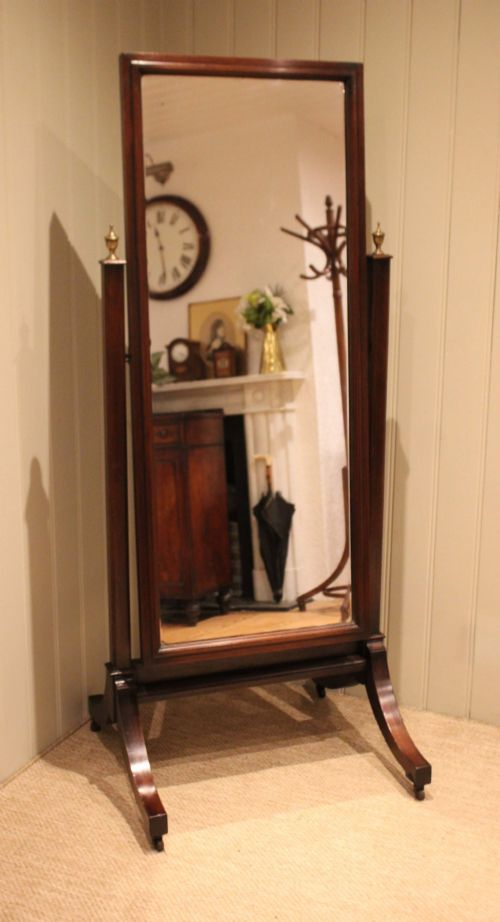
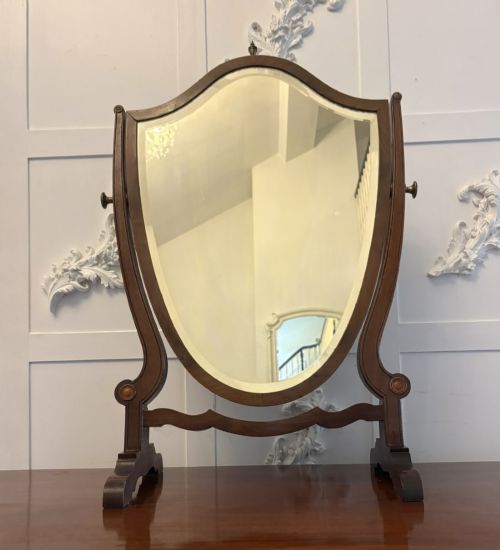
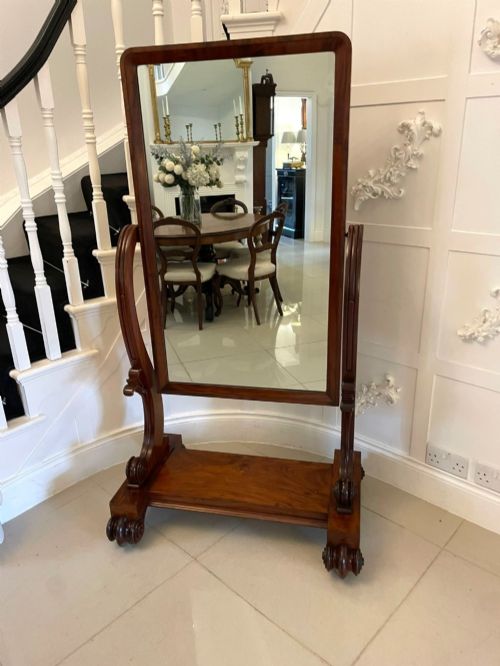
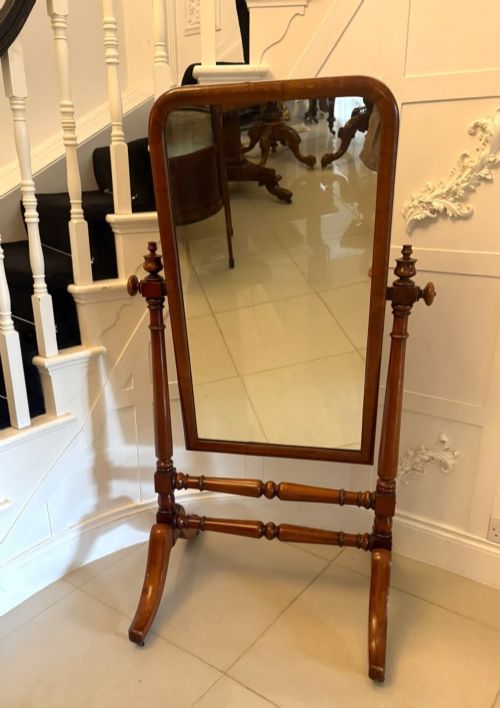
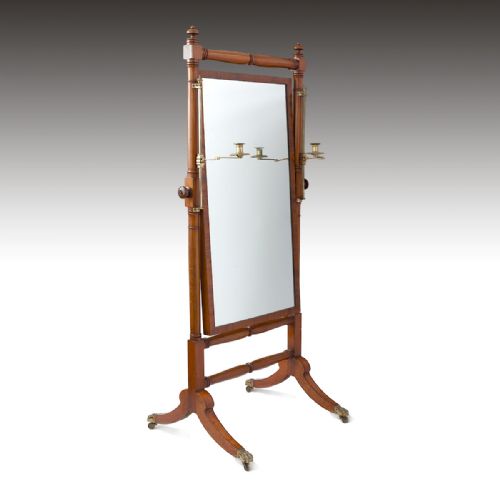
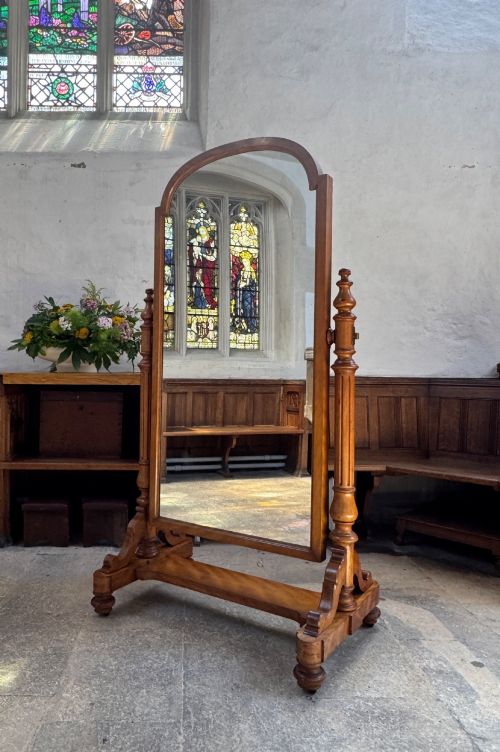
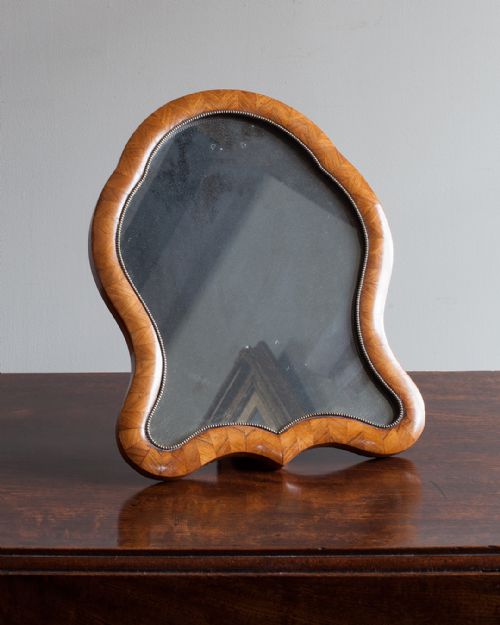
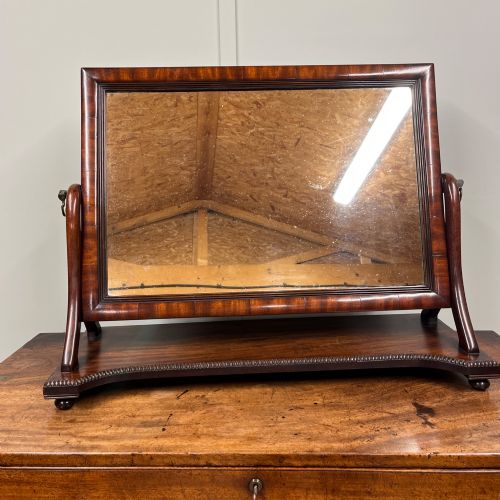
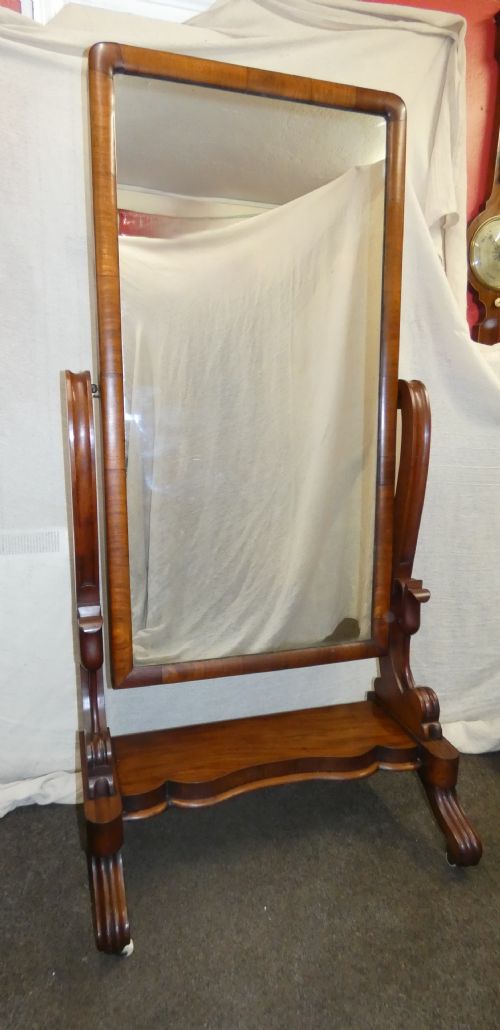
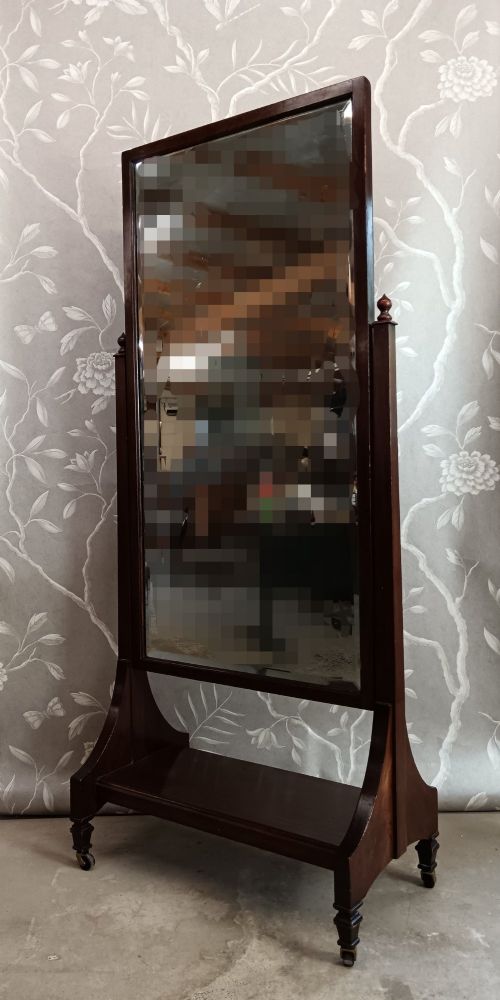
A freestanding swing mirror is designed to pivot between vertical uprights, offering adjustable angles for dressing or checking attire. These pieces appear in multiple formats across this page, ranging from large floor-standing cheval designs to compact table and toilet mirrors meant for placement on chests or dressing tables.
The selection draws on several distinct historical periods, with Victorian and nineteenth-century examples appearing most frequently alongside Regency, Georgian, and Edwardian pieces. Buyers frequently encounter tall mahogany cheval frames intended for full-length viewing, as well as smaller box and table mirrors equipped with fitted drawers.
Materials and Construction Methods
Makers relied heavily on solid and veneered timbers, with mahogany dominating the selection alongside walnut, oak, satin birch, kingwood, and satinwood. Brass fittings such as adjustable side screws, pivoting arms, and occasional candle holders provided the mechanical action needed to tilt the glass smoothly.
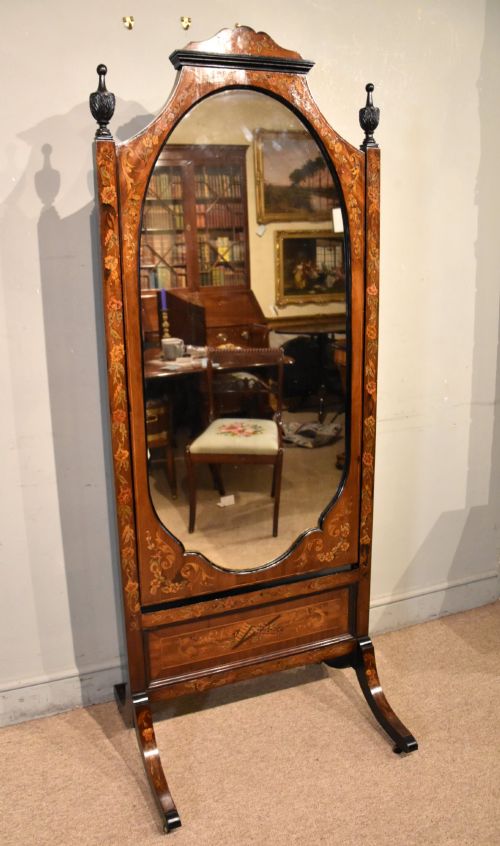
Frames demonstrate period woodworking techniques, including marquetry inlay, carved ornamentation, and turned supports. Glass plates are typically set within hinged or pinned frames that allow the user to alter the inclination of the reflective surface.
Freestanding Swing Mirror Retail Price Guide 2026
Typical asking prices for freestanding swing mirror among the pieces listed under this phrase on Sellingantiques today, from the lower quarter to the upper quarter. They describe what is for sale here now, not the wider market.
One listed piece is an antique boot maker's mirror, proving that even footwear artisans needed to check their appearance.
Distinctions in Quality and Execution
The distinction between standard domestic pieces and finer workshop productions rests on the selection of timber and the execution of carved details. Superior examples employ dense flame mahogany or finely figured satin birch, paired with substantial brass pivot hardware that holds the glass firmly at any angle without slipping.
Proportion and stability dictate the usefulness of a freestanding swing mirror. Finer pieces balance the weight of the glass plate securely against sturdy floor trestles or weighted box bases, while simpler utilitarian versions rely on lighter framing and straightforward turned uprights.
Waring and Gillow·Gillow
The Freestanding Swing Mirror Glossary
- Cheval mirror
- A large, floor-standing swing mirror designed for full-length viewing. The tall frame is supported by four legs or trestle feet.
- Toilet mirror
- A smaller swing mirror built to sit upon a dressing table or chest. Many incorporate small drawers within the base.
- Flame mahogany
- A decorative veneer cut from timber where the grain creates a distinctive flickering flame pattern. This material was favoured on high-status nineteenth-century pieces.
- Brass pivot
- The metal screw or pin set into the sides of the frame that allows the glass to swing freely. High-quality versions include tightening mechanisms.
Freestanding Swing Mirror: Frequently Asked Questions
Where should I place a freestanding swing mirror?
Floor-standing cheval versions suit bedrooms and dressing rooms where full-length sightlines are practical.
Smaller table and toilet variants sit comfortably atop sturdy chests of drawers or dedicated dressing tables.
How do I adjust the tension on a swing mirror?
Most frames use brass side screws or pivot pins that can be gently tightened by hand or with a suitable tool.
This adjustment restores friction so the mirror stays at the desired angle during use.
Are these mirrors easy to move around?
Tabletop mirrors lift easily between rooms, while large floor-standing cheval mirrors require two people to relocate safely due to their height and weight.
Care should be taken to support both the frame and the heavy glass plate during any movement.
How can I tell a Victorian mirror from a Regency one?
Regency frames often display sharper architectural lines, brass stringing, and formal classical proportions dating from the early nineteenth century.
Victorian pieces frequently feature heavier turned supports, carved mahogany frames, or lighter satin birch finishes from the later decades.