

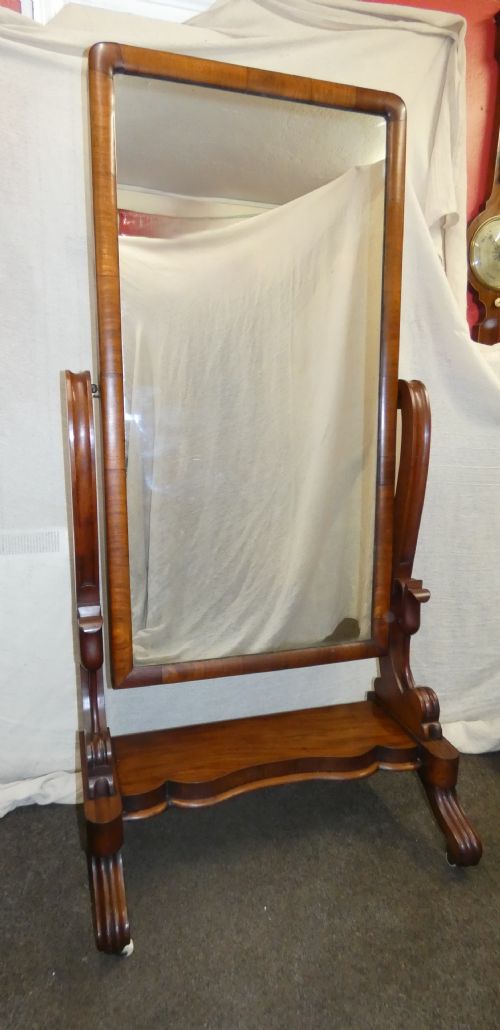


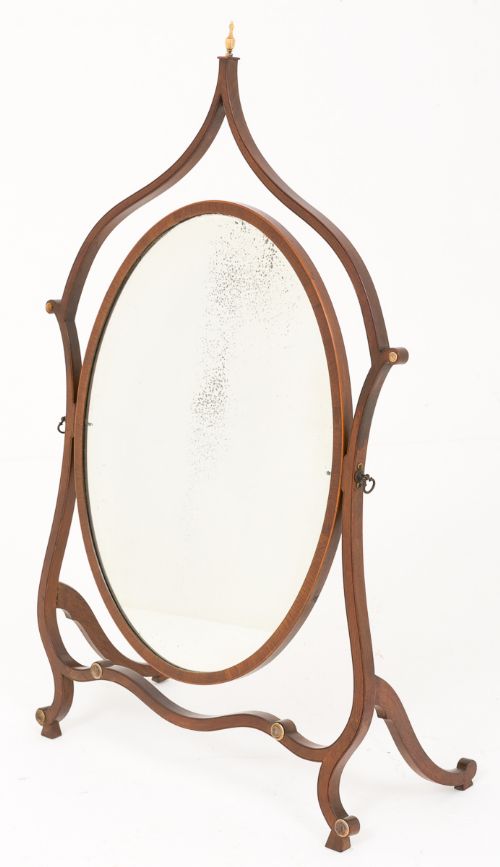


Carved Wooden Cheval Mirror
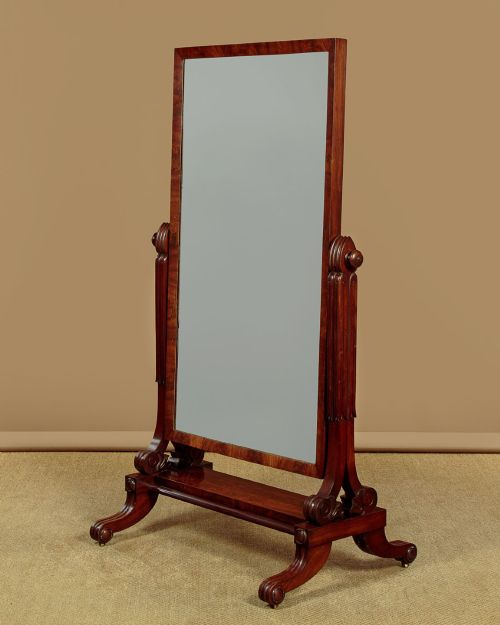
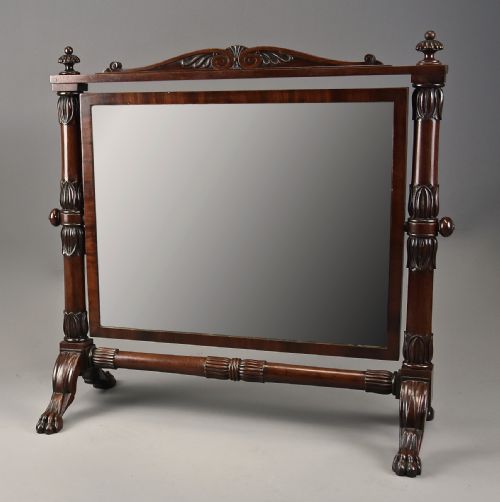
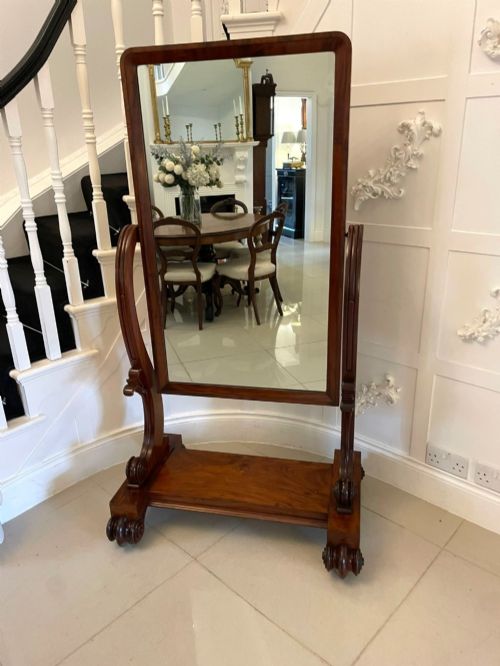
A carved wooden cheval mirror is a freestanding full-length glass framed to tilt, offering elegance and utility in equal measure.
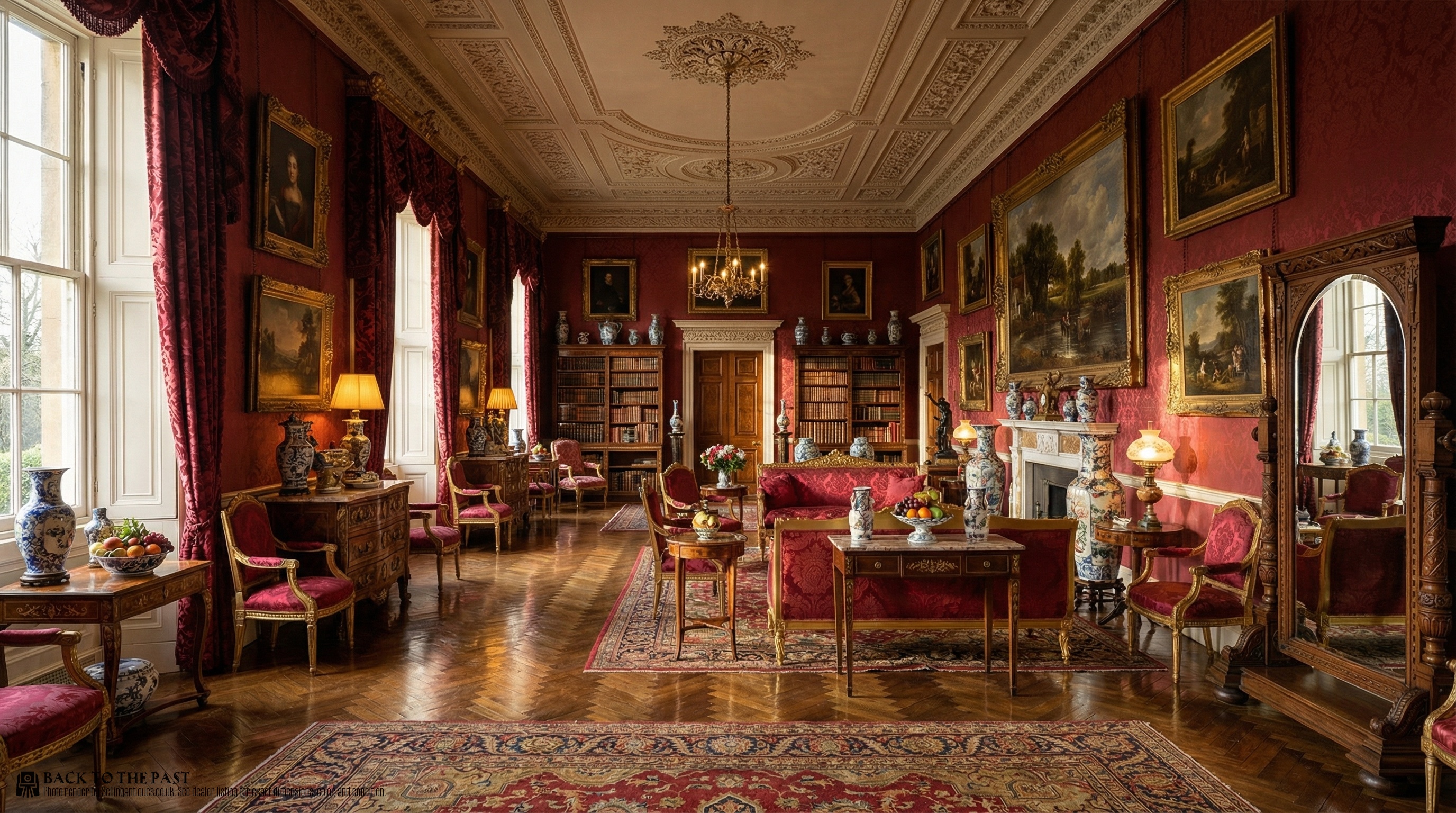
Carved Wooden Cheval Mirror
A carved wooden cheval mirror stands upright on a frame with supporting legs, allowing the user to adjust the angle of the glass for full-length viewing. These pieces originate across the nineteenth and twentieth centuries, spanning periods from the Georgian era through to the Edwardian period and the Arts and Crafts movement.
Makers and designers drew upon established historical idioms, producing work in the manner of firms such as P & MA Nicholson alongside vernacular interpretations in oak, walnut, and mahogany.
Materials and construction
Makers utilised dense cabinet timbers including mahogany, Cuban mahogany, walnut, burr walnut, oak, and kingwood for structural frames and supporting standards. Brass fittings frequently secure the pivoting mechanism, allowing the mirror plate to tilt smoothly within its upright supports.
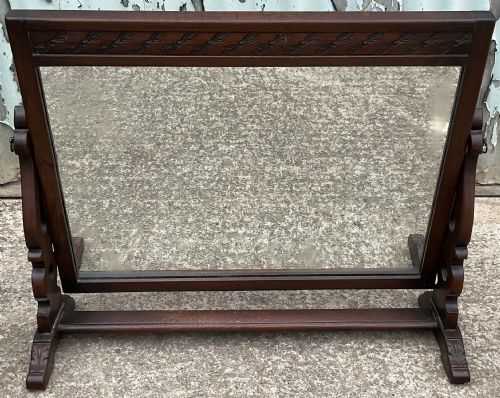
Carving technique ranges from crisp decorative moulding to elaborate applied ornamentation reflecting Louis XV style, Victorian Gothic, and Regency tastes. Glass plates are set into rebated frames, often accompanied by secondary woods and heavy mahogany or oak chassis construction.
Carved Wooden Cheval Mirror Retail Price Guide 2026
Typical asking prices for carved wooden cheval mirror among the pieces listed under this phrase on Sellingantiques today, from the lower quarter to the upper quarter. They describe what is for sale here now, not the wider market.
Current listings span the Georgian, Regency, Victorian, and Edwardian periods, constructed primarily in mahogany, walnut, and oak.
Assessing quality and execution
Superior examples distinguish themselves through the choice of timber, such as highly figured Cuban mahogany or burr walnut, paired with deeply undercut hand carving rather than shallow machine-milled decoration. The structural integrity of the pivoting arms and stability of the floor-standing frame determine how well the mirror holds its adjusted angle over time.
Proportion and execution of historical styles dictate distinction, with pieces reflecting specific design influences or exhibition quality standards showing greater refinement in joinery and brass hardware.
P & MA Nicholson
The Carved Wooden Cheval Mirror Glossary
- Cheval mirror
- A freestanding full-length mirror suspended on a frame with four legs or pillars. The term derives from the French word for horse.
- Toilet mirror
- A smaller dressing mirror designed to sit atop a chest of drawers or dressing table. These often feature miniature drawer bases.
- Cuban mahogany
- A dense, richly grained hardwood native to the Caribbean, heavily utilised in high-status furniture during the eighteenth and nineteenth centuries.
- Burr walnut
- Timber taken from the wart or growth on a walnut tree, yielding complex swirling grain patterns prized for decorative veneer work.
- Pivoting mechanism
- The set of brass screws, pins, and plates connecting the mirror frame to its upright supports, allowing the glass to tilt.
Carved Wooden Cheval Mirror: Frequently Asked Questions
How do I date a cheval mirror?
Dating relies upon timber selection, hardware construction, and stylistic clues inherent to the frame and feet. Earlier Georgian and Regency models often display lighter mahogany frames and delicate brass pivot screws.
Victorian and later nineteenth-century examples tend toward heavier proportions, deeper carving, and occasionally burr walnut or oak veneers. Examining the backboards and secondary timbers provides further confirmation of the period.
Are toilet mirrors the same as cheval mirrors?
Toilet mirrors are designed for tabletop placement on top of dressing chests, whereas cheval mirrors are tall, freestanding floor models built to show a full-length reflection.
Both utilise pivoting glass frames supported by upright standards, but their scale and intended placement in a room differ entirely.
What woods were commonly used?
Mahogany is the predominant timber found across these pieces, frequently appearing as Cuban mahogany in finer nineteenth-century examples. Oak, walnut, burr walnut, and kingwood also feature prominently.
Secondary woods like pine or mahogany are often used for internal framing and drawer linings on dressing table variants.
How do I maintain the pivoting glass?
The brass pivot screws on either side of the mirror frame regulate the tension that holds the glass at an angle. Period brassware should be handled with care when adjusting the tension.
Lubricants are generally avoided to prevent staining the surrounding wood and fabric backing.