

Framed Sporting Art
Framed sporting art brings together the energy of the field and the stable through historic oils, watercolours and prints.
Framed Sporting Art
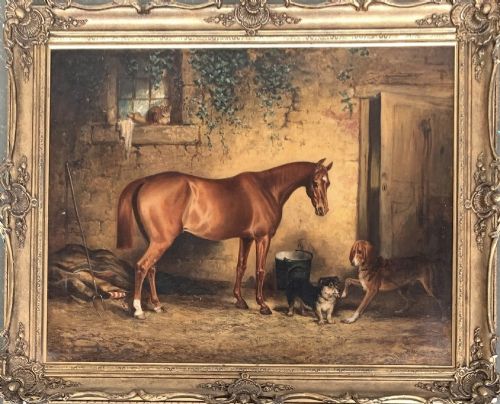
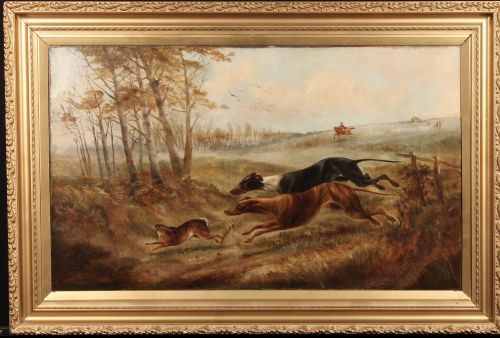
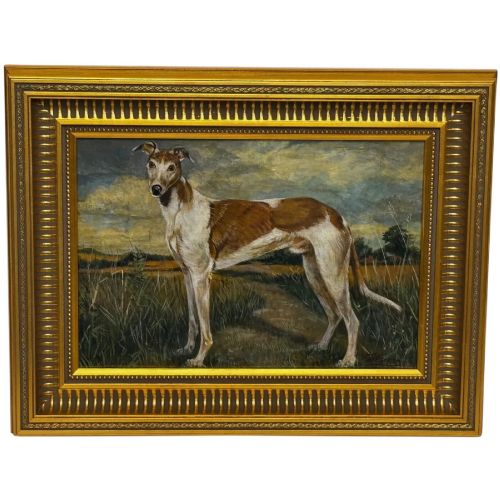
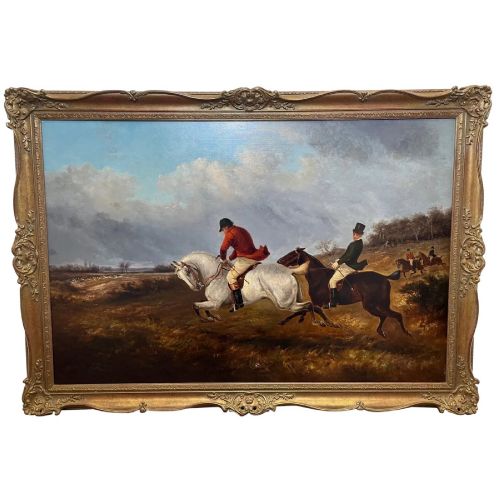
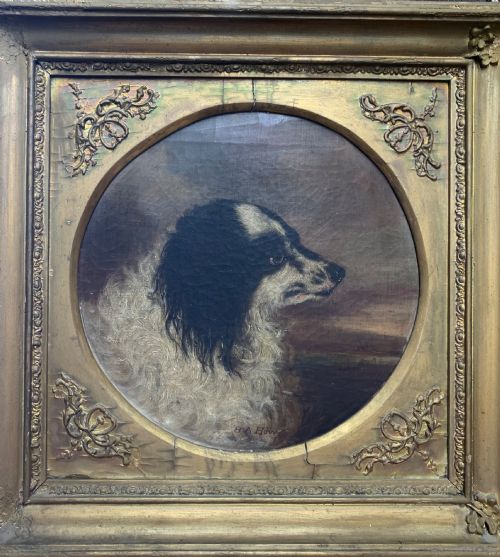
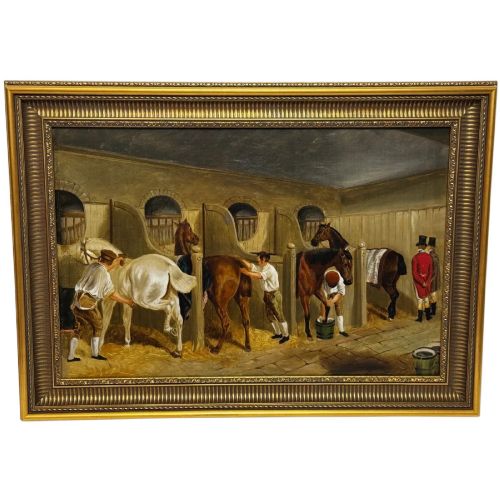
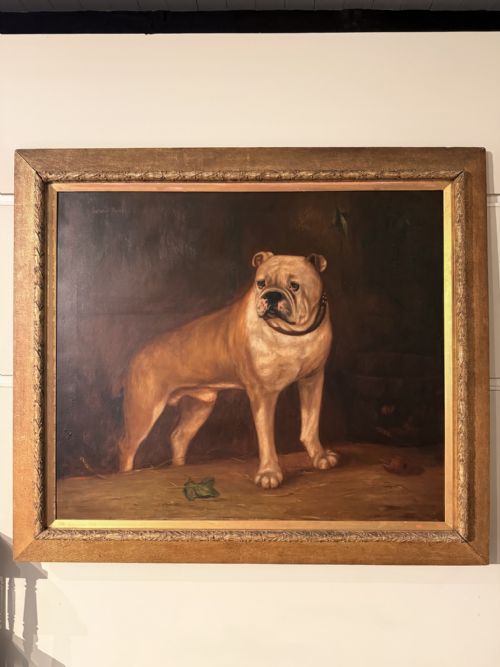
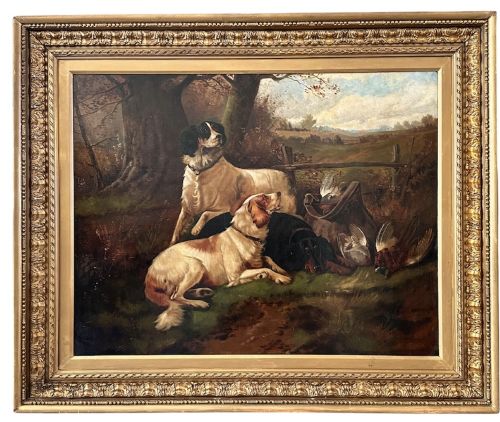
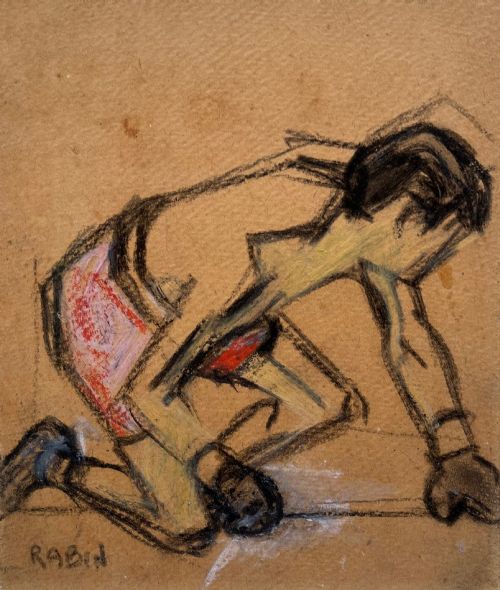
Framed sporting art captures horses, dogs, hunting, and racing across canvas, paper, and panel. These pieces reflect the British countryside and traditions of the nineteenth and twentieth centuries.
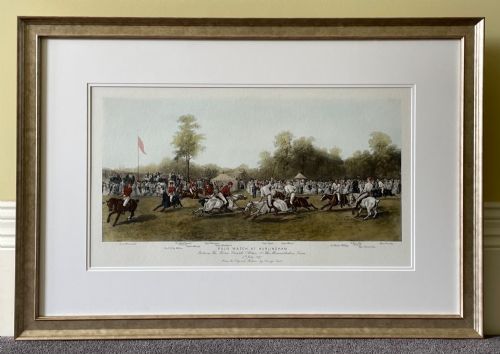
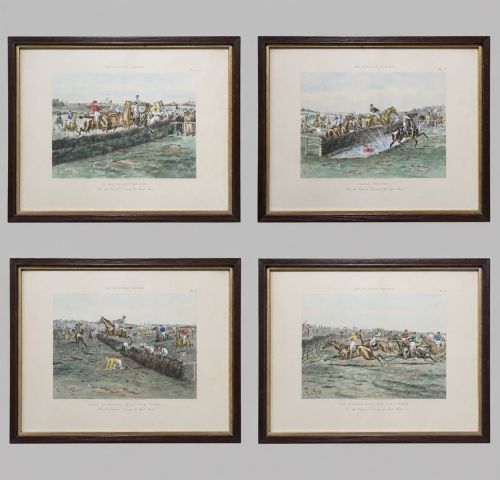
The selection ranges from detailed oil paintings on canvas to framed lithographs and watercolours under glass. Victorian and Edwardian works dominate, alongside mid-century interpretations of equestrian and field subjects.
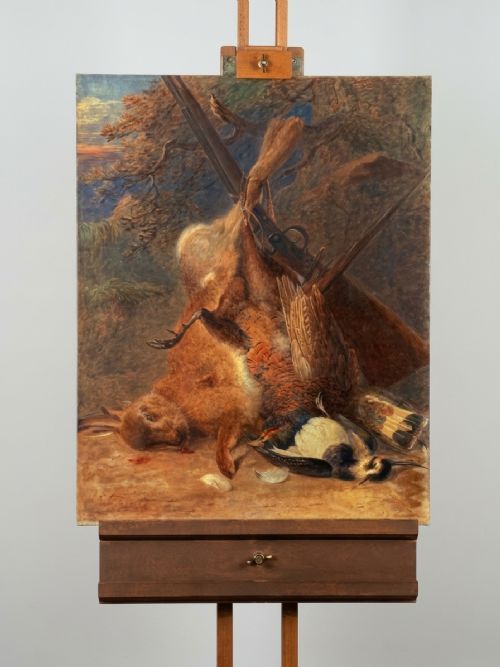
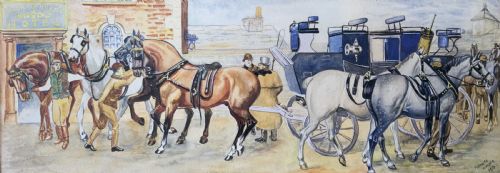
Buyers encounter everything from large coaching oils in giltwood frames to intimate watercolours of game birds. Each piece documents a specific pursuit, animal portrait, or race day scene.
Materials and techniques
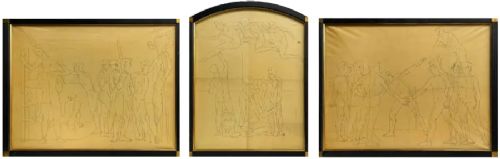
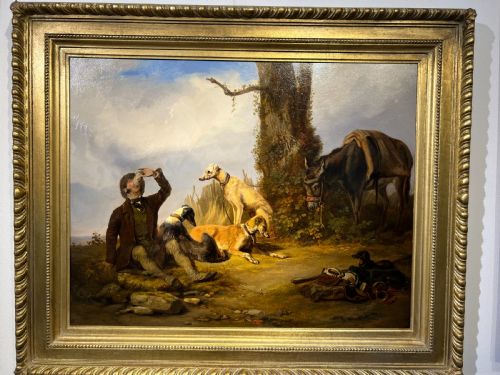
Artists painted in oil on canvas or worked in watercolour and pastel on paper, often protecting delicate works beneath glass. Frames utilise wood, giltwood, and gold leaf to house the composition.
Printmakers employed lithography, aquatint, and engraving to reproduce popular works by sporting artists for a wider audience.
Assessing quality
Quality rests upon the artist's ability to render the anatomy and movement of animals with precision. Hand-painted oils by recorded painters command attention for their depth, brushwork, and proportion compared to standard prints.
The preservation of the paper or canvas and the originality of the frame influence the character of the piece. Period frames matching the age of the artwork elevate the overall presentation.
Thomas Smythe·Sir Edwin Henry Landseer·George Wright·William Albert Clarke·Henry Barraud·Fred Fitzpatrick·Ernest Payne·Edward Priestley·George Rankin·Philip Rideout·Thomas Walker Bretland·John Frederick Herring Snr·John Emms·John Ferneley Senior
The Framed Sporting Art Glossary
- Aquatint
- A printmaking technique that produces tonal effects resembling watercolour washes. It was frequently used for nineteenth-century sporting prints.
- Giltwood
- Wood carved and coated with gold leaf or gilt paint. This material forms the ornate frames typical of Victorian and Edwardian paintings.
- Lithography
- A planographic printing process using a flat stone or metal plate. Artists utilised this method to produce detailed colour or monochrome sporting scenes.
- Canvas
- Heavy woven fabric stretched across a wooden frame as a support for oil paint. It remains the primary surface for historic animal and hunting portraits.
Framed Sporting Art: Frequently Asked Questions
How do I identify a period sporting oil painting?
Examine the canvas preparation, stretcher frames, and pigments used by the artist. Historic works often show age-appropriate craquelure and bear signatures or labels on the reverse.
Subject matter and attire also offer strong clues to the decade in which the piece was created.
Are framed prints as valuable as original paintings?
Original oil paintings involve unique brushwork and command higher interest than mass-produced prints. However, scarce period lithographs and aquatints by notable publishers hold significant collector appeal.
Condition and historical context remain vital for both mediums.
How should I hang and care for antique sporting art?
Keep framed works away from direct sunlight and damp environments to protect paper, canvas, and gilt frames. Stable indoor temperatures prevent the cracking of old oil paint.
Use secure wall fixings suited to the substantial weight of large wood and giltwood frames.
What subjects are most common in British sporting art?
Horses, hunting dogs, racing scenes, and shooting parties appear frequently across nineteenth and twentieth-century works. These themes reflect the rural pursuits popular during the Victorian and Edwardian eras.
Artists often detailed specific named animals and local racecourses.