

Framed Religious Wall Art
These framed religious wall art pieces span centuries of devotional painting, engraving, and textile work designed to bring sacred narrative into domestic spaces.
Framed Religious Wall Art
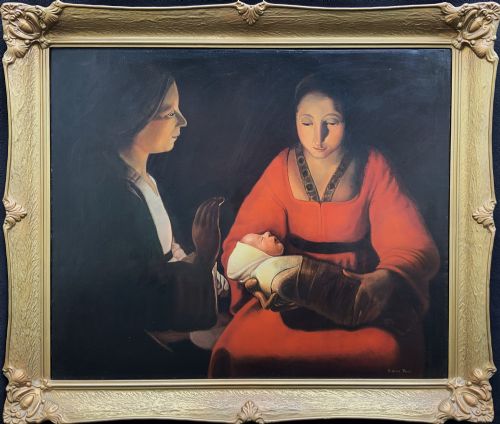
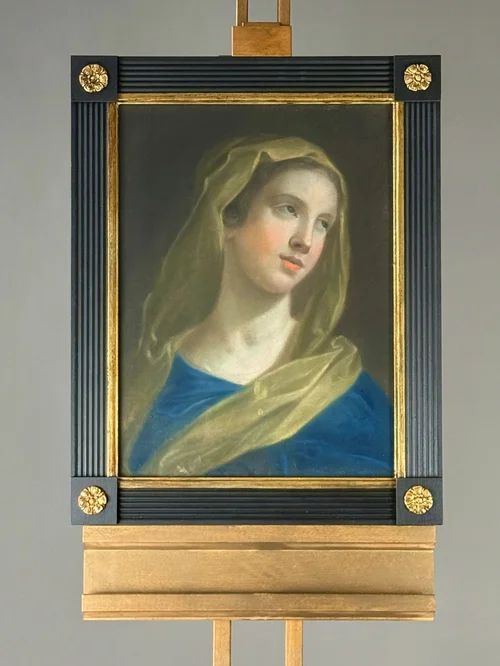
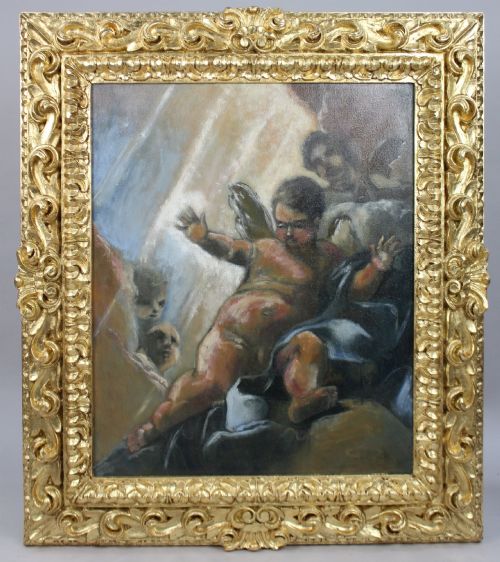
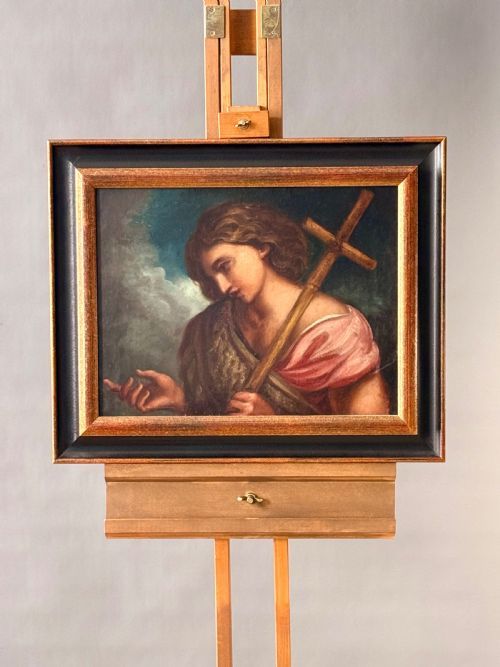
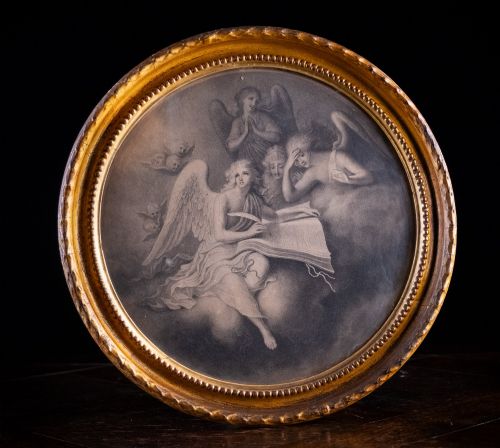
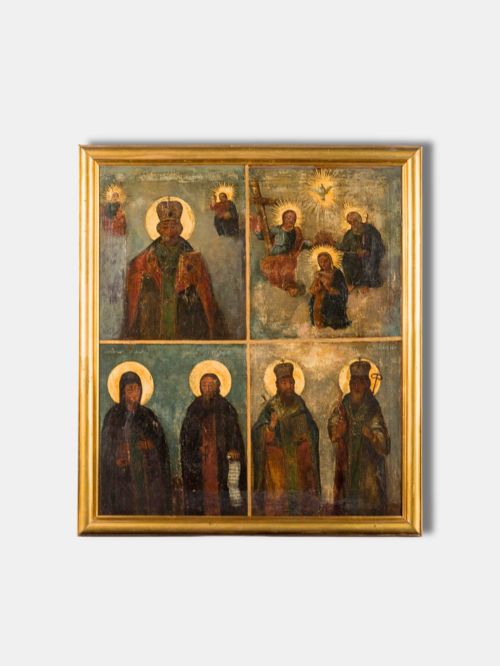
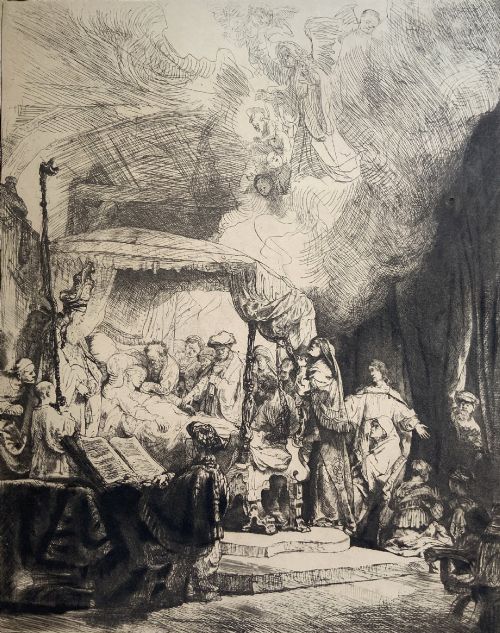
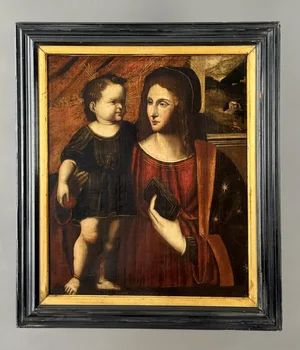
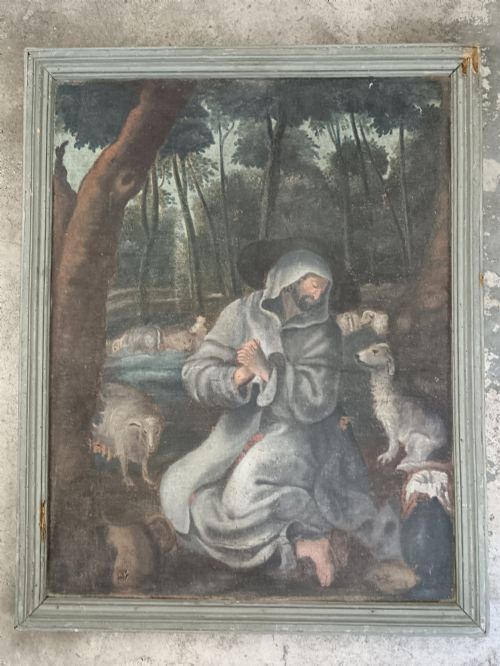
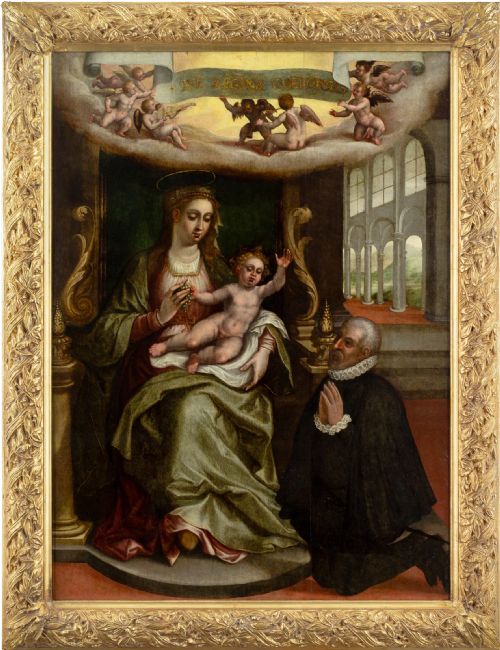
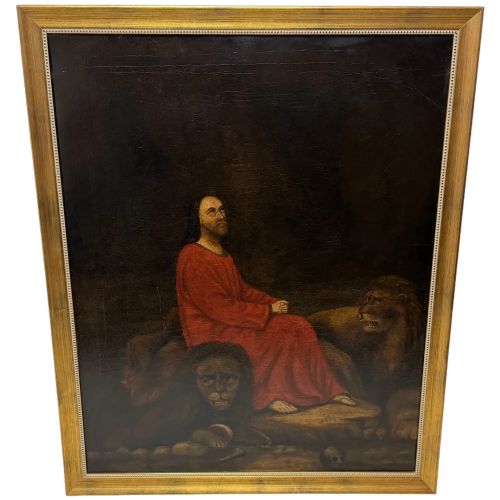
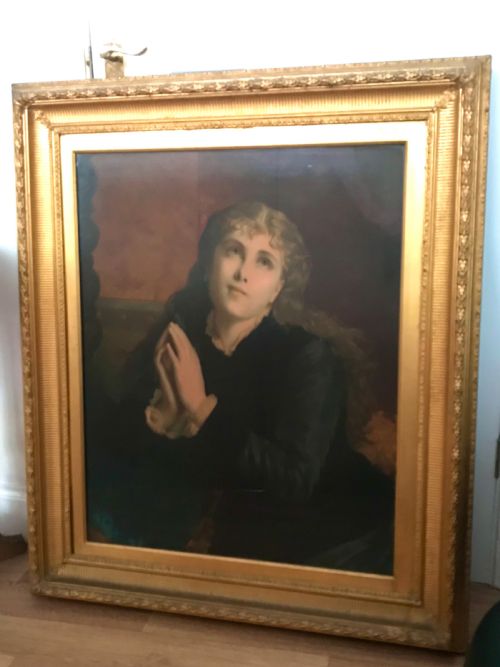
Buyers seeking framed religious wall art encounter a diverse selection of devotional imagery spanning the sixteenth through the twentieth centuries, originating primarily from British, Italian, Spanish, and Russian workshops. The selection centres on oil paintings, pastels, tempera icons, engravings, etchings, silk embroidery panels, and porcelain plaques depicting biblical figures and saints.
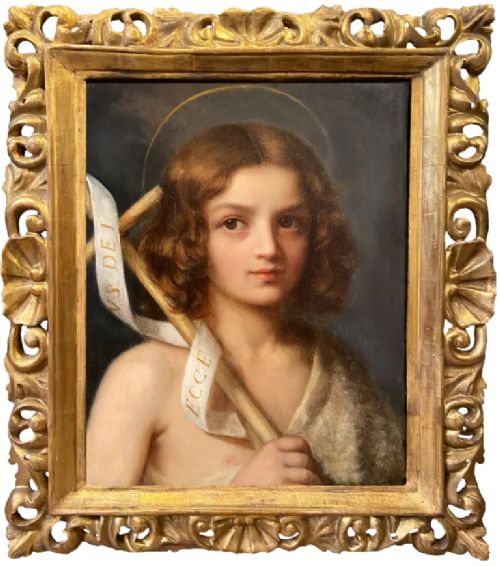
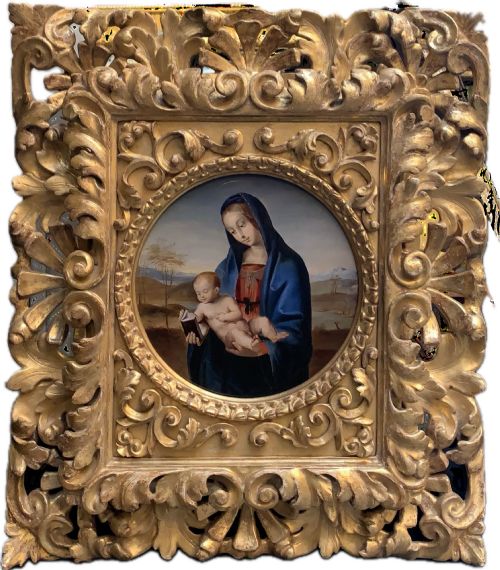
The pieces range from masterworks created in the Italian Renaissance and Baroque traditions to naïve provincial interpretations and later Victorian and Edwardian copies after Raphael and Correggio. Works often arrive set within period carved giltwood or oak frames that complement the devotional subject matter.
Materials and construction methods
Makers utilised traditional supports including canvas, mulberry wood, paper, and copper, applying oil paint, tempera, pastel, and gold leaf to render detailed sacred scenes. Reverse glass painting techniques and mezzotints required precise layering of pigments and inks to achieve depth and luminosity beneath protective glazing.
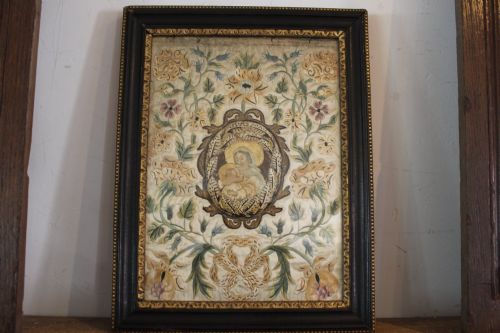
Textile and metal components appear in specialist pieces, utilising silk embroidery threads on fabric panels, hand-painted Limoges enamel on metal plaques, and embossed silver relief work. Frames were constructed from timber such as oak and carved wood finished with gold leaf gilding.
Materials range from mulberry wood manuscripts and mother of pearl to oil paint, tempera, and embossed silver.
Distinctions in quality and execution
Quality rests upon the skill of the draughtsmanship and the fluidity of the brushwork, distinguishing confident hands of regional schools from mechanical later reproductions or stiff provincial copies. The handling of drapery, facial expression, and anatomy reveals whether a work was produced by an accomplished master, a studio workshop, or a copyist.
The condition of the medium - whether oil paint, tempera, or delicate silk embroidery - dictates the visual impact of the piece. Superior examples retain their original pigments, gold leaf, and contemporary carved giltwood frames without heavy restoration obscuring the underlying surface.
Georges de La Tour·Sebastiaan Vrancx·Benedetto Luti·Miguel Barroso·Francesco Solimena·Costantino Frixione·Gaspar de Figueroa
The Framed Religious Wall Art Glossary
- Pentimento
- A visible trace of earlier painting beneath the layers of paint, showing where the artist changed their composition. This occurrence confirms the organic, evolving nature of an authentic old master work.
- Ex Voto
- A votive offering presented to a saint or divinity in fulfilment of a vow. These devotional objects are typically placed in sacred spaces to implore healing or give thanks.
- Mezzotint
- A printmaking process of the intaglio family where the plate is roughened to produce dark tones and scraped to create highlights. This technique allows for subtle gradations of light and shade.
- Tempera
- A permanent, fast-drying painting medium consisting of coloured pigment mixed with a water-binder such as egg yolk. It was widely utilised for icons and early panel paintings before oil paint became dominant.
Framed Religious Wall Art: Frequently Asked Questions
How do I date an old religious painting?
Dating relies upon examining the support materials, the preparation layers, and the style of the pigments used by the artist. Textile types, frame construction, and canvas weave also offer clear chronological markers.
Stylistic conventions and costume details provide further clues. Comparing the handling of the subject to dated works by regional schools helps narrow the period of creation.
What is a reverse painting on glass?
A reverse painting on glass involves applying pigment directly onto the rear surface of a glass panel. The artist paints details first so they appear correctly when viewed through the front.
This delicate technique creates a glossy, luminous finish that protects the pigments from atmospheric damage. Georgian and eighteenth-century makers frequently utilised this method for devotional imagery.
Are Russian icons painted on wood?
Russian icons are traditionally painted in tempera and gold leaf upon wooden panels prepared with gesso. The wood provides a stable foundation for the complex layering of sacred iconography.
These panels often feature built-in raised borders and designated areas for metal rizas or coverings. The reverse and edges frequently display the natural grain of the timber support.
How should I hang framed religious art?
Framed religious art requires stable interior wall spaces away from direct sunlight and excessive humidity shifts. Heavy giltwood frames and oil paintings need secure fixings suited to the weight of the timber and glass.
Maintaining a consistent room temperature protects delicate materials such as silk embroidery, tempera, and paper engravings. Proper placement ensures the artwork remains secure while allowing clear visibility of the surface details.