





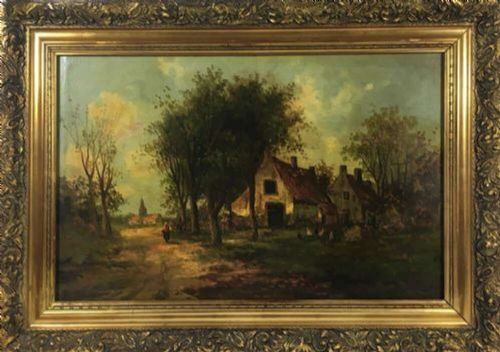

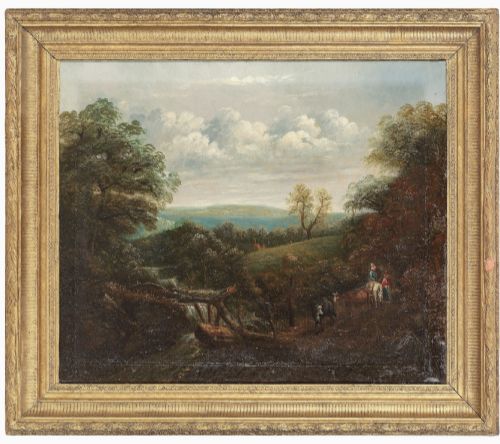
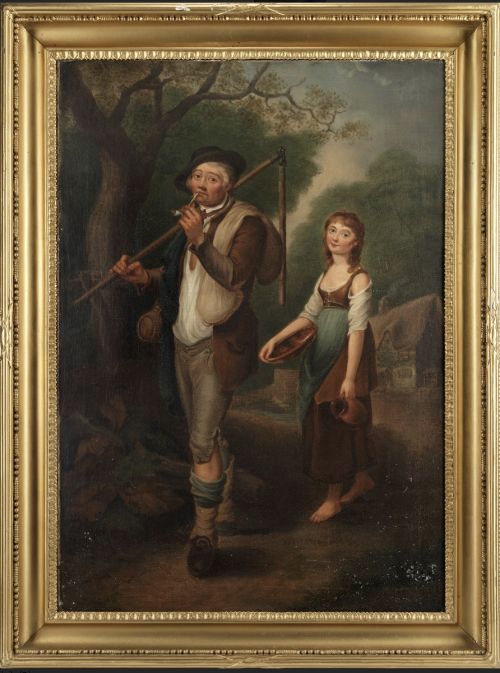
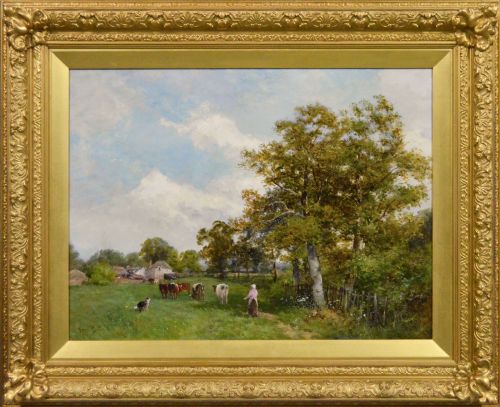
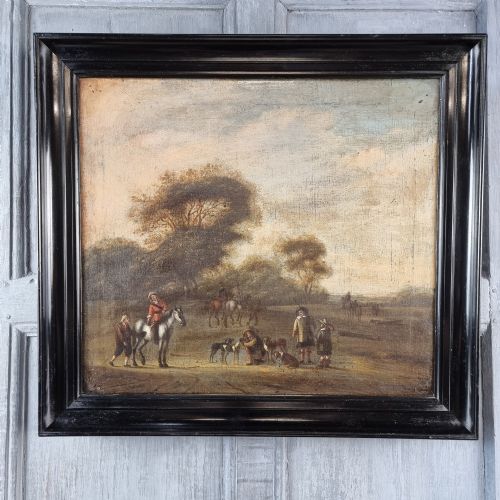
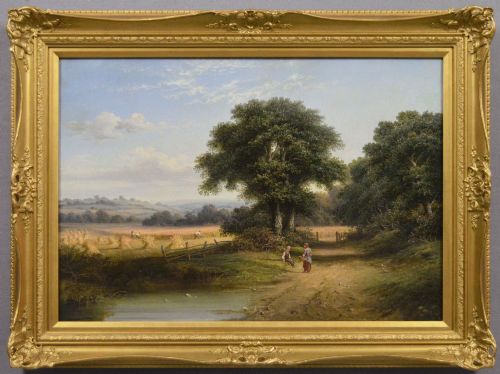
Framed Pastoral Landscape Art
Framed pastoral landscape art brings the quiet beauty of the British countryside inside through oil paintings captured in wood and gesso frames.
Framed pastoral landscape art
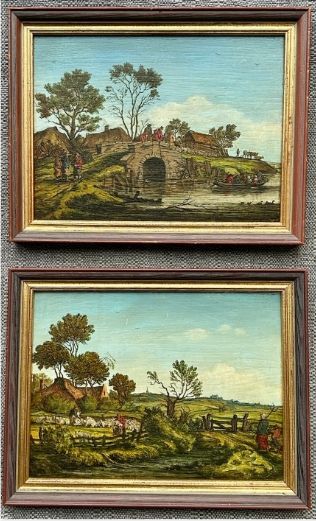
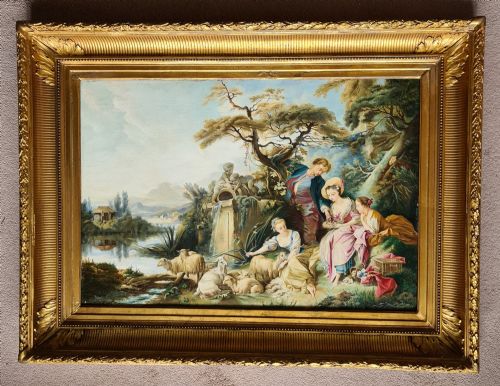
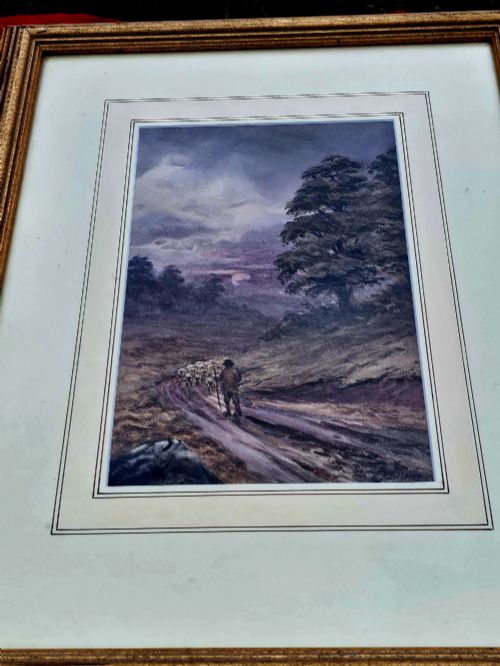
Framed pastoral landscape art captures rural life, farming scenes, and river views across the nineteenth and twentieth centuries. These works record sheep resting in fields, haymaking, and figures harvesting by riversides.
The pieces on this page span the Victorian era, British Impressionism, and mid-century realism. They include both intimate small works and larger canvases produced by named painters and regional British schools.
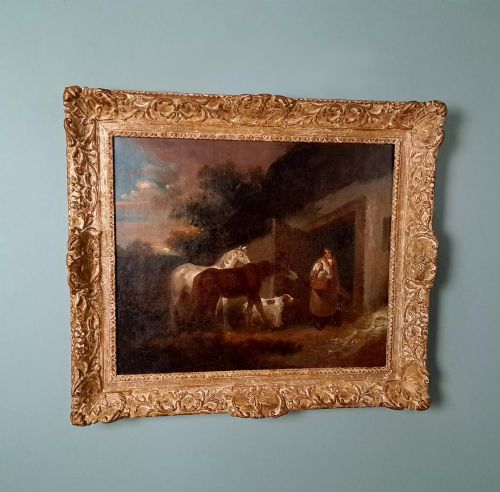
Makers and followers working in oil on canvas created these views using traditional techniques. Each painting retains its period frame, often finished in gilt or gold leaf.
Materials and Construction
Artists painted these pastoral scenes using oil paint applied to woven canvas supports. Brushwork ranges from the detailed realism of the nineteenth century to the looser touches of British Impressionist painters.
Frames combine structural wood with moulded gesso ornaments to hold the canvases securely. Many frames retain their original gilt or gold leaf finishes, adding warmth and reflection to the composition.
Retail Price Guide 2026
Typical UK retail prices for framed pastoral landscape art, calculated from the Sellingantiques database of over a million retail prices indexed since 2003. This retail price guide relies exclusively on Sellingantiques data; no external sources or auction records are used, so the figures do not describe the wider market.
Materials recorded across the listings include oil, canvas, wood, gesso, gilt, oil paint, and gold leaf.
Markers of Quality
Quality rests in the handling of light, atmosphere, and the convincing anatomy of livestock and figures within the landscape. Masterly oil paintings show confident brushwork and a balanced composition that draws the eye into the depth of the field.
The integrity and originality of the frame elevate a piece significantly. Frames featuring well-preserved gesso moulding and authentic gilding complement the oil painting far better than later replacements.
Owen Bowen·Eugene Verboeckhoven·Herbert Royle·Henry H Parker·A Davis·Henry J Kinnaird·Charles Duval
The Framed Pastoral Landscape Art Glossary
- Gesso
- A plaster-like mixture applied to wooden frame mouldings before gilding or painting. It provides a smooth surface for intricate decorative details.
- British Impressionism
- A painting style focusing on everyday rural subjects and natural light. Artists adopted looser brushstrokes to capture transient weather and atmospheric effects.
- Pastoral
- Relating to the countryside, farming, and rural life. These scenes typically feature fields, livestock, rivers, and agricultural labourers.
- Gilt
- Covered thinly with gold leaf or gold paint. This finish enhances the decorative impact of the picture frame.
Frequently Asked Questions
How do I date these landscape paintings?
Dating relies on stylistic evidence, costume details of figures, and the construction methods of the canvas stretcher and wooden frame. Nineteenth-century works often feature tighter realism, while twentieth-century pieces show freer impressionistic brushwork.
Examining the canvas backing and any inscriptions or signatures helps place the artwork within a specific period from the 1860s to the mid-century.
Are these paintings on canvas or panel?
The works recorded here are executed in oil paint upon canvas supports. Canvas allowed artists to create both intimate studies and large-scale pastoral scenes.
The woven fabric is stretched over a wooden frame, which sits inside the decorative outer frame of wood and gesso.
How should I clean a gilded frame?
Gilded frames require gentle dusting with a soft, dry brush to remove surface particles. Avoid liquid cleaners, water, or chemical solvents, which can damage the delicate gold leaf and gesso surface.
Professional conservators should handle any repairs to cracked or missing gesso ornamentation on antique frames.
What subjects are typical of pastoral art?
Typical subjects include farming activities such as haymaking and harvesting crops next to rivers. Sheep resting in fields and woodland river scenes also feature prominently in these rural compositions.
Artists aimed to evoke the peaceful rhythm of British country life during the Victorian and mid-century eras.