


Framed Oriental Bird Art
Framed oriental bird art brings together centuries of delicate handwork, silk embroidery and painted pith paper depicting natural subjects in traditional styles.
Framed Oriental Bird Art
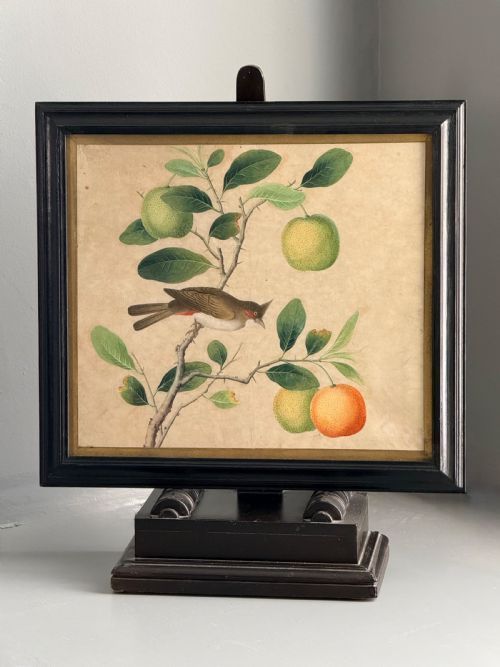
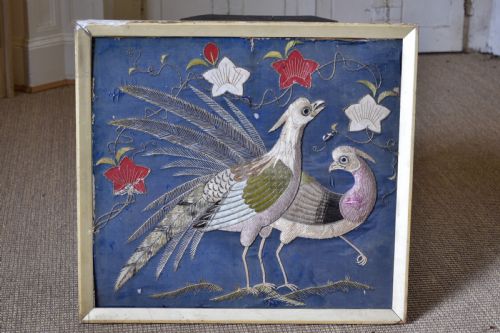
Buyers seeking framed oriental bird art encounter wall plaques, textile panels, mirrors and paintings spanning the eighteenth, nineteenth and twentieth centuries. These pieces reflect Chinese Export, Japanese Meiji and Chinoiserie traditions, often featuring avian subjects among branches and foliage.
The selections on this page most commonly include nineteenth-century silk embroideries, lacquered panels with mother-of-pearl inlay and gouache paintings on pith paper. Such works range from intimate roundels to large wall hangings, capturing garden birds, pheasants, geese and phoenixes in detailed compositions.
How they were made
Materials span delicate silk, pith paper and gouache alongside wood, glass and ebonised frames. Artisans built panels using lacquer and embellished surfaces with mother of pearl and abalone inlay to render birds and foliage with distinct depth.
Needlework utilises fine silk threads for embroidered garden birds and mandarin ducks, while painters applied gouache and watercolour directly onto pith paper or silk grounds. Reverse painting on glass and carved lacquer techniques complete the range of traditional Asian workshop methods.
The site listings feature works spanning the eighteenth to twentieth centuries, executed in silk, lacquer, pith paper and gouache.
What varies in quality
Quality rests in the precision of the handwork, whether the delicate stitching of a silk pheasant or the exact placement of mother-of-pearl inlay on lacquered panels. Finer examples maintain crisp brushwork in gouache and watercolour without fading or pigment loss.
The integrity of the frame and backing materials also separates standard works from exceptional items, particularly when original ebonised wood or reverse-painted glass surrounds survive intact. Superior execution is evident in the naturalism of the bird plumage and the complexity of the botanical background.
The Framed Oriental Bird Art Glossary
- Pith paper
- A delicate material formed from the pith of the tetrapanax papyrifer plant, commonly used in the eighteenth and nineteenth centuries for gouache paintings.
- Gouache
- An opaque water-based paint that provides dense, matte colour and fine detail in historical Asian paintings.
- Chinoiserie
- A Western stylistic tradition reflecting Chinese artistic motifs, frequently blended with European framing and manufacture.
- Meiji Period
- A Japanese historical era lasting from eighteen sixty-eight to nineteen twelve, known for refined decorative arts including silk textiles and lacquered roundels.
- Reverse painted mirror
- A technique where the design is painted directly onto the back of a glass panel so the image is viewed through the front.
Framed Oriental Bird Art: Frequently Asked Questions
What periods do these pieces date from?
The listings encompass works from the eighteenth, nineteenth and twentieth centuries. Dates range from early pieces created around eighteen hundred up to mid-century examples from nineteen fifty.
Specific periods represented include the Meiji era and various nineteenth-century Chinese export styles. Each era utilises traditional techniques characteristic of its origin.
What materials were used?
Artisans utilised silk, pith paper, gouache, watercolor and lacquer on wood. Many panels incorporate mother of pearl and abalone inlay to render foliage and birds.
Frames typically consist of wood or ebonised wood, occasionally housing reverse painted glass. Textiles rely on fine silk thread embroidery.
How were these artworks displayed?
These pieces were created as wall art, wall plaques, framed textiles and wall mirrors for interior decoration. Large wall hangings and pairs of lacquered panels were designed to adorn principal rooms.
Smaller roundels and framed paintings offered intimate focal points for studies and parlours. Many retain their original framing formats.
What subjects besides birds appear?
Compositions frequently incorporate natural elements such as plum blossom, branches, foliage and gardens alongside the avian figures. Pheasants, mandarin ducks, geese and phoenixes form the central subjects.
Floral and botanical details provide the natural setting for the birds, reflecting traditional East Asian artistic themes.