


Chinese Bird and Flower
Chinese bird and flower pieces bring natural splendour indoors through finely rendered avian and botanical scenes across porcelain, bronze, silk, and wood.
Chinese Bird and Flower
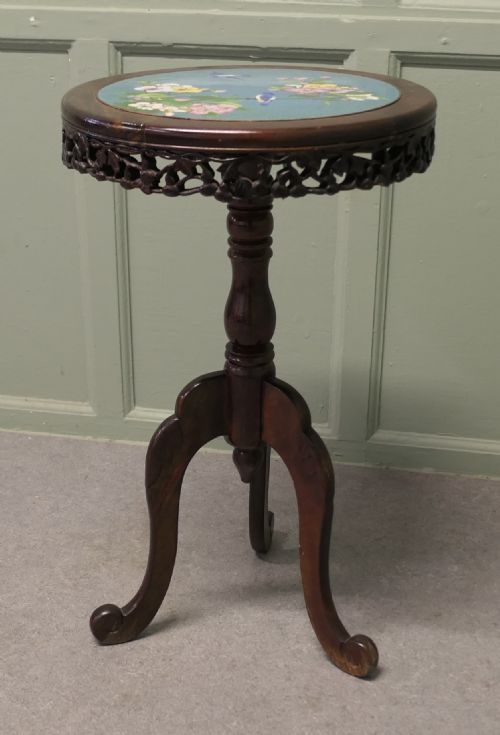
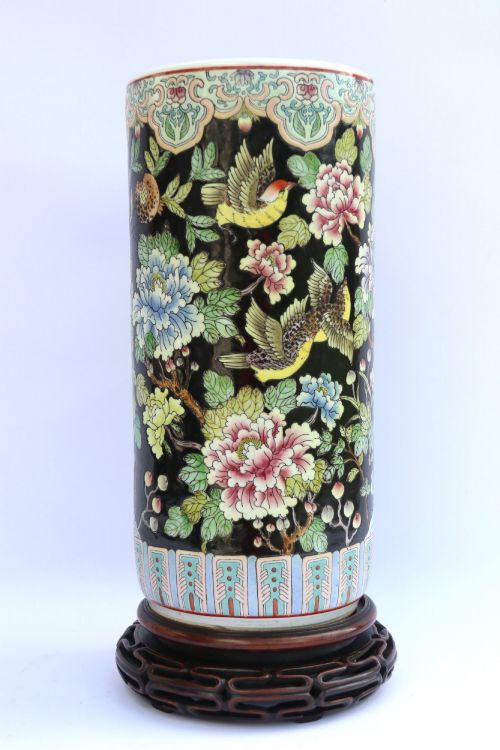
Chinese bird and flower works encompass decorative vessels, painted silk panels, and carved furniture spanning the nineteenth century through the mid-twentieth century. The selection ranges from famille rose jars and bronze vases to framed watercolour paintings and cupboards decorated in the Chinoiserie style.
Buyers encounter distinct traditional forms, including wine tables, rose medallion vases, and hand-painted wall screens mounted in hardwood frames. These objects reflect both Qing Dynasty traditions and later export aesthetics focused on natural motifs.
How they were made
The physical construction combines cast bronze, hard-paste porcelain, and carved hardwood structures often paired with delicate cloisonné enamel work. Artisans utilised brass accents and polished timber stands to complement metal vessels and ceramic jars.
Surface decoration relies on meticulous hand-painting on silk or porcelain surfaces, alongside fine silk embroidery and watercolour pigment application. Pigments capture plumage and flora with precise brushwork, while bronze bowls and vases display heavy cast forms.
A heavy bronze bowl tipped the scales at two and a half kilos, proving that birds and flowers could double as doorstops.
What varies in quality
Execution of detail separates standard commercial items from superior examples, particularly in the brushwork of plumage and the intricacy of floral rendering on porcelain and silk. The crispness of carved wooden frames and the density of bronze casting also determine the caliber of a piece.
Material integrity heavily influences overall distinction, visible in the preservation of original enamel work, unbroken silk grounds, and the quality of fitted hardwood stands. Pieces bearing period marks or retaining untouched original surfaces command greater attention from collectors.
The Chinese Bird and Flower Glossary
- Famille Rose
- A palette of opaque enamels dominated by pink or rose colours, introduced during the Qing Dynasty. This technique allows for subtle tonal gradations in botanical and avian subjects.
- Cloisonné
- An enamel technique where metal wire forms compartments on a brass or bronze base, which are then filled with coloured paste and fired. The resulting surface displays crisp linear boundaries.
- Chinoiserie
- European artistic styles reflecting Chinese motifs and decorative techniques, prevalent in furniture and interior decoration. This aesthetic reinterprets traditional subjects through Western craftsmanship.
- Rose Medallion
- A distinct style of Chinese export porcelain featuring segmented panels filled with figures, birds, and flowers in bright enamels and gilt. This decoration covers the visible ceramic surface.
- Hardwood
- Dense timber species such as Zitan or Huanghuali used for stands, cabinets, and frames. These woods take a fine polish and provide structural stability.
Chinese Bird and Flower: Frequently Asked Questions
How do I care for silk paintings?
Silk textiles require protection from direct sunlight to prevent fading of the delicate watercolours and embroidery threads.
Keep these pieces in stable humidity environments to avoid warping the wooden frames or degrading the fabric ground.
What periods do these pieces date from?
The selection spans the nineteenth century through the mid-twentieth century, including Qing Dynasty examples and later export pieces.
Specific dates range from nineteenth-century bronzes to 1950s paintings on paper.
Are wooden stands original?
Many porcelain vases and decorative vessels retain their original hardwood stands, which were custom-carved to fit the base of the object.
These fitted mounts provide secure display bases for heavy ceramic and bronze forms.
How do I identify Cloisonne?
Cloisonné pieces feature raised metal wires soldered onto a bronze or brass body to create cells that hold coloured enamel.
Run a finger gently across the surface to feel the distinct grid of thin metal partitions dividing the fired colours.