


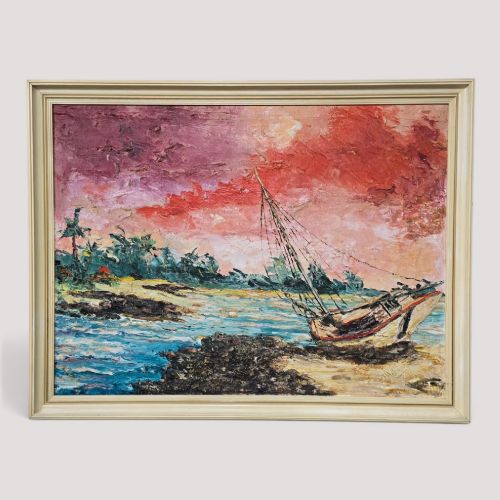
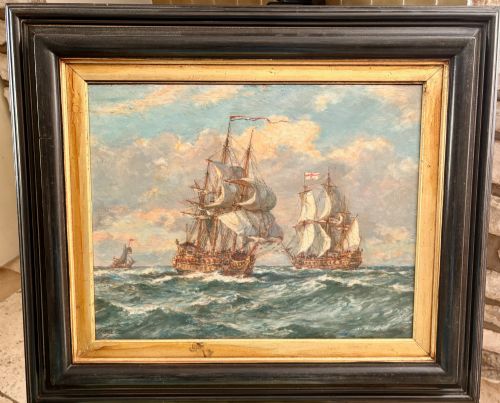
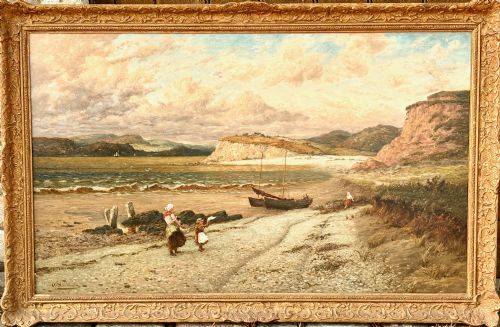
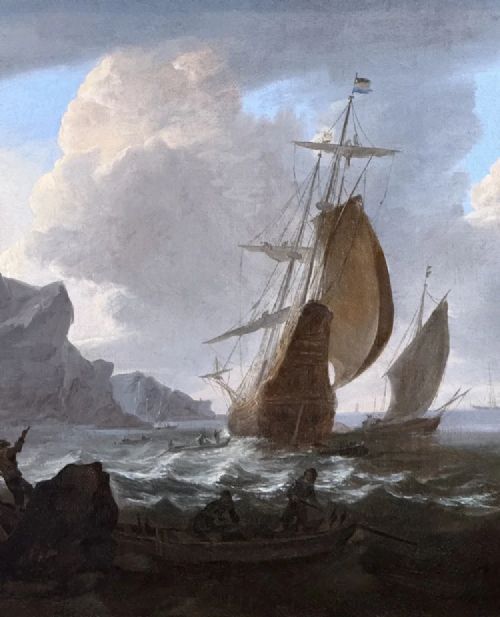
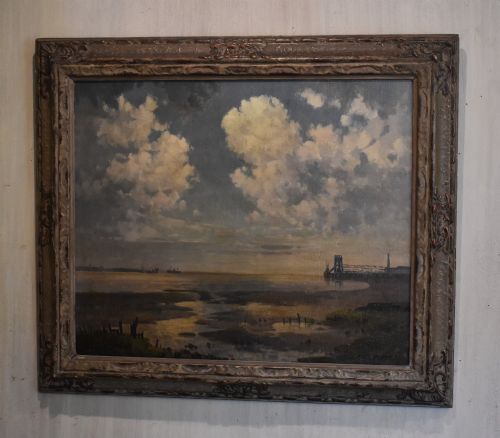
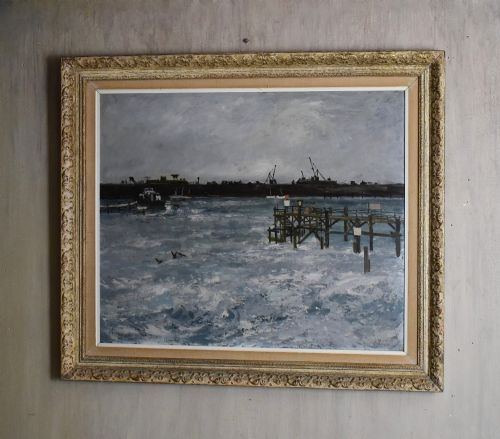
Framed Oil Canvas Seascape
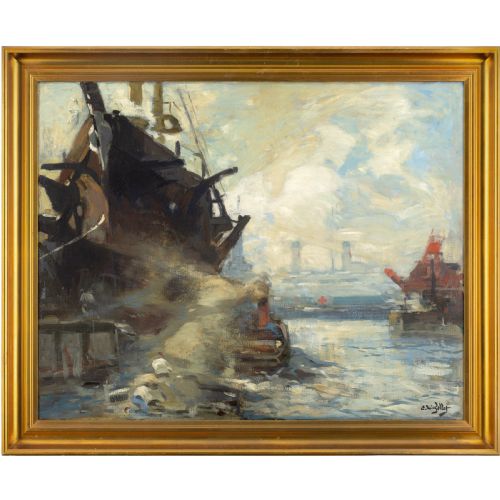
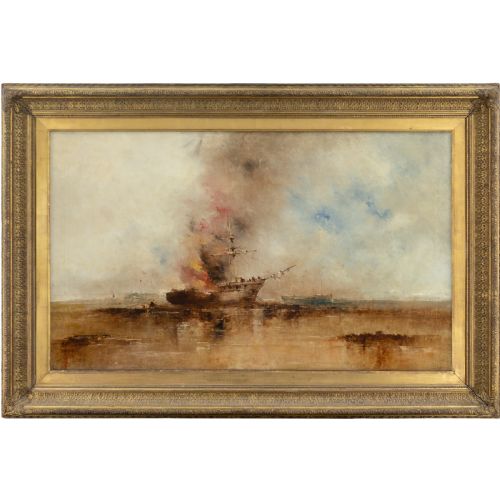
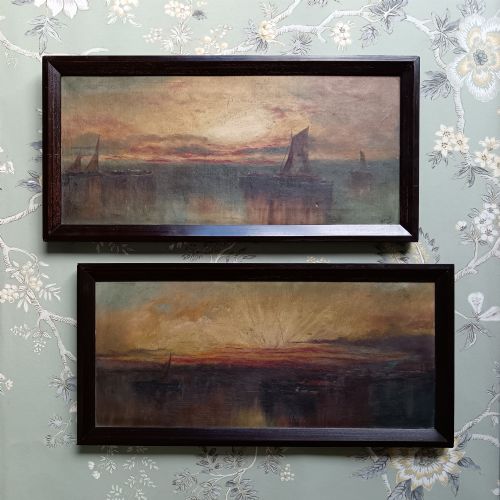
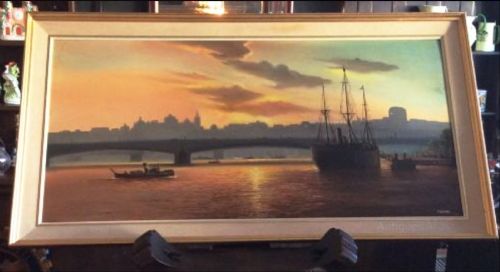
These framed oil canvas seascape works capture maritime life and coastal views, bringing historical ships and open water directly into your interior.
Framed Oil Canvas Seascape
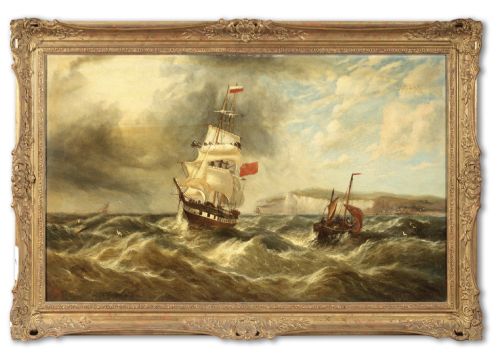
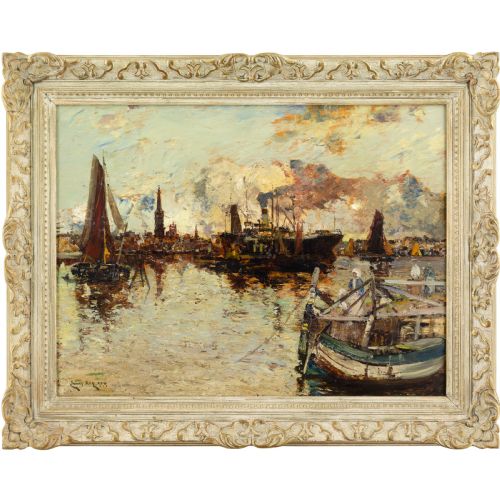
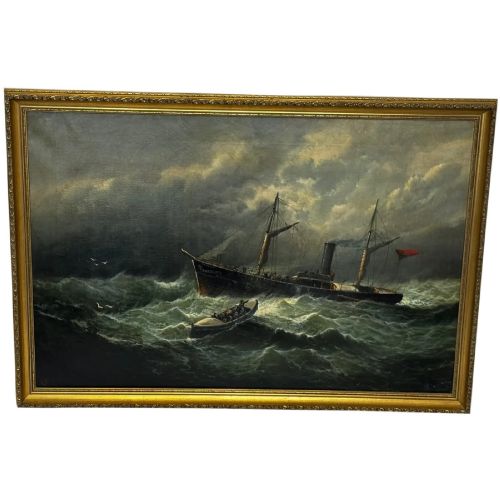
A framed oil canvas seascape presents maritime scenes, coastal views, and harbour activity executed in oil paint upon woven fabric support. These paintings frequently depict historical sailing vessels, turbulent open waters, and tranquil evening shores across various periods.
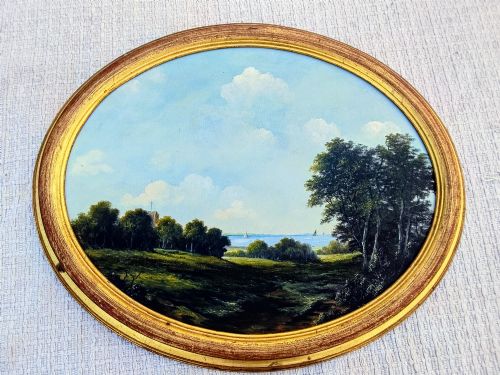
The selections here range from nineteenth-century Victorian maritime works and Edwardian coastal depictions to mid-century modern interpretations. Buyers encounter standard rectangular formats alongside occasional oval variations and panoramic London Thames scenes.
Origins span British, Dutch, and European schools, showing subjects from Venetian lagoons and stormy gales to peaceful domestic anchorages. The accompanying frames typically utilise wood and giltwood construction to enclose the canvas support.
Materials and Technique
Artists painted primarily with oil paint upon stretched canvas, applying pigment to build texture and depth within the water and sky. These woven canvas supports were secured to wooden stretchers before insertion into heavier wooden or giltwood frames.
Gilt and giltwood mouldings provided decorative borders that complemented the maritime subject matter, often incorporating surface ornamentation. Some later mid-century examples utilise textured painted applications on alternative board supports alongside traditional canvas.
Several paintings capture ships valiantly navigating rough seas, proving that even a canvas can get gloriously windswept.
Markers of Quality
Quality separates through the artist's ability to render light upon water and convey the atmospheric movement of the sea. Superior compositions display confident brushwork in handling difficult maritime conditions, such as rough seas or sunset reflections.
The integrity of the original canvas and the preservation of the pigment layer determine the overall standard of surviving works. Coherence between the oil painting and its period frame also influences the desirability of the piece.
Clifford Hanney·Eugène-Louis Gillot·William McAlpine·James Kay·William Broome·Bonaventura Peeters·Clive Browne·Peter Brannan·Francis Moltino·Bernard Benedict Hemy·Thomas Creswick·Willem Bos·Charles Euphraisie Kuasseg·John Wilson Carmichael·Lai Fong·Joseph Farquharson·Erich Mercker·Nicholas Condy·Thomas Hodgson Liddell·William Henry Williamson
The Framed Oil Canvas Seascape Glossary
- Canvas
- A heavy woven fabric used as the primary support surface for oil paintings. It is typically stretched tightly across a wooden frame before painting begins.
- Giltwood
- Wood that has been coated with a thin layer of gold leaf or gilt powder. This material is standard for ornate period picture frames.
- Marine art
- Artistic works that focus primarily on the sea, ships, and coastal environments. This category includes historical naval battles, merchant vessels, and quiet harbours.
- Post-Impressionism
- An art movement developing roughly from the late nineteenth century that rejected naturalistic depiction in favour of expressive forms. Works in this style emphasise symbolic content and distinct brushstrokes.
Framed Oil Canvas Seascape: Frequently Asked Questions
What periods do these paintings date from?
The inventory spans seventeenth-century Dutch works through to mid-twentieth-century modern pieces. Nineteenth-century Victorian and Edwardian examples represent a significant portion of the available selections.
Dating relies upon artist biographies, stylistic conventions, and framing techniques characteristic of specific decades such as the eighteen-sixties or nineteen-twenties.
How should I hang a framed oil canvas seascape?
Select an interior wall with stable humidity and away from direct sunlight to protect the canvas and oil pigments. Secure fixings must match the weight of the solid wood or giltwood frame.
Ensure the hanging height places the centre of the maritime scene at eye level for optimal viewing of the coastal details.
Are all pieces signed by the artist?
Many works bear visible signatures or attribution notes linking them to known painters or specific European schools. Other historical pieces remain unsigned but are attributed through style, subject matter, and archival records.
Signatures frequently appear in the lower corners of the canvas, sometimes accompanied by exhibition dates.
What subjects are most common?
Maritime subjects dominate, including merchant sailing ships, fishing boats off the coast, and turbulent open seas in gales. Coastal landscapes, Venetian lagoons, and harbour scenes also appear regularly.
Compositions range from peaceful sunsets and calm anchorages to dramatic wartime naval depictions and rescue operations.