

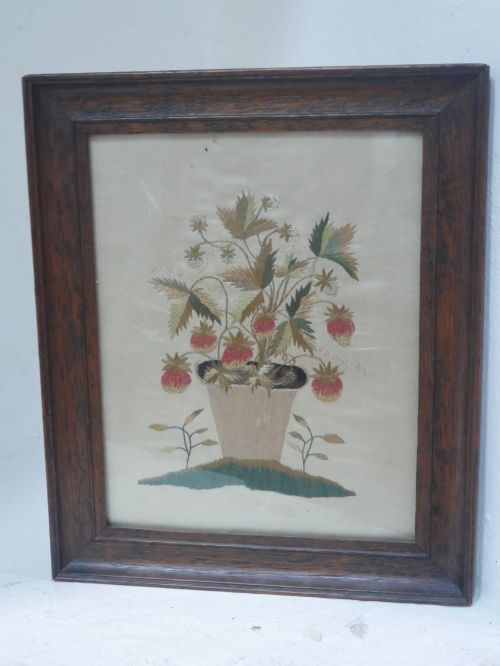
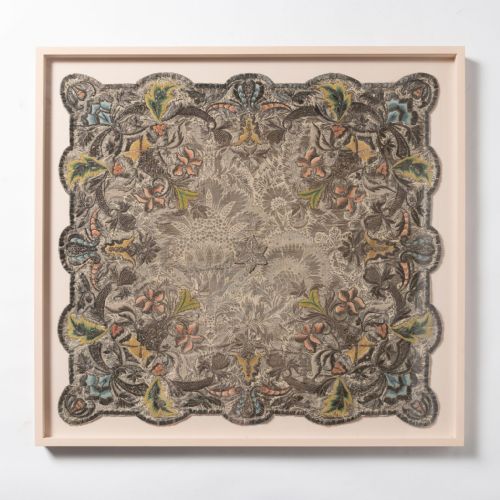

Framed Needlework Panel
A framed needlework panel brings centuries of threadwork and textile art directly to the wall, offering a tangible link to domestic handiwork of the past.
Framed Needlework Panel
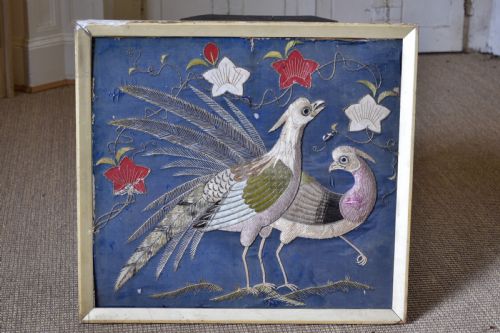
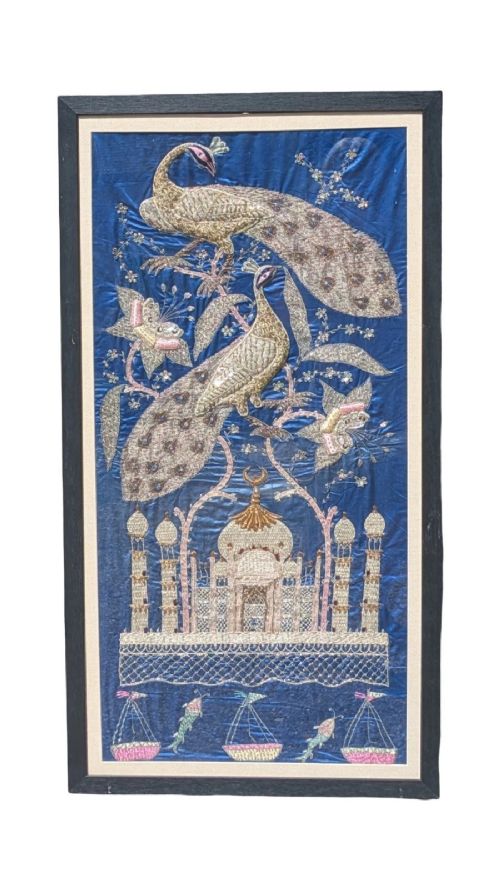
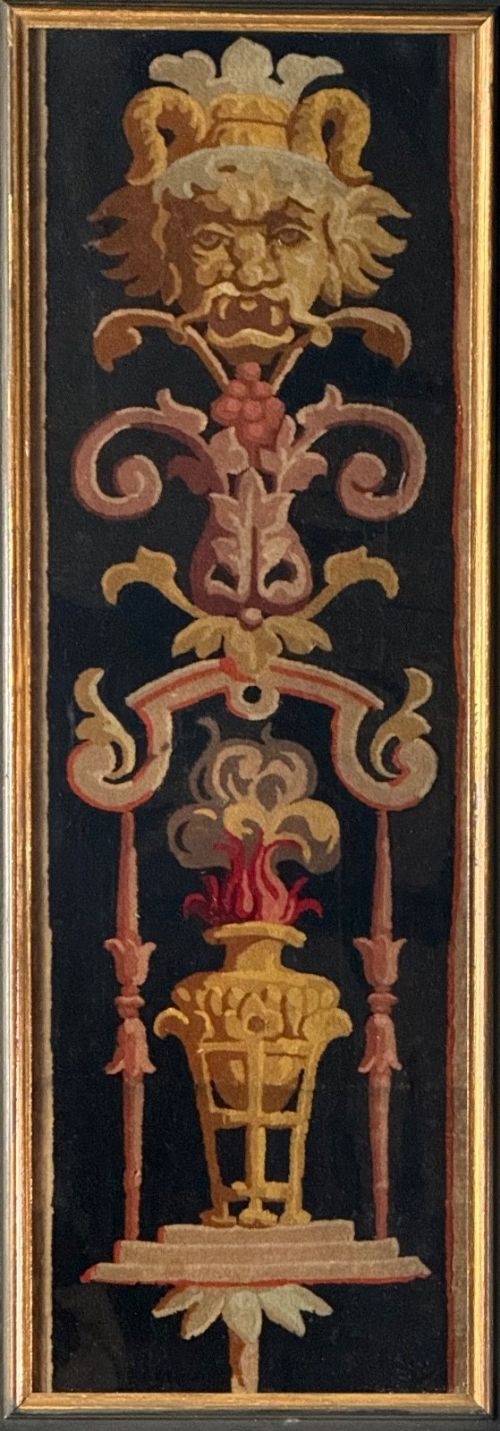
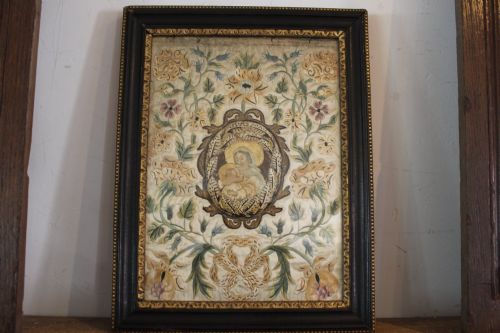
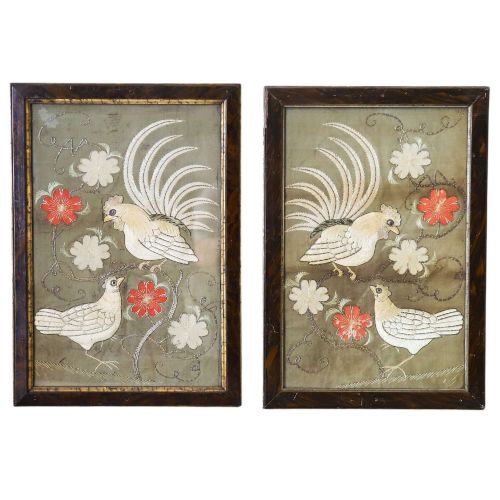
A framed needlework panel encompasses embroidered pictures, samplers, and textile fragments executed across the seventeenth, eighteenth, nineteenth, and early twentieth centuries. These pieces display a variety of regional and stylistic approaches, spanning from English band samplers and Stuart stumpwork to continental classical panels and Indian silk embroidery.
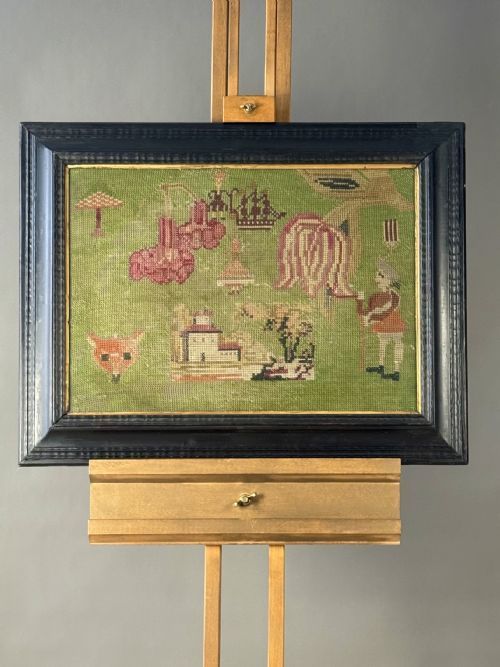
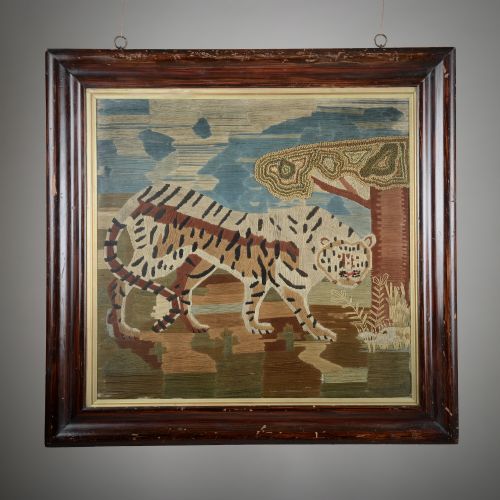
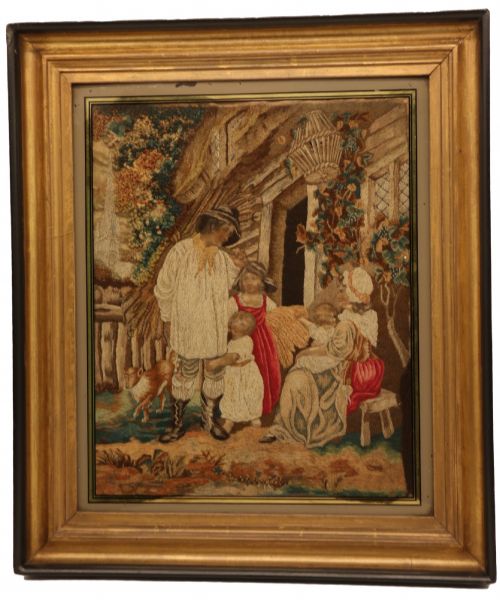
Most examples encountered on this page originate from the Victorian and Georgian periods, alongside earlier seventeenth-century works and later pieces from nineteen hundred and nineteen thirty. Formats range from detailed botanical studies and pastoral farming pictures to alphabet samplers and figural depictions mounted behind glass.
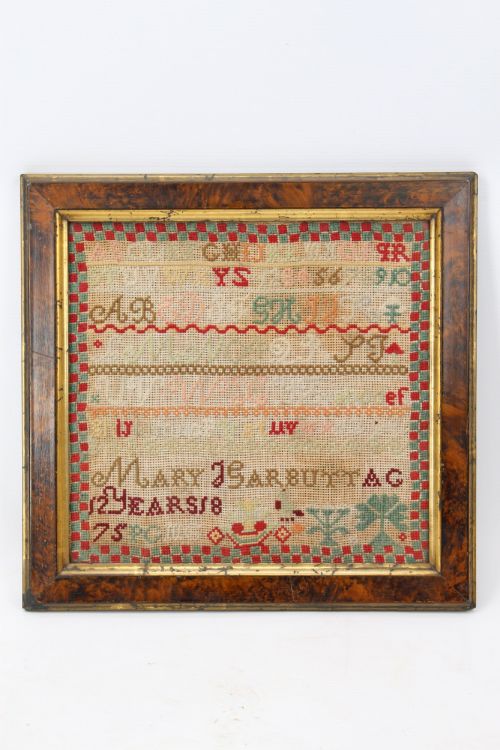
Makers include young girls working schoolroom samplers, such as Mary J Garbutt and Annabella Samon, alongside anonymous artisans producing intricate crewelwork, gros-point wool pictures, and silk embroidery. Their works survive within period surrounds such as burr maple or faux tortoiseshell frames.
Materials and Techniques
Needlework panels rely on foundational textiles like linen, canvas, and silk, worked with silk thread, wool, and metallic thread. Artisans employed diverse stitches, from standard embroidery and crewelwork to raised stumpwork and beadwork fragments.
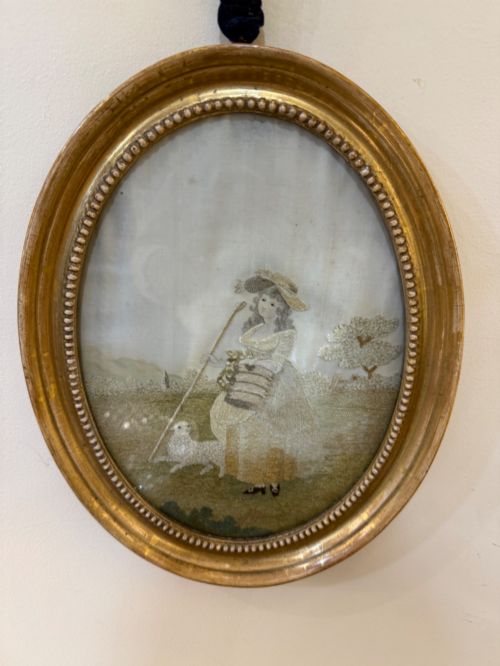
Many works combine hand-painted silk sections with fine needlework, integrating silk floss and metal threads to achieve depth in pastoral scenes and portraits. Completed embroideries were subsequently housed in wooden frames, frequently protected by glass.
Framed Needlework Panel Retail Price Guide 2026
Typical asking prices for framed needlework panel among the pieces listed under this phrase on Sellingantiques today, from the lower quarter to the upper quarter. They describe what is for sale here now, not the wider market.
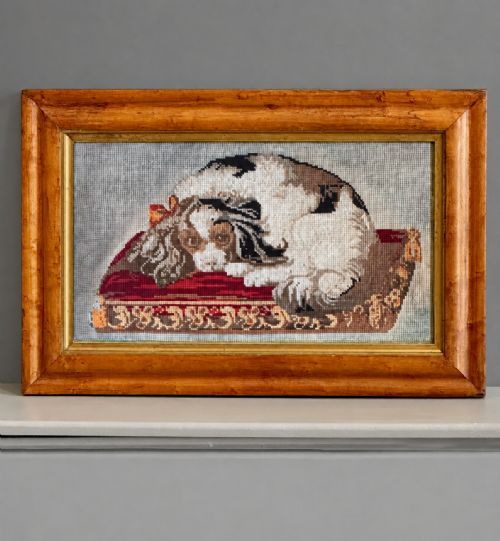
Canines gaze out from nineteenth-century wool work while tigers and spaniels watch over centuries of careful stitching.
Assessing Quality and Execution
Quality rests upon the precision of the stitching and the complexity of the design, distinguishing simple schoolgirl alphabets from intricate seventeenth-century stumpwork or detailed silk paintings. Finer pieces demonstrate tight, even tension in the threadwork and sophisticated pictorial composition.
The survival of original framing, such as burr maple or specialised faux tortoiseshell surrounds, adds historical integrity to the textile within. Condition is influenced by the preservation of the original colours in the silk and wool against fading from light.
The Framed Needlework Panel Glossary
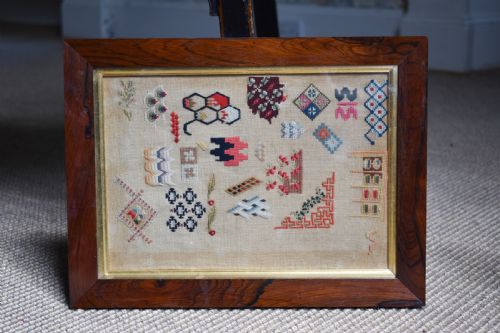
- Sampler
- A piece of needlework produced to demonstrate skill in various stitches, often featuring alphabets, numerals, and motifs. These exercises were frequently signed and dated by younger makers.
- Stumpwork
- A raised embroidery style popular in the seventeenth century, utilising padding and wire foundations to create three-dimensional figures and elements. Figures like kings and queens commonly appear in these detailed panels.
- Crewelwork
- Embroidery executed using wool yarn on a linen or cotton twill ground. This technique creates robust, textured floral and botanical designs.
- Berlin Work
- A type of counted-thread embroidery popular in the nineteenth century, worked in wool on canvas using printed grid patterns. King Charles spaniels frequently appear as subjects in this style.
- Gros-point
- A coarse needlepoint stitch worked on canvas using wool yarn, often employed for durable pictorial tapestries and figurative scenes.
Framed Needlework Panel: Frequently Asked Questions
How do I hang a needlework panel safely?
Keep framed textiles away from direct sunlight to prevent silk and wool threads from fading over time. Maintain stable room temperatures to protect fragile organic materials.
Ensure the frame hangs securely from appropriate wall fixings without placing weight on the glass or the inner mount. Professional framing techniques help isolate the textile from humidity fluctuations.
What periods do these panels come from?
The selection spans from the seventeenth century through the eighteenth and nineteenth centuries, extending into early twentieth-century examples. Earlier pieces include Stuart stumpwork and band samplers, while later works feature Victorian samplers and twentieth-century silk embroideries.
Dating is often confirmed by stitched dates, signatures, or the style of the accompanying wooden frame. Archival records on samplers frequently name the maker and the year of creation.
How are samplers different from embroidered pictures?
Samplers primarily record alphabets, numerals, and rows of practicing stitches, often created by children as educational exercises. They emphasise technical variety and lettering.
Embroidered pictures focus on pictorial scenes, such as pastoral landscapes, portraits, or botanical studies like strawberries and pheasants. These works prioritize unified visual composition over stitch demonstration.
Are original frames common?
Many panels retain period surrounds, including burr maple frames, faux tortoiseshell designs, and simple moulded wood mouldings. These housings often date to the same era as the textile.
Original frames contribute to the historical context of the piece, though frames are occasionally updated or replaced by past owners over the centuries.