

Framed Naval Art
Framed naval art brings centuries of maritime history, battles and royal vessels straight to the wall in oils, watercolours and woolwork.
Framed Naval Art
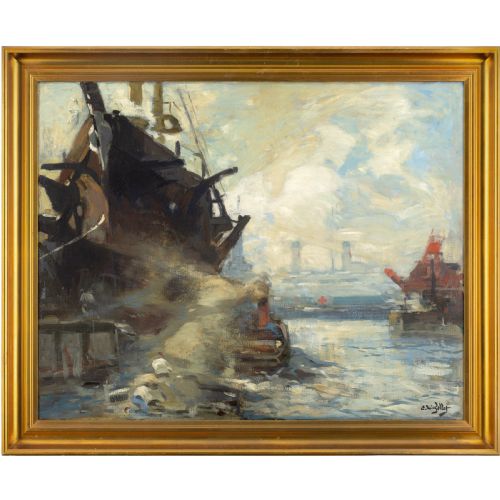
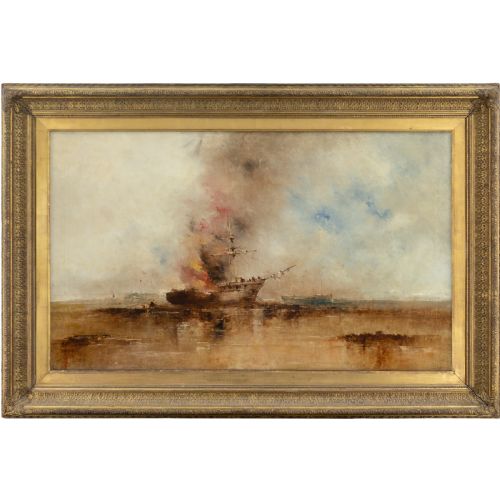
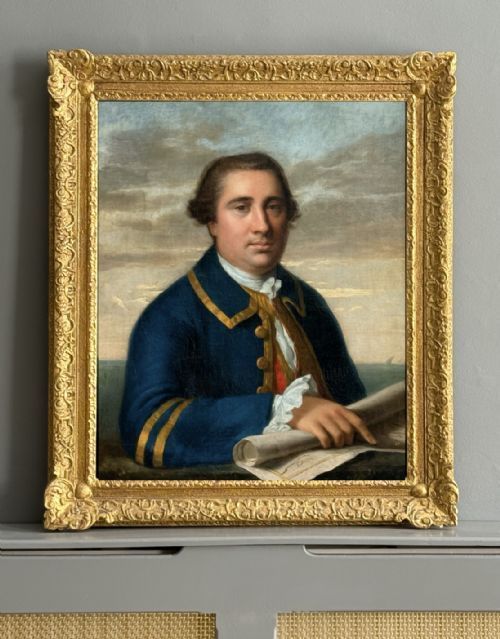
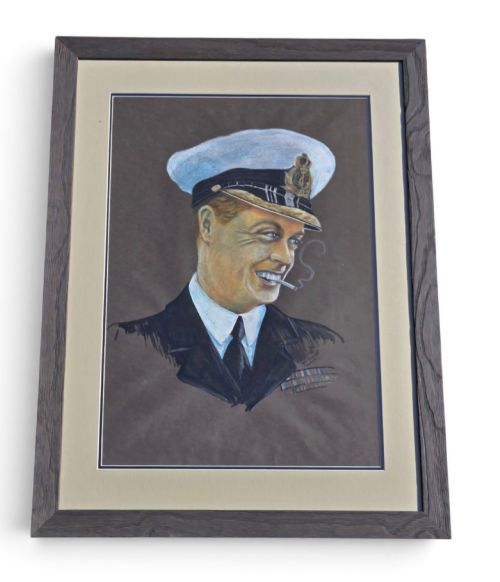
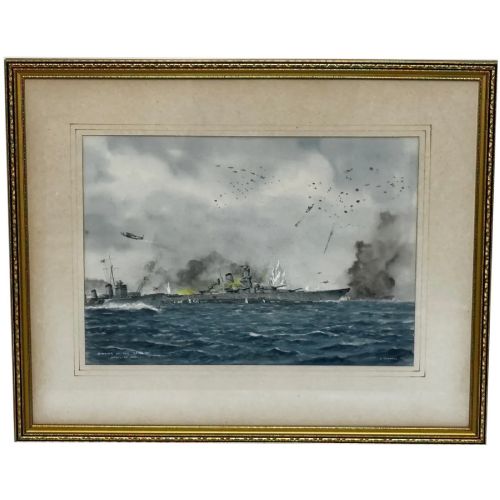
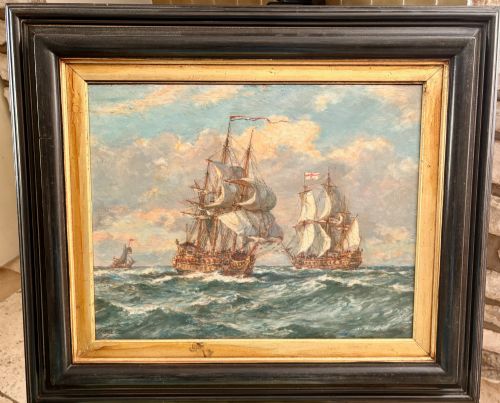
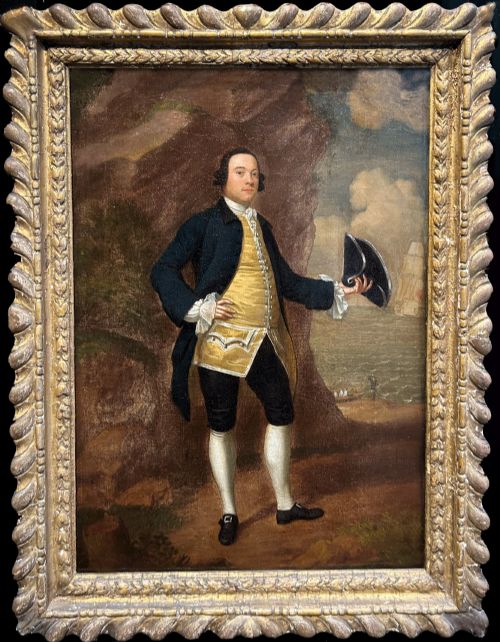
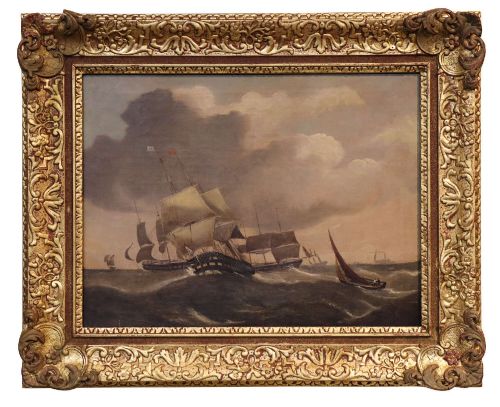
Framed naval art encompasses paintings, watercolours, engravings and textile works depicting ships, sea battles, coastal harbours and naval officers. Collectors encounter pieces ranging from eighteenth-century oil portraits of captains to Victorian woolwork embroideries and twentieth-century warship watercolours.
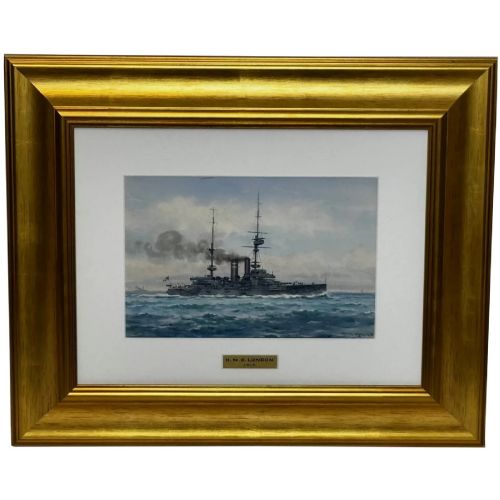
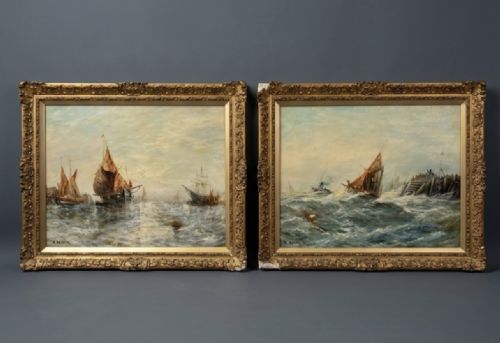
The selections on this page lean heavily toward nineteenth-century maritime watercolours and oil paintings on canvas or panel. Works representing specific vessels, such as named Royal Navy ships and historical engagements, appear frequently alongside portraits of officers and merchant captains.
Formats extend from small framed miniatures on agate to large statement oil paintings and decorative sets of engravings. Frames vary from period giltwood surrounds to original oak mouldings that complement the nautical subject matter.
What varies in quality
Material preservation and frame originality influence the standing of a piece. Works retaining their period giltwood or oak frames, alongside stable, unlined canvases and vibrant watercolours without excessive fading, represent the upper tier of survivals.
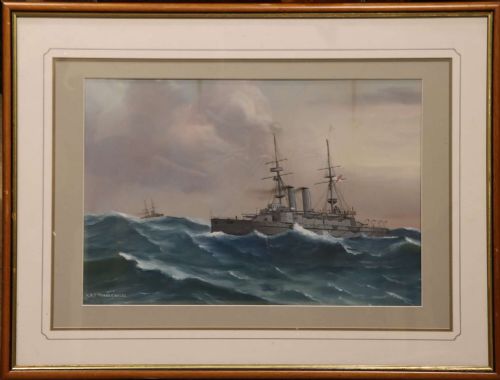
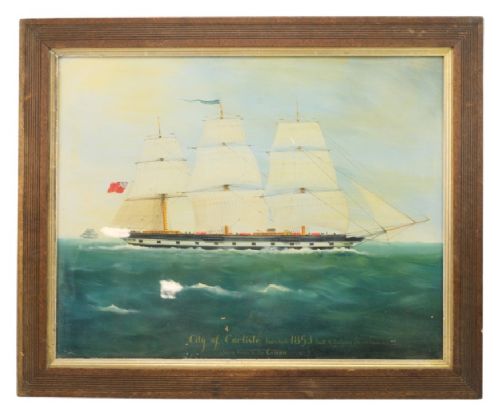
Sailors occasionally immortalised their affection for specific ironclads and shipmates through detailed gouache tributes.
Eugène-Louis Gillot·William McAlpine·Lemuel Francis Abbott·Eric Tufnell·Frank Watson Wood·Bernard Gribble·Francis Hayman·Nicholas Condy·Charles William Adderton·Vincenzo D’Esposito·Samuel Owen·Don Wilson
The Framed Naval Art Glossary
- Gouache
- An opaque water-based paint that provides solid, vibrant colour blocks frequently utilised in detailed maritime watercolours.
- Giltwood
- Wood carved and covered with a thin layer of gold leaf, commonly used for ornate nineteenth-century picture frames.
- Trumeau
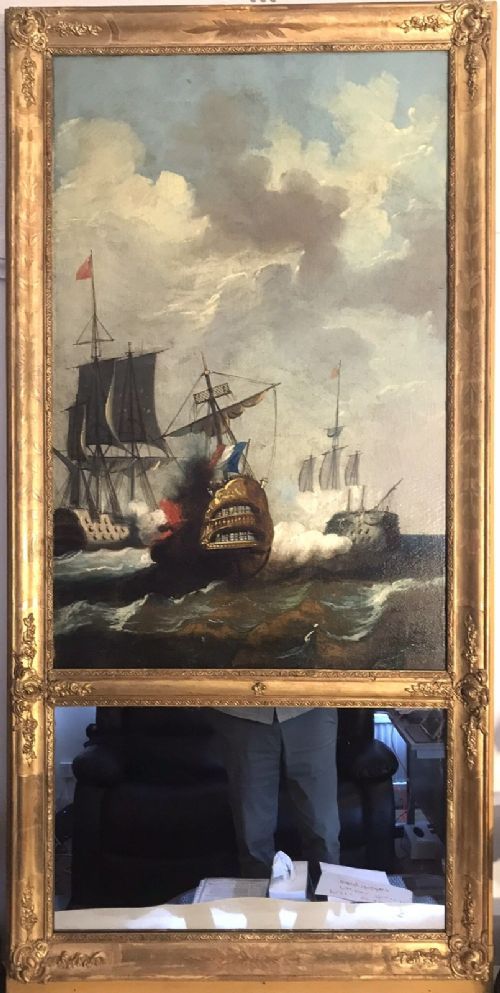
- A decorative architectural wall mirror incorporating a painted panel, often featuring a seascape or naval scene above the glass.
Framed Naval Art: Frequently Asked Questions
How do I date a maritime painting?
Dating relies on uniform styles, ship types, framing materials and recorded artist signatures. Naval uniforms and vessel architecture changed rapidly across the eighteenth and nineteenth centuries.
Accompanying documentation or inscriptions on the reverse of the canvas often confirm the specific year or campaign depicted.
Where should I hang framed naval art?
These pieces suit studies, libraries and living spaces where traditional decor allows the detailed maritime scenes to stand out. Strong natural light should be avoided for watercolours and textiles to prevent fading.
Pairing oil paintings with period giltwood frames creates a traditional focal point on panelled or neutral walls.
What subjects are common in naval art?
Common subjects include named Royal Navy battleships, historical sea engagements, harbour views and portraits of captains or officers. Artists frequently recorded specific vessels and coastal fortifications.
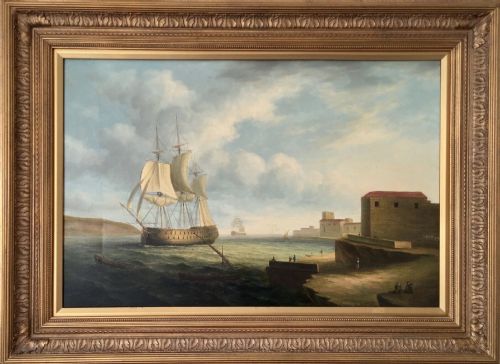
Scenes range from calm anchorages in foreign ports to dramatic depictions of ships in heavy seas.