

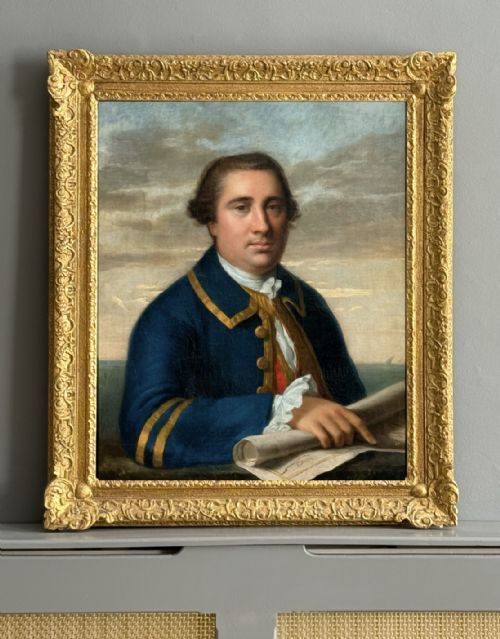


Georgian Naval Officer Portrait
A georgian naval officer portrait captures the likeness of sea-faring commanders and captains from the eighteenth and nineteenth centuries.
Georgian Naval Officer Portrait
A georgian naval officer portrait records the likenesses of captains, admirals, and gentlemen in service during the eighteenth and nineteenth centuries. These works document individuals who commanded vessels, often highlighting their rank through uniform details and medals.
The objects on this page appear in several forms, most notably oil paintings on canvas and smaller portrait miniatures on materials such as agate panel or paper. Artists of the period also recorded these subjects through prints and engravings, alongside occasional sculptural busts.
Examples span the eighteenth century, the Regency period, and the mid-nineteenth century, reflecting shifting tastes in military portraiture. Works range from intimate miniature paintings framed in gold to large canvas portraits depicting high-ranking admirals.
Judging quality
Quality rests upon the skill of the artist in rendering facial likeness, expression, and the texture of textiles. Accomplished painters managed the fall of light across fabric and the precise rendering of medals and orders.
The preservation of the paint surface, canvas, or miniature support alters the character of the piece. Fine condition retains the original vibrancy of the oil paint or watercolour without excessive later restoration.
Georgian Naval Officer Portrait Retail Price Guide 2026
Typical asking prices for georgian naval officer portrait among the pieces listed under this phrase on Sellingantiques today, from the lower quarter to the upper quarter. They describe what is for sale here now, not the wider market.
Several naval commanders insisted on holding swords, torches, or spyglasses in their portraits to remind viewers they were ready for action at any moment.
Lemuel Francis Abbott·Henry Bone·John Simmons·Sir Thomas Lawrence·George Frederick Clarke·Samuel Lane·Robert Ker Porter·Ambrosini Jerome
The Georgian Naval Officer Portrait Glossary
- Oil on Canvas
- A traditional painting method involving pigment suspended in drying oil applied to a woven fabric support. This combination allowed artists to build rich layers of colour and depth.
- Portrait Miniature
- A small, highly detailed painting designed for intimate viewing or portable display. These works required immense precision using fine brushes on surfaces like paper or agate.
- Enamel
- A material produced by fusing powdered glass to a metallic substrate through firing. This technique created durable, glossy painted surfaces resistant to fading.
- Giltwood
- Wood that has been treated with a thin layer of gold leaf or powder. It provided ornate, reflective borders for framing important portraits.
- Engraving
- A printmaking process where an image is incised into a metal plate using a sharp tool. Ink is applied to the lines and transferred under pressure to paper.
Georgian Naval Officer Portrait: Frequently Asked Questions
How do I identify a naval officer?
Naval officers are typically identified by their dark blue jackets, often featuring distinctive collar facings, gilt buttons, and epaulettes denoting rank. Many portraits also include medals, orders, or a background showing the sea and ships.
Specific decorations, such as the Order of St. Louis, provide further clues to the subject's identity and service history.
What is the difference between an oil painting and a miniature?
Oil paintings on canvas are larger works intended for prominent display on walls, offering artists room to render expansive uniforms and background naval scenes in rich detail.
Portrait miniatures are much smaller, often framed in gold or glass, and were designed to be held in the hand or worn close to the body.
How should I care for a canvas portrait?
Canvas portraits require stable indoor environments away from direct sunlight and excessive humidity, which can warp the wooden stretcher frames or degrade the oil paint.
Dusting should be done gently with a soft, dry brush, avoiding any liquid cleaners or harsh wiping that could damage the paint surface.
Are these portraits signed by the artist?
Some works bear the signature or monogram of the painter, while others are attributed based on stylistic evidence, historical records, and documentation associated with the sitter.
Attributions are made by comparing handling, brushwork, and known commissions from the eighteenth and nineteenth centuries.