



Georgian Officer Watercolour
A georgian officer watercolour captures military service in miniature, offering collectors a personal glimpse into the regiments and fleets of the eighteenth and nineteenth centuries.
Georgian Officer Watercolour
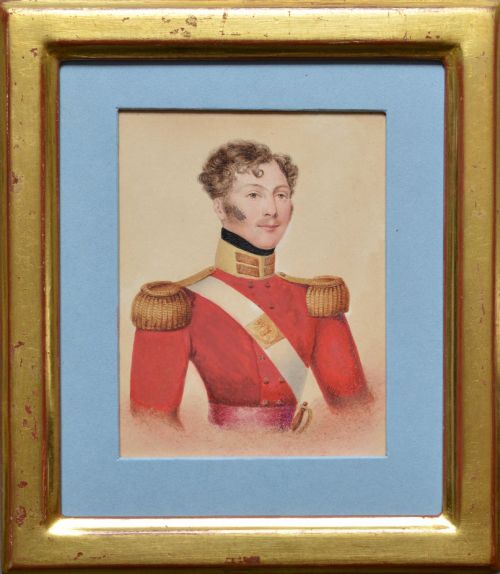
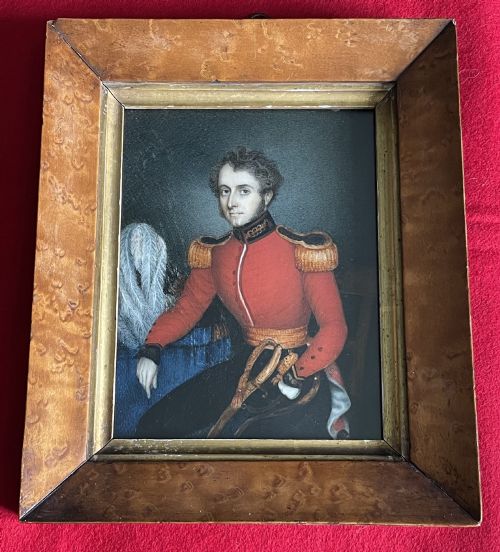
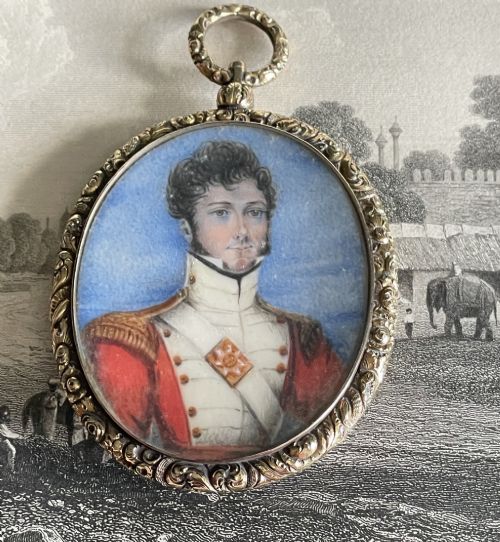
When you search for a georgian officer watercolour, you are looking at portrait miniatures and fine art paintings depicting military figures from the eighteenth century, nineteenth century, and Regency periods. The pieces on this page include portrayals of naval officers, dragoons, and infantrymen.
You will encounter works attributed to British schools as well as named artists such as Edward Pugh and Sir William John Newton. Subjects range from anonymous Dragoons officers to identified individuals like Captain Richard Hamilton and General Dudley Craig.
The formats vary from intimate miniature portrait paintings to works on paper and agate panels. Many retain their original framing materials, including gilt metal, giltwood, and eighteen-carat gold.
How they were made
Makers housed these portraits in protective enclosures featuring glass, gilt metal, ivory, and burl wood. Gilding with gold leaf added a polished finish to the frames that enhanced the visual presence of the miniature.
Georgian Officer Watercolour Retail Price Guide 2026
Typical asking prices for georgian officer watercolour among the pieces listed under this phrase on Sellingantiques today, from the lower quarter to the upper quarter. They describe what is for sale here now, not the wider market.
Captains and generals stare out across the centuries with immaculate neckstocks and sharply waxed moustaches.
What varies in quality
The refinement of the brushwork and the precision of the facial likeness distinguish accomplished portraiture from standard workshop output. Mastery of proportion and expression brings military subjects to life on a small scale.
The quality of the housing, from plain wood to elaborate eighteen-carat gold frames set with glass, indicates the original importance commissioned for the sitter.
Edward Pugh·Sir William John Newton
The Georgian Officer Watercolour Glossary
- Watercolour
- A painting method where fine pigments are suspended in a water-soluble binder on paper or panel. It provides the translucent medium used for these detailed military portraits.
- Portrait Miniature
- A small-scale painting capturing the likeness of a specific individual. These works were often carried or worn as personal tokens during the Georgian era.
- Regency
- The historical period spanning from 1811 to 1820, alongside the wider Regency aesthetic seen in the arts. Pieces from this era often reflect distinct military dress codes of the British forces.
- Gilt Metal
- Metal treated with a thin layer of gold or gold-coloured wash. It frequently frames these watercolours to provide a durable and decorative border.
Georgian Officer Watercolour: Frequently Asked Questions
What is a georgian officer watercolour?
It is a hand-painted portrait of a military figure from the eighteenth or nineteenth century, executed in watercolour on materials like paper or agate.
These works range from intimate miniatures housed in gold or gilt metal frames to larger framed studies of named captains and generals.
How were these miniatures displayed?
Officers and their families kept these portraits in protective cases or hung them in small formats on domestic walls. The inclusion of glass, ivory, and burl wood framing helped preserve the delicate watercolours.
Many pieces were designed to be portable tokens of service and affection, reflecting the personal connections of the sitter.
How do I identify a naval officer portrait?
Naval subjects typically feature distinct dark blue or black uniforms with specific gilt buttons, lace, and insignia appropriate to the Royal Navy of the period.
Descriptions and titles in the listings often confirm the branch of service, distinguishing naval personnel from infantrymen and dragoons.
What materials are used in the frames?
Frames commonly incorporate gilt metal, gold leaf, eighteen-carat gold, and burl wood, often protected by a glass cover over the painting.
These materials reflect the status of the officer and the prevailing decorative tastes of the Georgian and Regency eras.