

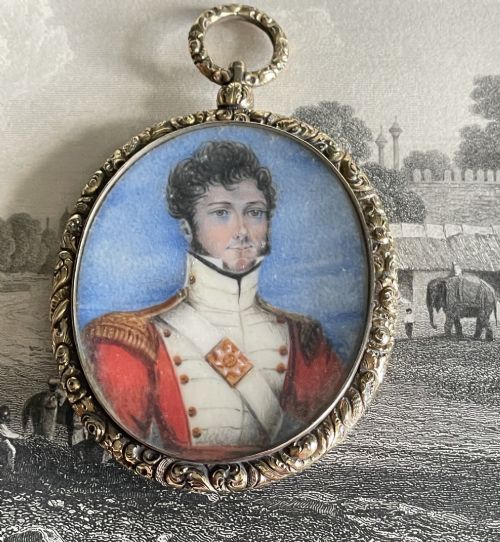


Regency Military Painting
Regency military painting captures the character of officers, admirals and battles through oil on canvas, watercolour and reverse glass prints.
Regency Military Painting
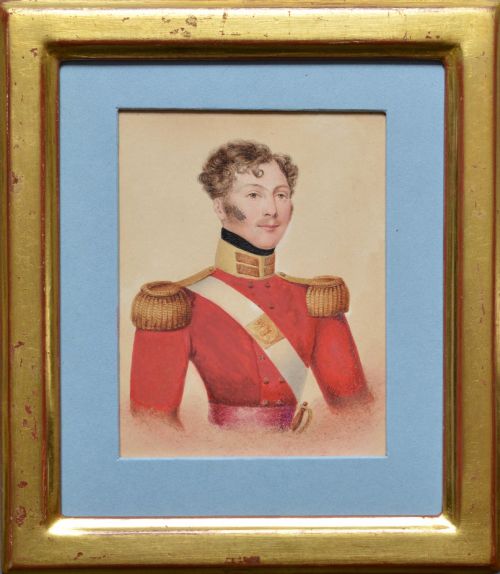
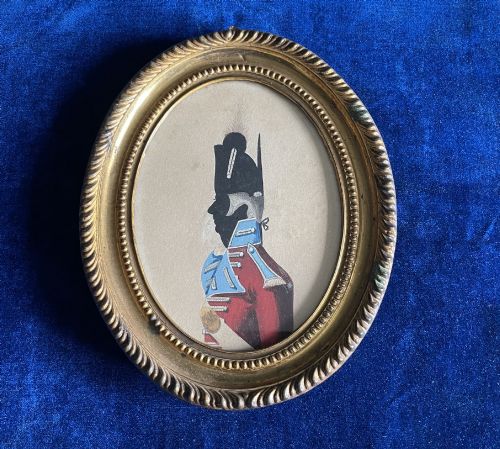
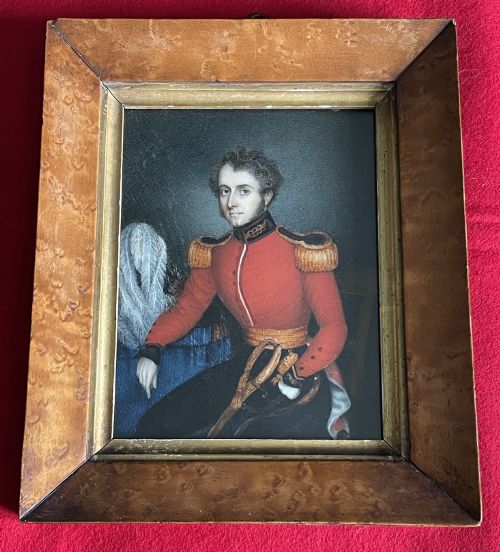
A regency military painting encompasses portraits of officers, naval commanders and battle scenes originating from the eighteenth and nineteenth centuries. These works record individuals such as the Duke of Wellington, Lieutenant-General Sir John Harvey and various regimental officers.
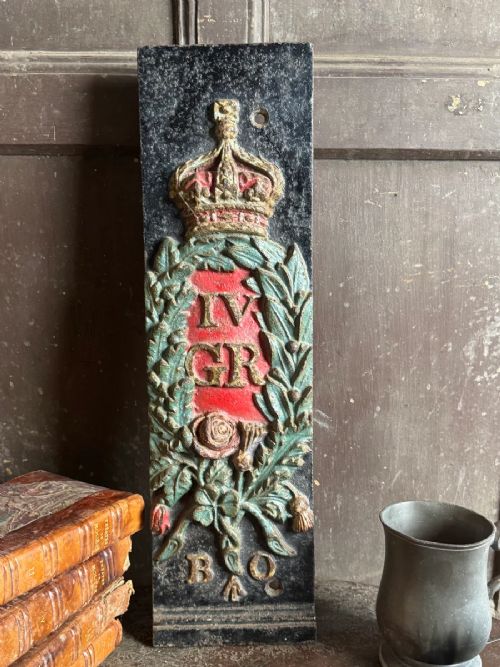
The selection on this page ranges from modest watercolours and miniature portraits set in gold frames to large oil paintings on canvas. Buyers also encounter reverse glass prints depicting notable conflicts like the Battle of Waterloo alongside architectural plaques.
Most items belong to the nineteenth and eighteenth centuries, though occasional pieces reflect later revivals or interpretations in folk art styles. Portrait miniatures and framed watercolours represent the common formats available to collectors.
How they were made
Artists utilised oil on canvas and delicate watercolour on paper to record military and naval figures, often mounting smaller works in wood, giltwood or gold leaf frames. Portrait miniatures required fine brushwork, sometimes incorporating pearls or precious metal settings.
Reverse glass printing involved applying pigment directly to the reverse side of a glass sheet, creating a glossy finish that protected the image beneath. Architectural plaques employed cast iron painted to display official insignia, such as Board of Ordnance designs.
The selection includes portrait miniatures, architectural plaques and reverse glass prints alongside standard canvas paintings.
What varies in quality
The distinction between works rests upon the precision of the portraiture and the attribution to known artists or schools. Pieces by established painters display superior control over facial likeness, uniform detail and the rendering of light.
Materials also differentiate the range, as solid gold and pearl settings or substantial giltwood frames elevate the status of portrait miniatures. Finer works capture specific campaign uniforms and accurate regimental insignia with distinct clarity.
Sir Thomas Lawrence PRA·Edward Pugh·Ramsay Richard Reinagle RA·Stephanus Chiantor·Henry Hoppner Meyer·Sir William John Newton·Samuel Lane·William Salter·Gerrit Schipper·Henry Wyatt·Robert Ker Porter·Harry Ashby·Ambrosini Jerome
The Regency Military Painting Glossary
- Reverse glass print
- An image painted directly onto the back of a glass panel so that the final picture is viewed through the front. This technique produces a reflective surface.
- Portrait miniature
- A small, highly detailed painting, often executed on ivory, vellum or paper. These portable pieces frequently served as personal tokens for military officers.
- Oil on canvas
- Pigment suspended in drying oil applied to a stretched fabric support. This medium allowed artists to achieve rich tones and durable textures for large military portraits.
- Giltwood
- Wood that has been coated with a thin layer of gold leaf or gilt paint. Picture frames finished this way frequently accompany formal military oils and watercolours.
Regency Military Painting: Frequently Asked Questions
What subjects appear in these paintings?
The artworks predominantly portray military officers, admirals and generals from British and European regiments. Prominent historical figures such as the Duke of Wellington and various naval commanders frequently feature.
Scenes of combat, including the Battle of Waterloo, also appear alongside intimate portrait miniatures of individual soldiers and sailors.
Where should I hang a regency military painting?
These works suit studies, libraries and drawing rooms where traditional decor complements period portraits. Smaller watercolours and miniatures benefit from placement in areas with controlled lighting to protect paper and pigments.
Larger oil on canvas works function well as focal points above mantelpieces or on panelled walls.
How do I care for antique watercolours?
Watercolour paintings require protection from direct sunlight to prevent the fading of pigments on paper. Maintaining stable indoor humidity levels prevents warping of the paper and damage to the wooden or giltwood frames.
Displaying pieces away from damp walls ensures the longevity of both the artwork and its mount.
How can I identify the period of a portrait?
The uniform styles, epaulettes and headwear depicted in the portrait offer clear indicators of the military era. Comparing the sitter's dress with official uniform regulations helps narrow down the decade.
Signatures, artist attributions and framing techniques further assist in dating the piece accurately.