





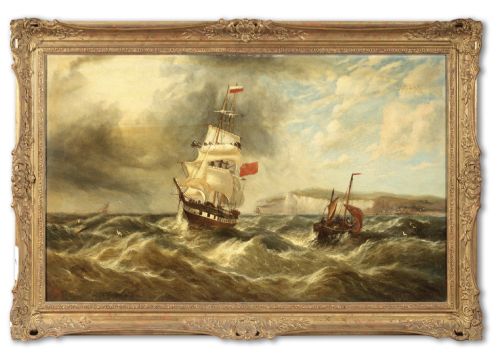

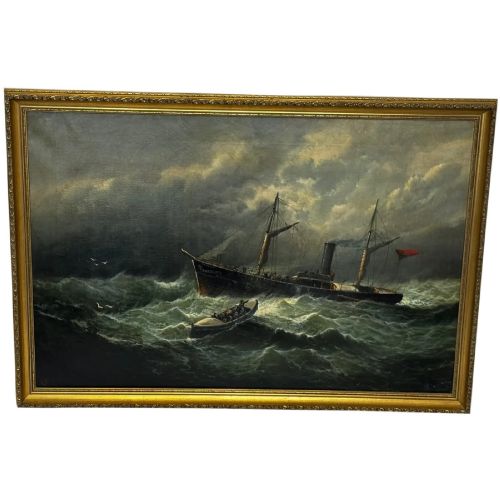
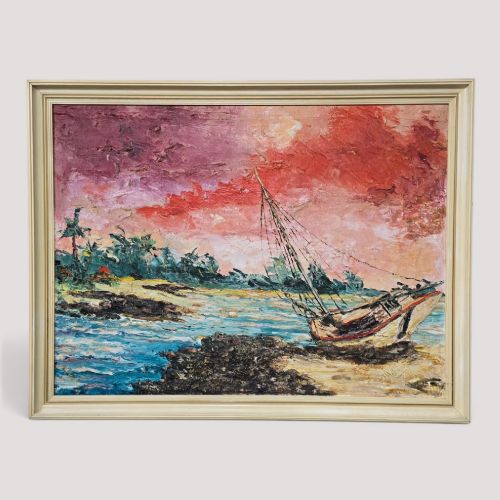
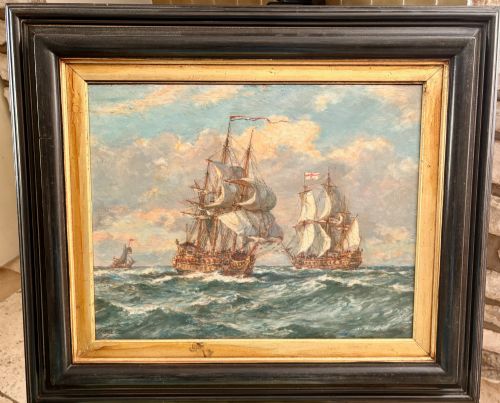
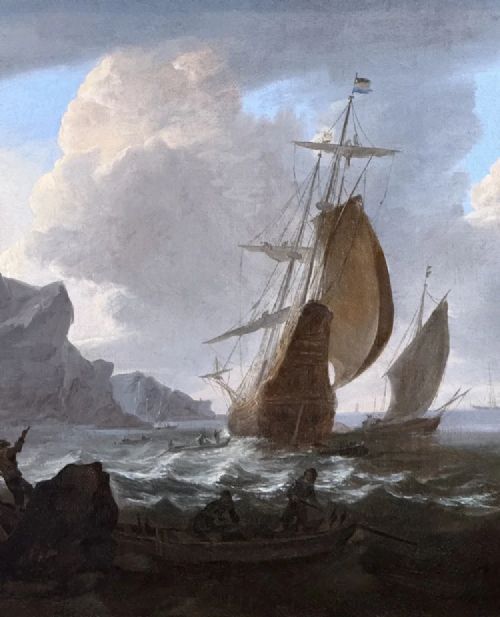
Framed Nautical Seascape Painting
When you search for a framed nautical seascape painting, you step into centuries of maritime art capturing the power and stillness of the open water.
Framed Nautical Seascape Painting
A framed nautical seascape painting brings coastal views, merchant vessels, and tempestuous gales into an interior space through historic depictions of the sea. When exploring this phrase, buyers encounter works ranging from quiet Victorian beach scenes to dramatic depictions of sailing ships in heavy seas.
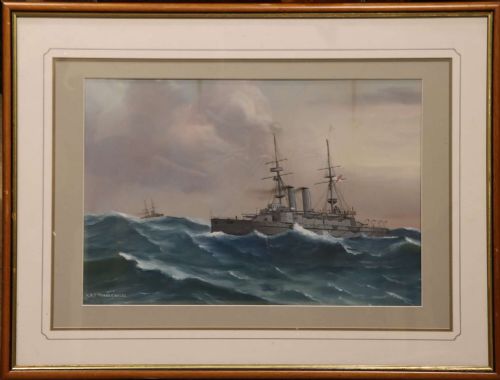
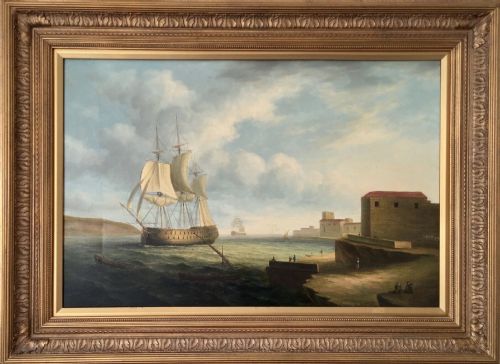
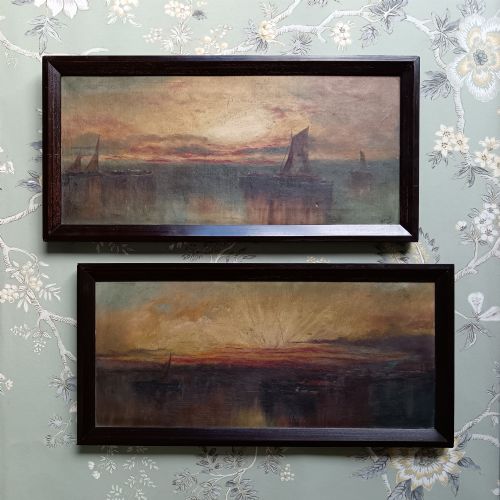
The selections on this page heavily feature nineteenth-century and Edwardian marine art, alongside mid-twentieth-century interpretations of coastal landscapes and harbours. These pieces span detailed depictions of named warships and merchant vessels to moody twilight watercolours and oil paintings.
Most examples come enclosed in traditional wooden and gilt frames that complement the maritime subject matter. Collectors will find everything from modest paper watercolours to large canvases depicting historical naval events and local fishing fleets.
How they were made
Artists captured maritime subjects primarily through oil paint on canvas or board, alongside watercolours and gouache on paper. Oil paint allowed for rich, layered textures capable of rendering churning waves, grey skies, and reflective water, while watercolours offered fluid transparency for lighter coastal sketches.
Several artists captured the volatile British weather so convincingly that viewers can almost smell the salt in the air.
What varies in quality
The distinction between ordinary and exceptional maritime art lies in the artist's command of light, atmosphere, and maritime anatomy. Finer works demonstrate a precise understanding of rigging, hull construction, and water movement under varying weather conditions.
Compositional balance and the preservation of the original canvas and frame also dictate the standing of a piece. Works by documented historical marine painters with clear provenance naturally command greater attention than anonymous school pieces.
James Hardy·James Orrock·Eugène-Louis Gillot·William McAlpine·Charles Edward Dixon·John Rose Miles·James Kay·Bernard Gribble·Bonaventura Peeters·Frank William Scarbrough·John Wilson Carmichael·William Henry Williamson·Bernard Benedict Hemy·George Stanfield Walters
The Framed Nautical Seascape Painting Glossary
- Seascape
- A work of art depicting the sea, coastlines, or marine vessels in various states of weather and light. These compositions range from calm harbour scenes to dramatic shipwrecks.
- Gilt frame
- A wooden picture frame coated with gold leaf or metallic paint, commonly found surrounding nineteenth-century paintings to add warmth and emphasis to the artwork.
- Maritime art
- Artistic works that document ships, naval battles, harbours, and coastal life. This broad genre includes both historical documentation and expressive landscape painting.
- Watercolour
- A paint consisting of pigment suspended in a water-based solution, typically applied to paper. It provides a luminous quality well-suited to atmospheric coastal sketches.
- Shadow box
- A deep, glass-fronted display case used to house three-dimensional maritime dioramas or models alongside painted backgrounds.
Framed Nautical Seascape Painting: Frequently Asked Questions
What is a marine oil painting?
A marine oil painting uses slow-drying pigment suspended in oil on canvas or panel to depict ships, oceans, and coastal views. This medium allowed artists to build rich textures and deep tones suitable for stormy seas and dramatic skies.
Such works were produced extensively throughout the nineteenth and early twentieth centuries by artists recording naval history, merchant shipping, and local coastal trades.
How should I hang maritime art?
Maritime art requires stable wall space away from direct sunlight and excessive moisture to protect the canvas, paper, and gilt framing. Placing them at eye level in rooms with balanced natural light helps reveal the subtle details of the water and rigging.
Pairing these works with traditional interiors or contrasting them in modern spaces allows the historic character of the frame and subject to stand out.
How do I identify nineteenth-century paintings?
Nineteenth-century paintings often show specific characteristics in their canvas preparation, stretcher frames, and artist signatures. Examining the back of the panel or canvas frequently reveals period stamps, dealer labels, or handwritten inscriptions.
Stylistic cues, such as the depiction of specific types of sailing vessels like three-masted schooners or steamships, also help narrow down the era of production.
What is a watercolour marine sketch?
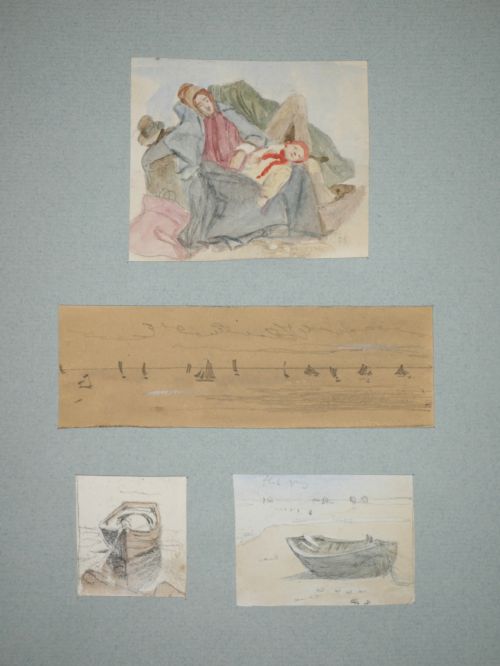
A watercolour marine sketch is a work on paper capturing coastal views or shipping movements with thinned, transparent pigments. Artists often used these spontaneous studies outdoors before developing larger studio paintings.
Because paper is sensitive to light, these works are typically protected behind glass within framed mount boards to preserve their subtle colours.