
Edwardian Maritime Art
Edwardian maritime art encompasses evocative watercolours, detailed oil paintings and folk art objects recording vessels and coastal scenes from the early twentieth century.
Edwardian Maritime Art
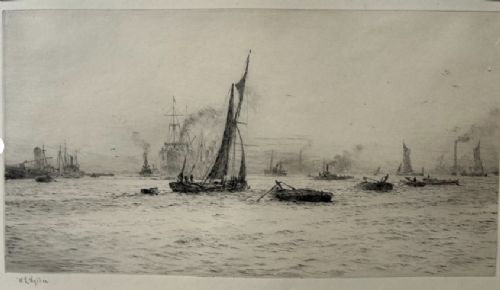
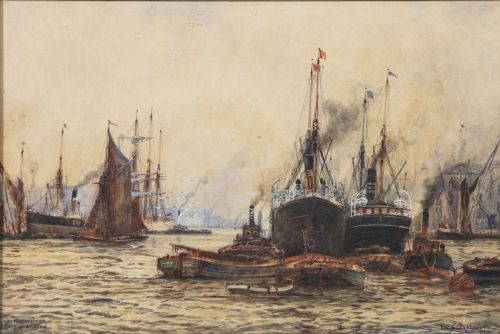
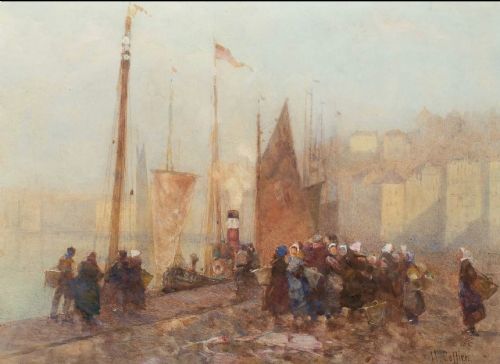
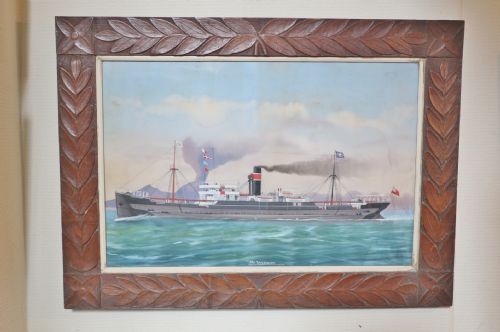
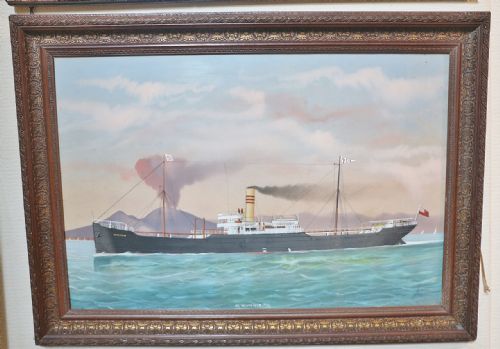
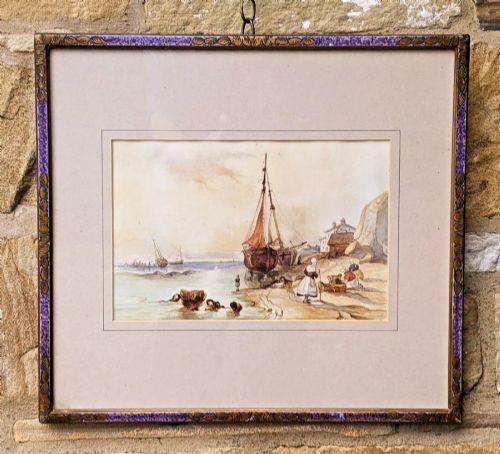
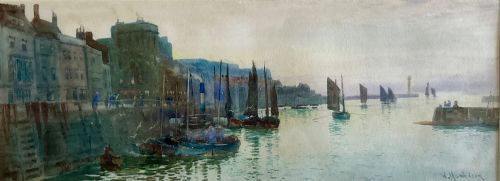
Edwardian maritime art captures the bustling trade ports, naval vessels and coastal fishing fleets of the early twentieth century through various visual media. Buyers encounter framed watercolours, oil paintings on canvas, and gouache works depicting specific named ships and familiar harbours.
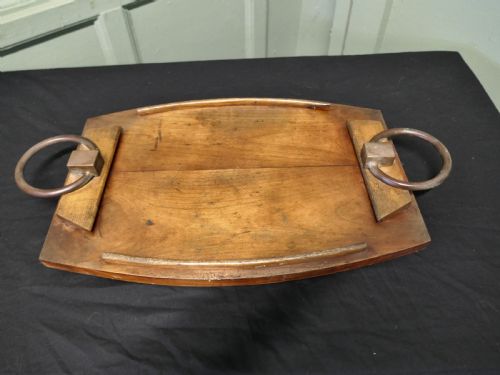
The pieces on this page span the late nineteenth century into the 1930s, concentrating heavily on the Edwardian period itself. Formats range from large oil paintings down to intimate woolwork pictures and decorative ship's trays.
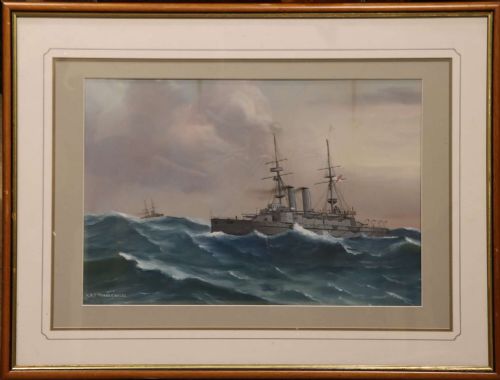
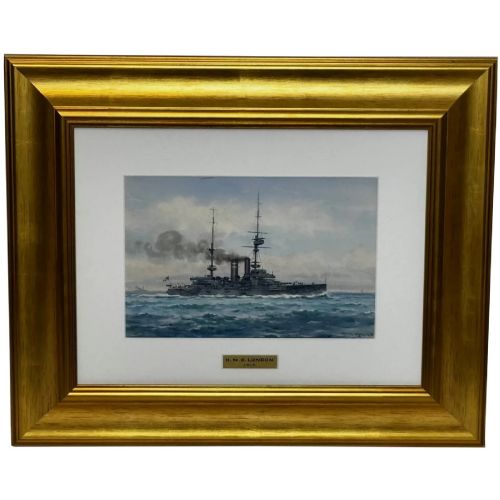
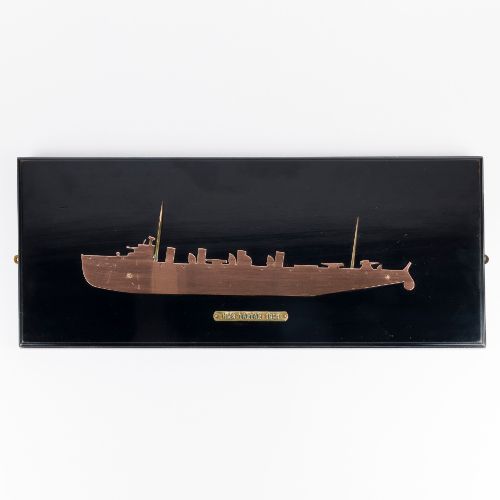
Common subjects include named steamships, warships like destroyers and ironclads, and working sailing vessels operating around British coasts and international waters. These works serve as historical records of naval architecture and traditional maritime life.
Materials and techniques
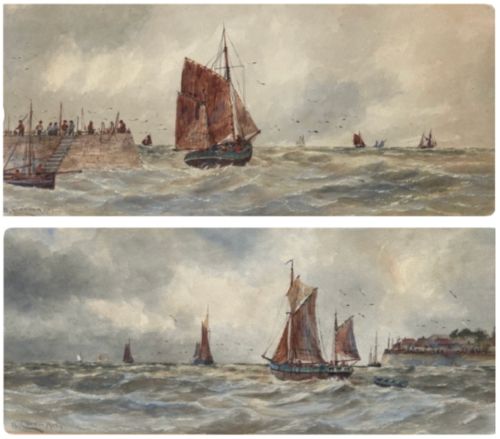
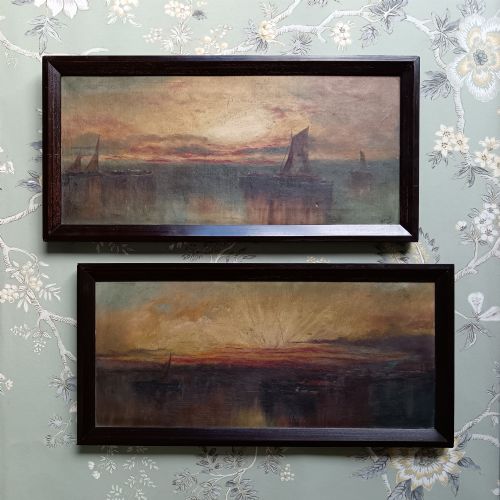
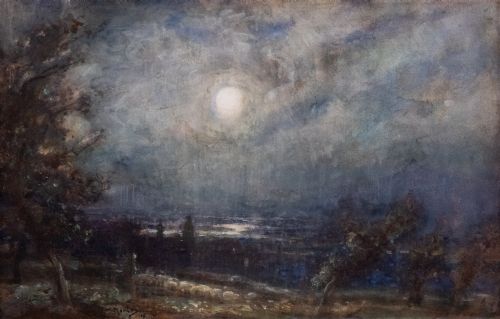
Artists working in this field utilised watercolour pigment and gouache on paper or board, often applying fine pencil work to establish rigging and architectural details. Oil on canvas was preferred for larger coastal landscapes and dramatic marine scenes requiring richer depth of colour.
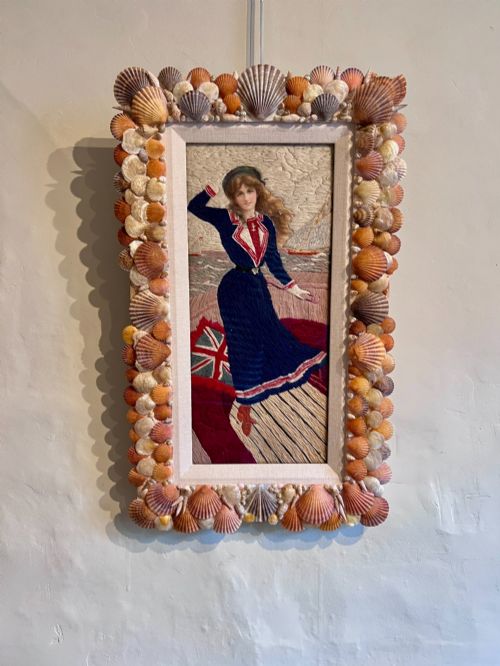
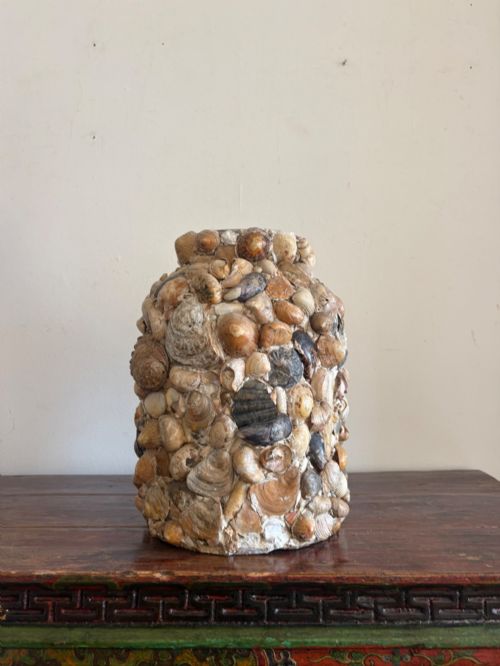
Folk art pieces incorporate diverse materials such as wool textiles in woolwork pictures, shell decorations on jars, and carved wood in ship's trays and dioramas. These mixed media objects rely on traditional handcraft techniques passed down through generations of maritime communities.
Sailors doubling as textile artists stitched detailed woolie portraits of their favourite warships while idling on long oceanic voyages.
Distinctions in quality
Quality rests upon the artist's technical command of maritime architecture, water movement and atmospheric light. Superior watercolours and oil paintings demonstrate accurate depictions of ship rigging, hull construction and sea conditions rather than generic marine backdrops.
Provenance and documentation elevate individual pieces, particularly when a painting identifies a specific vessel, precise location and dated event. Works signed by recognised professional marine artists or executed by contemporary participants command greater attention than anonymous studio output.
William Cannon·Frank Watson Wood·Thomas William Morley·William Lionel Wyllie·Frank William Scarbrough·F. Corpuz·Hector Caffieri·Alexander Harwood·Frank Kelsey·F A Roylance·George F Pennington·Alfred George Morgan·Charles Napier Hemy·Richard Harry Carter·Pieter Cornelis Dommersen·Daniel Sherrin·Tom Clough·Stanley Leader·Edward Henry Eugene Fletcher·Fred Waugh·James Watson
The Edwardian Maritime Art Glossary
- Gouache
- An opaque watercolour paint that dries to a matte finish, allowing artists to create sharp highlights on turbulent water and ship superstructures.
- Woolie
- A traditional embroidery picture created by sailors using coloured wool yarns to depict sailing ships and naval vessels, often featuring padded textile elements.
- Diorama
- A three-dimensional display containing a detailed model of a ship set against a painted curved background depicting the sea and sky.
- Etching
- A printmaking technique where an artist uses acid to cut lines into a metal plate, producing fine, linear impressions on paper.
Edwardian Maritime Art: Frequently Asked Questions
What subjects appear in Edwardian maritime art?
These works depict a wide variety of vessels, ranging from working fishing luggers and Thames barges to grand steamships, royal yachts and naval ironclads. Coastal towns, harbour entrances and open sea views provide the setting for these watercolours and oil paintings.
Artists frequently recorded specific named ships participating in historical events or operating in recognised ports around Britain and overseas. This focus on verifiable vessels gives the genre its strong documentary appeal.
How were woolwork pictures made?
Sailors created woolies, also known as woolwork pictures, during long voyages at sea using leftover coloured wool yarns. They stitched these threads onto canvas or linen backgrounds to build detailed portraits of their ships.
Stitchers often padded parts of the sails and hull with cotton wool to give the vessel a three-dimensional appearance. These sentimental tributes frequently included flags, signal pennants and decorative borders.
Where should I display marine watercolours?
Watercolours and works on paper require protection from direct sunlight to prevent the pigments from fading over time. Hanging them in rooms with stable humidity levels helps preserve both the paper support and the original framing.
Positioning these pieces at eye level allows viewers to appreciate the fine penwork and delicate washes characteristic of the period. Proper conservation framing with acid-free mounts safeguards the longevity of paper-based artwork.
How do I identify the date of a marine painting?
Signatures, dates inscribed by the artist, and contemporary framing often provide the clearest initial indicators of a work's period. The specific type of vessel depicted, such as a pre-First World War destroyer or a specific steamship design, narrows down the possible era of creation.
Examine the back of the canvas or paper for old exhibition labels, dealer stamps, or handwritten notes regarding the ship and location. These archival clues help establish a reliable timeline for the artwork's origin.