



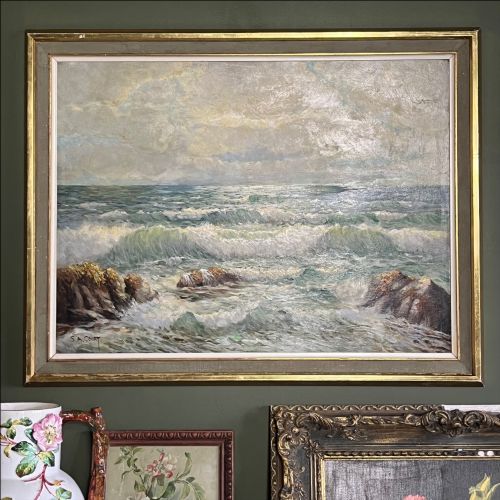
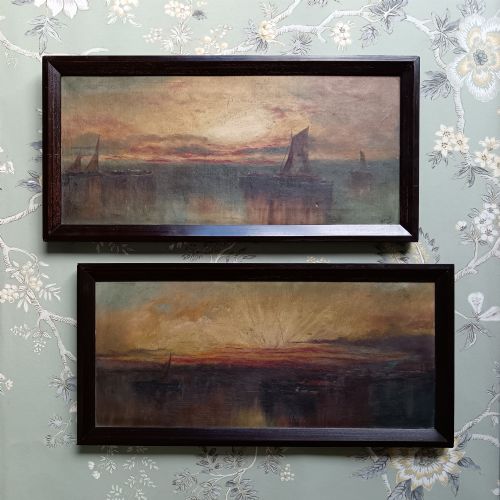
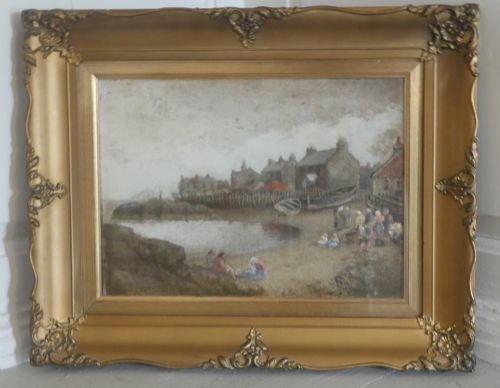
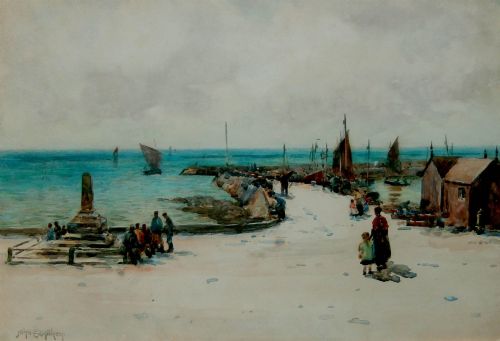

Framed Coastal Painting
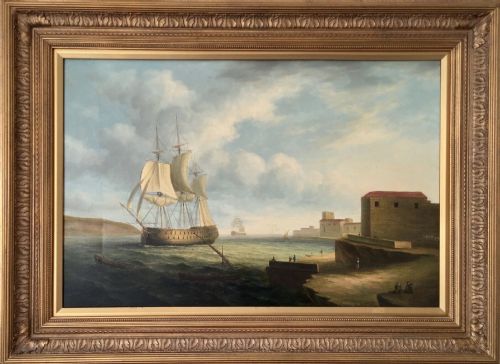
When you search for a framed coastal painting, you are looking at maritime history and seaside light captured across the nineteenth and twentieth centuries.
Framed Coastal Painting
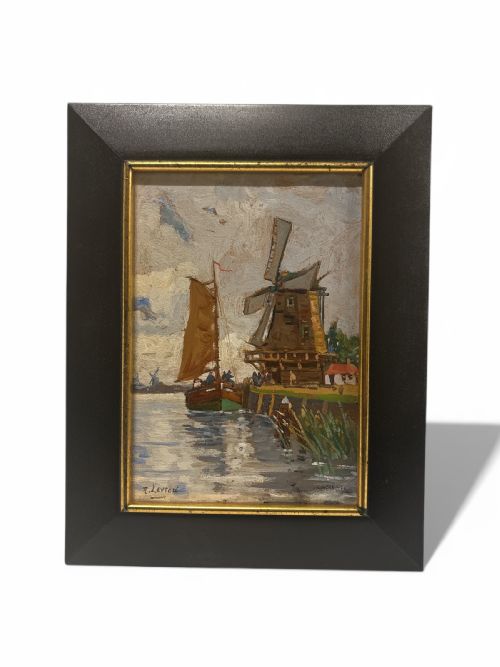
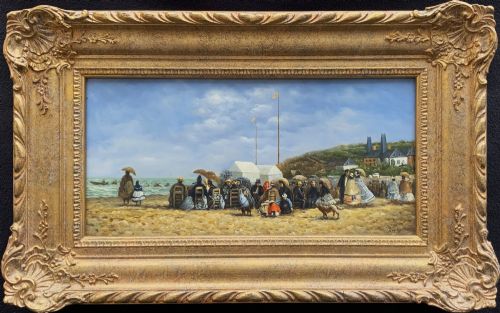
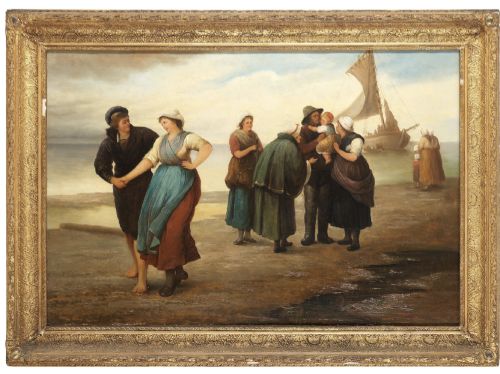
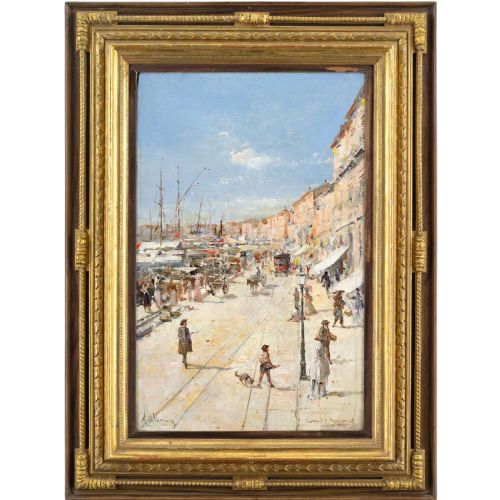
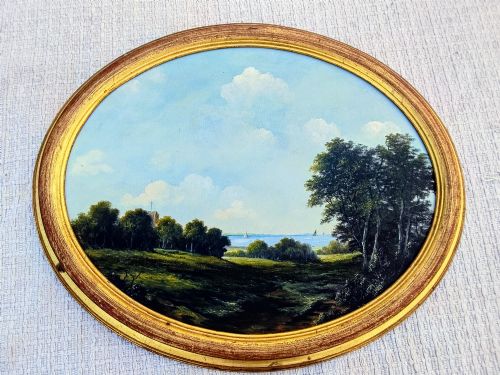
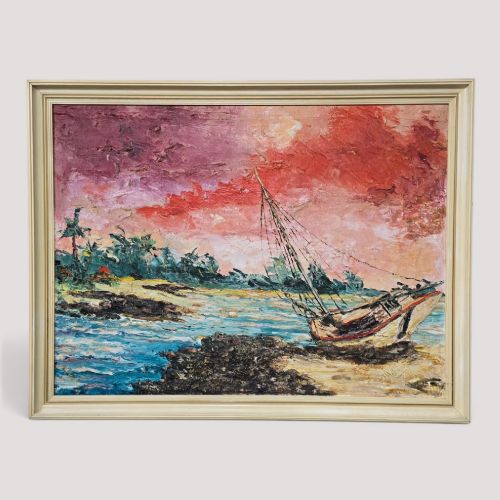
A framed coastal painting captures harbours, fishing boats, and shorelines, spanning Victorian marine scenes to mid-century modern interpretations.
Most pieces you meet on this page originate from the nineteenth century or the mid-twentieth century, showing British and European coastal life.
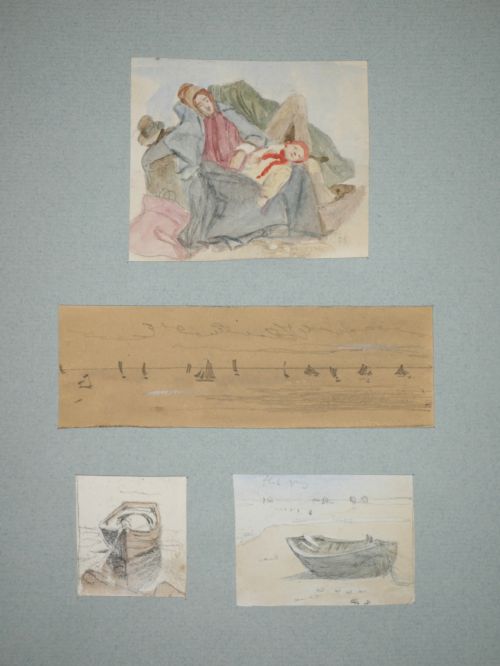
The selections range from detailed watercolour sketches of Cornish harbours to bold oil paintings executed en plein air on canvas or board.
How they were made
Artists worked in oil paint or watercolour, applying pigment to stretched canvas, wooden panels, heavy paper, or card.
Finished works were housed in timber frames, often embellished with gilt wood to complement the maritime subject matter.
Listings feature works executed in oil paint, watercolour, and mixed media across the Victorian era up to the mid-twentieth century.
What varies in quality
The handling of light and atmosphere separates accomplished marine art from simpler topographical records, particularly in how water and skies are rendered.
The integration of the frame with the artwork plays a role, as period gilt wood surrounds enhance the visual weight of the oil or watercolour within.
James Hardy·James Orrock·Clifford Hanney·Sidney A Court·William Banks Fortescue·Augusto Alberici·Lucy Pratt·Clive Browne·Peter Brannan·Paul Bret·Bernard Benedict Hemy·Thomas Creswick·James Fry·Thomas Maidment·TB Hardy·Donald McIntyre·Cecil Allan Mould·Charles Euphraisie Kuasseg·John Wilson Carmichael·Abraham Cooper·Joseph Farquharson·Erich Mercker·G W Butland·Clarkson Stanfield
The Framed Coastal Painting Glossary
- En plein air
- Painting outdoors to capture natural light and atmospheric conditions directly. This method was favoured by artists recording coastal weather and shifting tides.
- Gilt wood
- Timber treated with a gold leaf or metallic finish. It provides a reflective border that frames marine watercolours and oil paintings.
- Marine art
- Depictions of ships, harbours, and coastal views. This genre includes historical naval engagements as well as quiet fishing village scenes.
- Watercolour
- A paint consisting of water-soluble pigments applied to paper. It yields translucent washes that suit bright seaside skies.
Framed Coastal Painting: Frequently Asked Questions
How do I date a coastal painting?
Examine the materials, support, and framing style, alongside any signatures or biographical dates of the artist. Stylistic shifts between Victorian academic marine art and twentieth-century impressionism also offer clear chronological clues.
Paper, canvas preparation, and the construction techniques of the gilt wood frame provide additional physical evidence for the period of creation.
Where were these coastal scenes painted?
The works record locations across Britain, including Cornwall, Morecambe Bay, and Sussex, as well as European destinations such as Malta, Sicily, and the Dutch coast.
Artists travelled to busy commercial ports and quiet fishing havens alike, capturing local vessels, architecture, and maritime industries.
How should I hang a framed oil painting?
Select a wall with stable humidity and away from direct sunlight to protect both the canvas or board and the surrounding gilt wood frame. Ensure the fixings match the weight of the heavy timber framing.
Keep oil paintings out of extremes of temperature to prevent cracking in the paint layer or warping in the wooden support.