


Framed Maritime Wall Decor
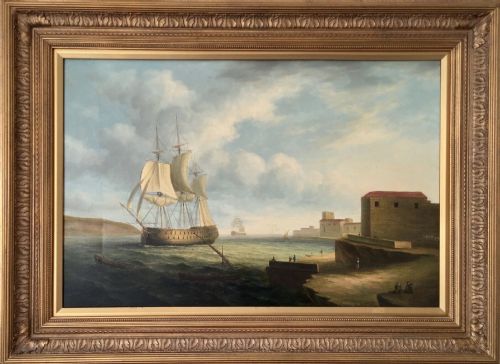
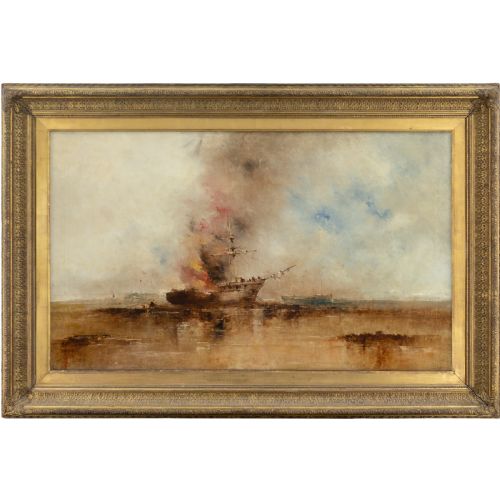
Framed maritime wall decor encompasses paintings, watercolours, and dioramas capturing historic vessels and coastal scenes that bring nautical heritage into interior spaces.
Framed Maritime Wall Decor
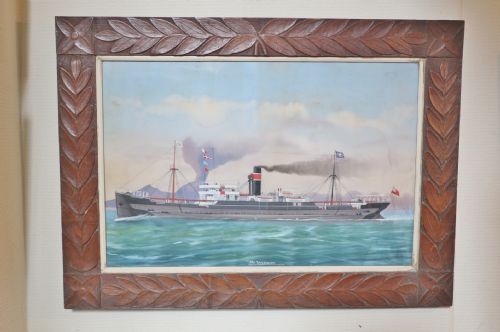
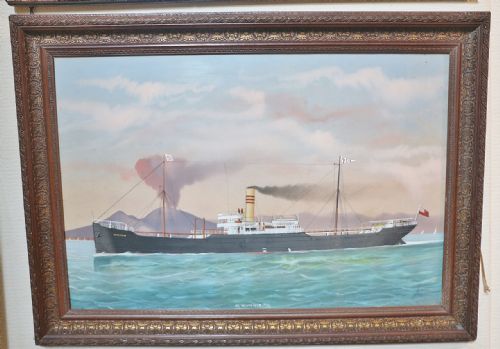
Framed maritime wall decor brings together paintings, watercolours, maps, and dimensional dioramas that record centuries of seafaring life and coastal views. These pieces range from detailed depictions of steamships and merchant vessels to harbour scenes and sea battles executed in oil or watercolour.
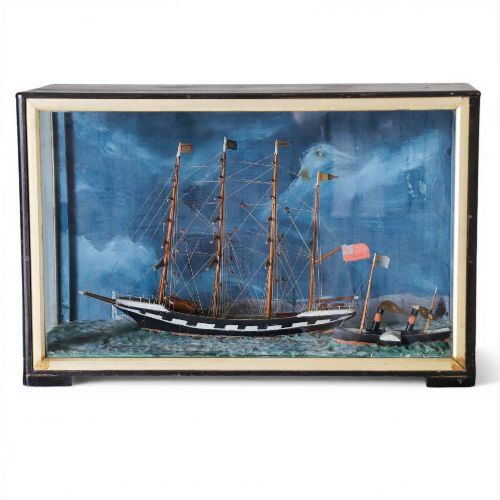
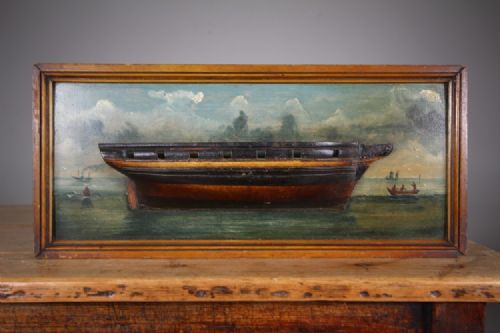
The versions most frequently encountered on this page are nineteenth-century and early twentieth-century oil paintings on canvas or panel, alongside Edwardian ship portraits and coastal watercolours. Maritime shadow boxes and dioramas also appear, offering dimensional views of sailing ships and steam barges.
Materials and construction
The physical build of these pieces relies on traditional painterly and framing materials, primarily oil paint or watercolour applied to canvas, wood panels, or paper supports. Gilded wood and oak frames enclose the majority of works, preserving the delicate surfaces from atmospheric moisture.
Dimensional pieces such as dioramas and shadow boxes utilise carved wooden hulls, painted canvas backdrops, and glass front panels to create perspective. These constructions require careful assembly to secure the miniature elements within the wooden framing.
Several Victorian captains clearly insisted their ships looked suitably heroic, regardless of the actual weather.
Gradations in quality
Quality in these works rests upon the fidelity of the maritime subject and the surety of the brushwork. Works by named marine artists or pieces displaying precise rigging details and accurate vessel anatomy stand apart from generic coastal scenes.
The integration of the frame with the artwork contributes to the overall standard. Original gilded wood or oak frames that suit the period of the painting indicate a higher degree of preservation and original integrity.
James Hardy·Lemuel Francis Abbott·Edward Matthew Elliott·Richard Brydges Beechey·Frank Wood·H Hadfield Cubley·Charles Cameron Baillie·James Kinnear·Godwin Bennett·Arthur Joseph Meadows
The Framed Maritime Wall Decor Glossary
- Diorama
- A three-dimensional scene enclosed in a box with a glass front, often featuring carved model ships set against painted canvas backgrounds. These pieces combine flat art with sculptural elements.
- Barque
- A sailing vessel with three or more masts, having square sails on the foremast and mainmast and fore-and-aft sails on the mizzenmast. This rig frequently appears in nineteenth-century marine art.
- Panel
- A rigid support for painting, commonly made of wood, used before canvas became standard. Oil paintings on panel often survive from the nineteenth century.
- Shadow Box
- A deep, glass-fronted frame designed to display three-dimensional objects such as maritime models. It protects delicate dimensional work from dust and damage.
- Gilded Wood
- Wood treated with a thin layer of gold leaf or gold paint, commonly used for nineteenth-century picture frames. It adds a decorative border to maritime paintings.
Framed Maritime Wall Decor: Frequently Asked Questions
What subjects do these maritime pieces show?
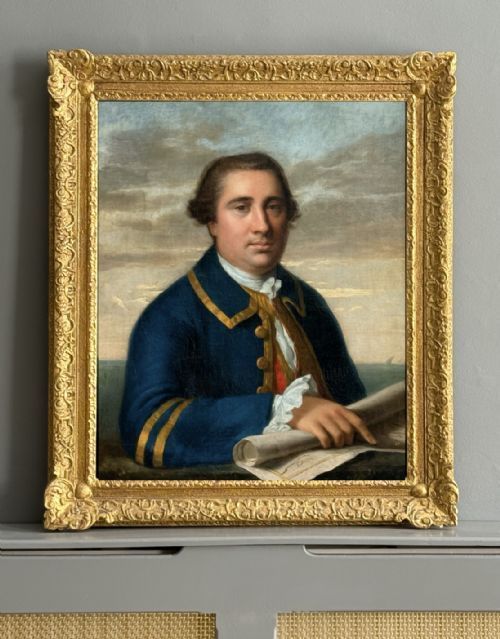
The artworks depict named steamships, war vessels, merchant navy captains, and four-masted barques alongside coastal harbours, fishing trawlers, and open sea views. Many capture specific historical vessels or coastal locations from the nineteenth and early twentieth centuries.
Alongside flat oil paintings and watercolours, some pieces present dimensional dioramas featuring sailing ships and steam barges set within shadow boxes.
How do I date a framed marine painting?
Dating relies on the vessel types depicted, such as steamships or nineteenth-century barques, combined with the style of the frame and the artist's active period. Details like clothing styles in portraits or specific recorded ship names provide further chronological markers.
Materials such as wood panels or specific canvas types also help determine the era of execution when combined with signatures or inscriptions on the reverse.
Where were these maritime artworks originally displayed?
Many of these paintings and watercolours hung in the smokerooms of passenger liners, shipping company offices, or domestic homes of maritime enthusiasts. Ship portraits were often commissioned by captains or owners to commemorate specific vessels.
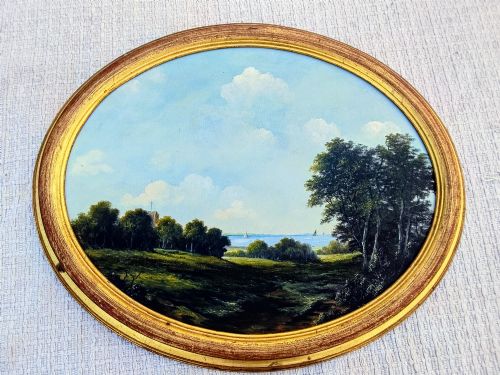
Smaller watercolours and coastal scenes served as domestic wall art for Victorian and Edwardian households with connections to the sea or coastal towns.
How should I care for antique marine art?
Keep framed paintings and dioramas away from direct sunlight and sources of extreme heat to protect oil paints, watercolours, and wooden frames. Maintain stable room humidity to prevent wood panels from warping and canvas from sagging.
Clean glass panels on shadow boxes and framed watercolours gently with a dry cloth, avoiding moisture near the paper supports or unsealed frame joints.