


Framed Lake Landscape Picture
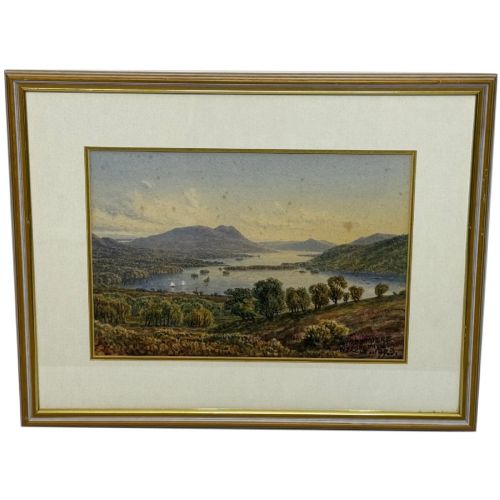
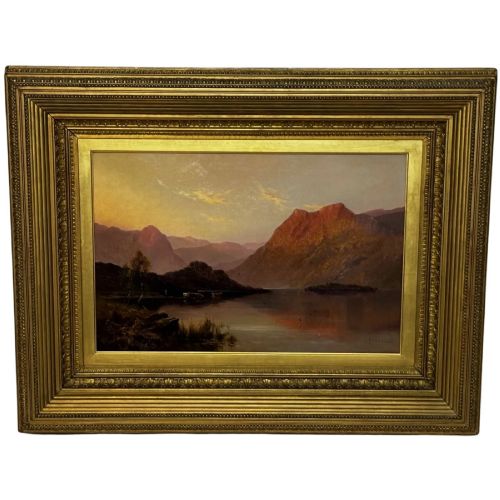
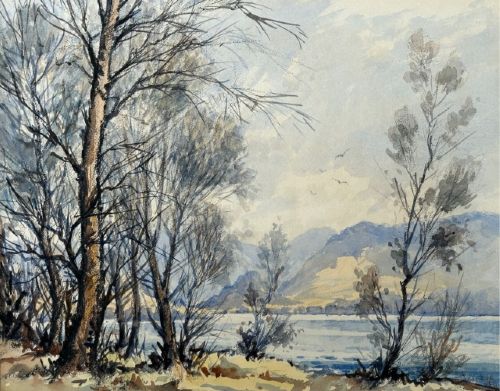
A framed lake landscape picture brings water and open sky into a room, spanning nineteenth-century oils and mid-century watercolours.
Framed Lake Landscape Picture
A framed lake landscape picture captures bodies of water, mountains and rural shores, appearing primarily in nineteenth-century styles, Victorian works, and mid-century British or French impressionism. These pieces range from grand oil paintings on canvas to intimate watercolour paintings on paper.
Buyers encounter subjects stretching from the English Lake District and Scottish Highlands to Italian lakes and Alpine vistas. The selection includes works by named artists alongside unsigned school pieces housed in period enclosures.
How they were made
Painters applied oil on canvas or watercolour to paper, using brushwork to render light on water, distant mountains and moody skies. Pen-and-ink drawings also appear among the works.
The artwork sits within wood, gesso and giltwood frames, sometimes protected beneath glass depending on the medium.
Geese occasionally paddle through the foreground of a quiet river landscape.
What varies in quality
Quality rests in the handling of light, atmospheric depth and the confidence of the brushwork in capturing water and reflections. Stronger examples demonstrate precise topography and balanced composition.
The surround plays a role; heavy gilt wood or elaborate period frames that complement the painting elevate the piece above standard mountings.
Alfred Fontville de Breanski Jr·Robert Leslie Howey·Frank Hider·J Laporte·John Douglas Perrett·Edward Horace Thompson·James Bell Anderson·Alexis De Leeuw·Benjamin Williams Leader·Claude Muncaster·Cornelius Pearson·Tom Dudley·Gustave De Breanski·Percy Lancaster
The Framed Lake Landscape Picture Glossary
- Giltwood
- Wood carved and coated with gold leaf or a gold-coloured finish. This material forms many of the ornate surrounds found on period artworks.
- Gesso
- A plaster-like mixture applied to wood frames before gilding or painting. It provides a smooth base for intricate moulded decoration.
- Watercolour painting
- Pigment suspended in a water-soluble vehicle applied to paper. This medium produces translucent washes of colour suited to atmospheric lake views.
- Impressionism
- An art movement focusing on light and its changing qualities rather than fine detail. Works in this style employ visible brushstrokes to capture fleeting outdoor moments.
- Topographical landscape
- A painting or drawing that depicts a specific real place with geographical accuracy. These works record identifiable lakes, valleys and buildings.
Framed Lake Landscape Picture: Frequently Asked Questions
Are these works original paintings?
The selection consists of original hand-painted works in oil or watercolour, alongside hand-drawn pieces on paper. Each item represents a unique creation by the artist rather than a modern reproduction.
Signatures appear on many pieces, while others remain unsigned examples from specific nineteenth-century or mid-century schools.
How do I hang a heavy oil painting?
Large oil paintings on canvas housed in substantial wood and gilt frames require secure fixings screwed directly into wall studs or heavy-duty wall anchors. The weight of the canvas and frame demands stable support.
Position the work away from direct sunlight and moisture fluctuations to protect both the canvas and the gilt surround.
What is the difference between oil and watercolour?
Oil paintings use pigments bound in medium-drying oil applied to stretched canvas, allowing for thick textures and deep, layered tones. Watercolours use water-soluble paint on paper, resulting in lighter, more translucent compositions.
Watercolour paintings and drawings require glass protection to prevent moisture and surface damage, whereas oil canvases remain open to the air.
How do I date a landscape painting?
Dating relies on stylistic evidence, artist signatures, framing materials and any recorded biographical dates associated with the creator. Nineteenth-century works often feature romantic or impressionistic handling, while later pieces adopt mid-century techniques.
The construction of the wood frame and the type of canvas or paper provide further clues to the period of origin.