

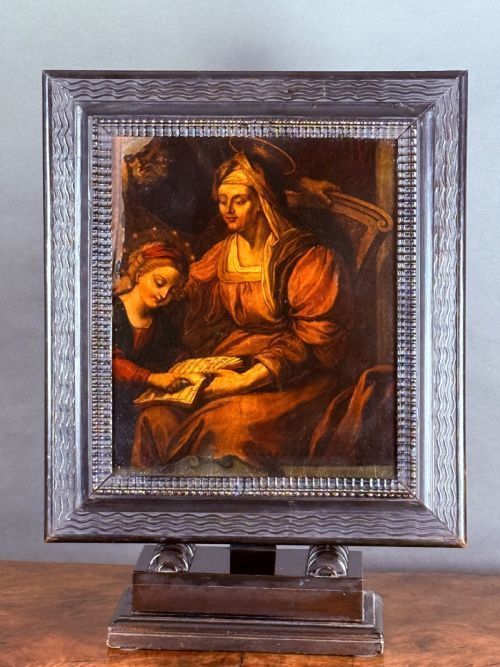
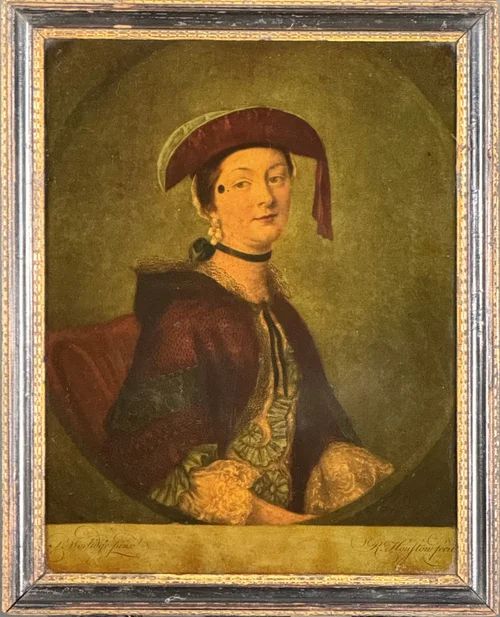
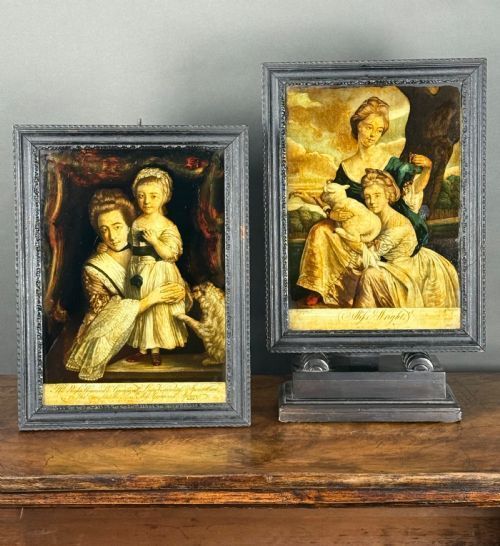
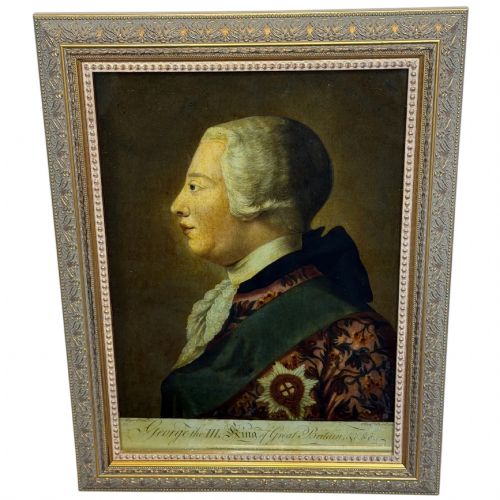


Framed Glass Mezzotint
A framed glass mezzotint offers a remarkably deep tonal range captured beneath protective glass, prized for its lustrous surface and historical depth.
Framed Glass Mezzotint
A framed glass mezzotint is a specialised form of wall art where printmakers applied inked impressions to glass panels, often hand-colouring the details from behind. These works span the seventeenth, eighteenth, and nineteenth centuries, encompassing the Georgian and Regency periods alongside Victorian examples.
The pieces on this page mostly take the form of reverse glass prints and reverse glass paintings, depicting royal portraits, allegorical seasonal figures, and narrative scenes. Portraiture of figures such as King George III and Queen Anne appears frequently alongside seasonal sets representing spring, summer, autumn, and winter.
Makers and publishers active in this medium included Charles Spooner, Richard Purcell, Robert Sayer, and W. Bishop, translating works by artists like Fletcher, Sebastiaan Vrancx, and Richard Phillips. Collectors encounter these works mounted in period wooden frames, occasionally embellished with gold leaf and gilt.
Materials and Technique
Makers transferred the inked mezzotint image onto the reverse side of a glass sheet, allowing the viewer to observe the print through the smooth front surface. This reverse method protected the delicate paper and ink from atmospheric dirt and moisture.
Artisans applied oil paint, pigment, and oil pigment directly onto the back of the glass to introduce rich colour beneath the transparent layer. Silk embroidery and paper elements occasionally supplemented the printed design within the composition.
Housings relied on timber and wood finished with gold leaf or gilt to secure the glass panel safely while providing structural support for wall display.
Early printmakers cleverly turned the rules of reflection upside down by painting their subjects backwards so viewers could admire them the right way round.
Assessing Quality
Quality rests upon the crispness of the underlying mezzotint transfer and the precision with which the pigments were applied behind the glass. Skilled hand-colouring enhances the visual depth of portraits and narrative scenes, whereas careless application mutes the tonal contrast.
The integrity of the glass and the originality of the housing significantly influence the standing of a piece. Examples retaining their original gilt wood frames and undisturbed backing materials hold greater authority among collectors.
Charles Spooner·Richard Purcell·Robert Sayer·W. Bishop
The Framed Glass Mezzotint Glossary
- Mezzotint
- A printmaking process of the intaglio family where the copper plate is roughened uniformly to produce rich dark tones and subtle gradations of light. This technique allows for velvety blacks and smooth mid-tones without relying on line work.
- Reverse glass painting
- An artistic technique where the image is painted directly onto the back of a glass panel so that it is viewed from the front. The finished work gains a characteristic glossy sheen from the protective glass layer.
- Crystoleum
- A Victorian method of applying a coloured print to the inside of convex glass and refining it with oil paints. This process created a luminous, three-dimensional portrait style popular during the nineteenth century.
- Gilt wood
- Timber frames or decorative elements coated in a thin layer of gold leaf or metallic gilt paint. Such framing was standard for housing fine eighteenth and nineteenth-century wall art.
- Allegorical print
- Artwork depicting symbolic figures or personifications representing abstract concepts such as the seasons or virtues. Seasonal sets depicting spring, winter, and autumn frequently employ this narrative device.
Framed Glass Mezzotint: Frequently Asked Questions
What is a framed glass mezzotint?
A framed glass mezzotint is an early print transferred and displayed behind a protective sheet of glass, often enhanced with hand-applied pigments on the reverse side.
These pieces combine printmaking with painting techniques, resulting in a luminous surface that differs significantly from standard paper prints.
How should I hang these prints?
Hang these works away from direct sunlight and areas of high humidity to protect the delicate pigments and oil paint applied behind the glass.
Secure them using appropriate wall fixings suitable for heavy wood and gilt frames to ensure the glass remains stable.
How do I identify the period?
Examine the framing materials, the style of the portraiture or subject matter, and the construction of the wooden backing boards. Georgian and Regency examples often display specific stylistic cues in typography and dress.
Comparing the named sitters, such as Queen Anne or King George III, provides a reliable chronological anchor for dating the work.
Were these made as pairs?
Many examples were produced as pairs or larger sets, particularly those depicting seasonal allegories like spring and winter or companion portraits.
Sets of four, such as the Regency reverse glass engravings, were commonly created to decorate symmetrical wall spaces in period interiors.