



18th Century Reverse Picture
An 18th century reverse picture brings together glass, mezzotint, and meticulous hand-painting to create a luminous portrait with remarkable depth.
18th Century Reverse Picture
When you search for an 18th century reverse picture, you encounter delicate works created by applying ink, paint, and gold leaf to the underside of a glass plate. The viewer sees the finished image through the polished surface of the glass, which protects the pigments and gives the work a characteristic sheen. Most examples on this page date from the Georgian era and take the form of reverse glass paintings, prints, and mezzotints.
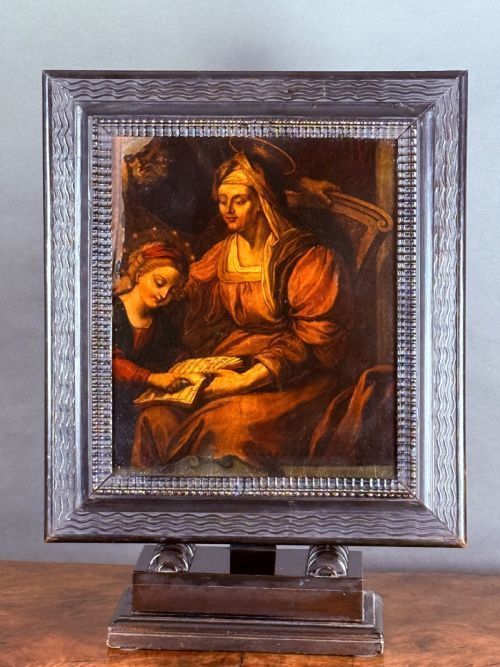
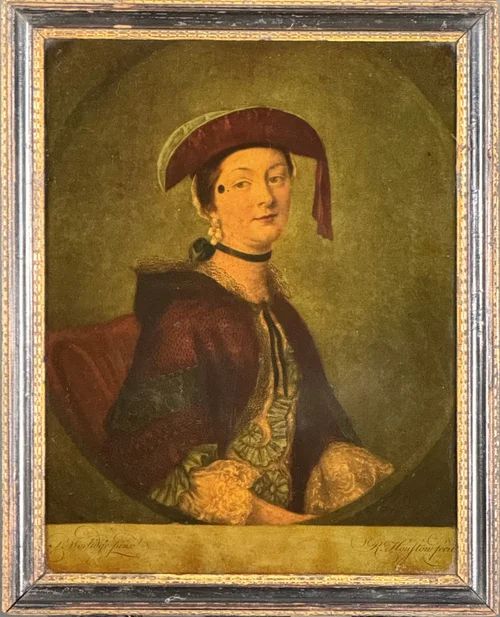
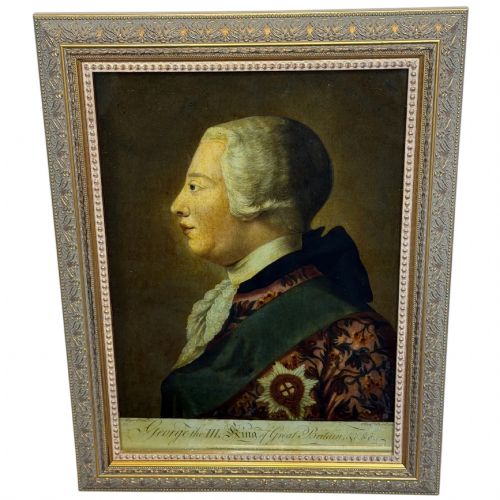
The subjects range from royal portraits and classical religious scenes to allegories of the seasons and domestic genre studies. You will frequently find depictions of notable figures such as King George III, Queen Anne, and various society ladies, alongside narrative compositions like The Education of the Virgin. These pieces were designed for domestic display as wall art, housed within simple or moulded wooden frames.
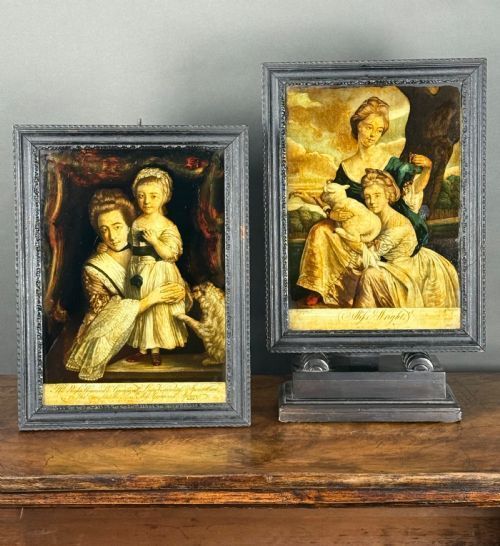
While the majority of listings adhere to the 18th century and Georgian periods, the selection also spans related items reaching back towards the late 17th century and forward into the 19th century. The formats include both single framed plates and balanced pairs, such as seasonal depictions of autumn and winter or matched portraits.
Materials and Technique
The creation of these works required applying the image in reverse directly onto a sheet of glass, beginning with the finest details and finishing with the background layers. Artisans utilised printed mezzotints or delicate paper transfers pasted face-down onto the glass, which were then painstakingly hand-coloured using oil paint, pigment, and gold leaf. This technique demanded absolute precision, as any error made on the primary layer could not be corrected from the front.
The primary structural components consist of clear glass panels paired with oil pigment, paint, and paper, all secured within wood framing. The interaction between translucent glass and applied pigment produces the distinct optical depth that defines the medium, separating these works from standard paper prints or canvas paintings of the period.
The listings on this site encompass glass, paper, gold leaf, and oil pigment, spanning periods from the 17th century through the 19th century.
Factors of Quality
The condition of the glass substrate and the integrity of the pigments beneath it also dictate the standing of a piece. Works that retain their original vibrant tones without excessive flaking or pigment loss demonstrate superior preservation of a notoriously fragile medium.
Fletcher·Sebastiaan Vrancx·Charles Spooner·Richard Purcell·W. Bishop·Richard Phillips
The 18th Century Reverse Picture Glossary
- Reverse glass painting
- A technique where an artist paints or applies pigment directly to the back of a glass sheet so the image is viewed through the front. This method preserves the colours from airborne dirt and fading.
- Mezzotint
- A printmaking process of the intaglio family where the plate is roughened to produce dark tones and smoothed where light areas are required. It yields rich gradations of shadow well-suited to portraiture.
- Georgian
- Pertaining to the period of the British monarchs George I through George IV, spanning the 18th and early 19th centuries. Pieces from this era often reflect neoclassical or late baroque design influences.
- Gold leaf
- Thin sheets of hammered gold applied to specific areas of the design to catch the light. It is frequently utilised in these works to highlight jewellery, frames, or decorative garments.
18th Century Reverse Picture: Frequently Asked Questions
What is a reverse glass mezzotint?
A reverse glass mezzotint is a printed image transferred face-down onto glass and then hand-coloured from the rear. The resulting work combines the tonal range of a copperplate print with the polished sheen of glass.
This technique creates a glossy surface finish that protects the delicate pigments underneath while giving the portrait or scene an unusual optical depth.
How should I hang these framed glass pieces?
These works require secure wall fixings suited to the combined weight of the glass, wooden frame, and backing boards. Ensure the hanging wire and wall hooks match the dimensions of the piece.
Position the picture away from direct sunlight to protect the fragile oil pigments and paper elements from fading over time.
How do I tell Georgian examples apart from later pieces?
Georgian examples typically display the costume, hairstyles, and portrait subjects characteristic of the 18th century, such as powdered wigs, lace collars, and specific historical figures. The framing materials and glass manufacturing traits also offer clues to the period.
Later nineteenth-century interpretations often exhibit subtle shifts in printing technology and stylistic execution compared to their eighteenth-century predecessors.
Were these works intended as wall art?
These pictures were produced primarily for domestic interior decoration, functioning as fashionable wall art for parlours and drawing rooms. Their reflective surfaces caught the candle-light of period interiors effectively.
They served both to display portraits of reigning monarchs and public figures and to bring allegorical and seasonal themes into the home.