


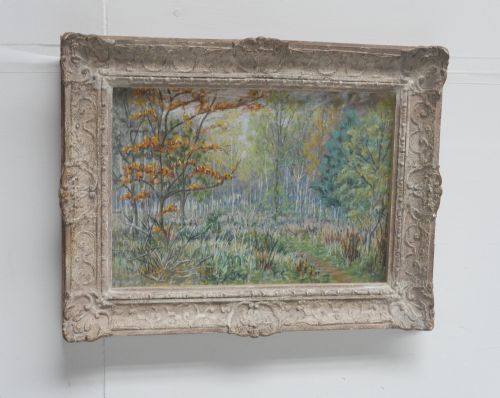
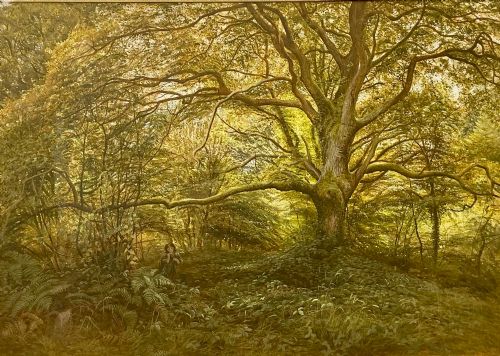


Framed Forest Landscape Art
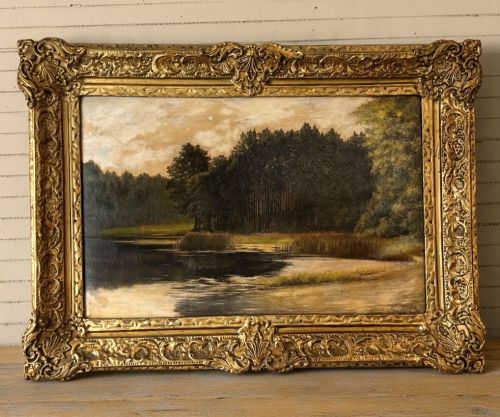
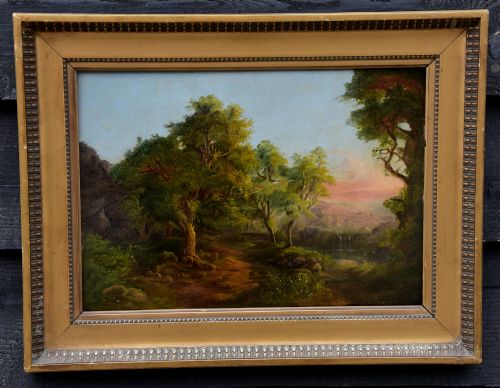
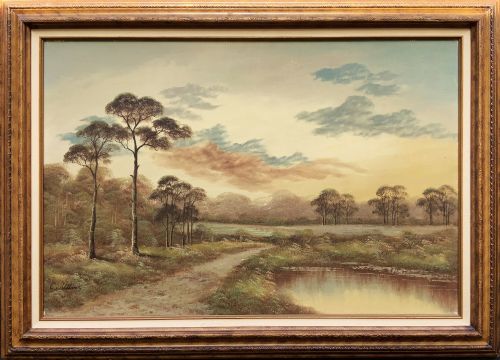
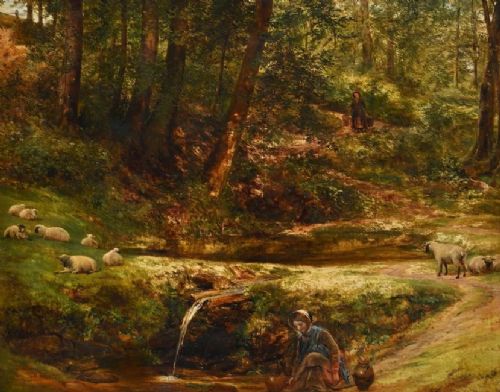
Framed forest landscape art brings the quiet depth of woodland paths and shaded trees straight onto your walls through oils and watercolours.
Framed Forest Landscape Art
When you search for framed forest landscape art, you encounter works that capture woods, trees, and rustic clearings across several distinct periods. These pieces range from Victorian watercolours to mid-century oil paintings, reflecting shifting interpretations of natural scenes.
The versions you are most likely to meet on this page include 19th-century oils on board and canvas, alongside early 20th-century watercolours. Many arrive already housed in period frames that suit the earthy tones of the foliage and rivers depicted within.
The selection encompasses traditional realism, impressionist touches, and romantic approaches to British and European scenery. Each piece focuses on trees, sunlight filtering through branches, or quiet woodland paths mapped out by past painters.
How they were made
Artists painted these scenes primarily with oil paint on canvas or board, and watercolour on paper, capturing the rich greens and browns of the woods. Oil paint allowed for thick, textured applications of foliage and light, while watercolour offered translucent washes for skies and distant trees.
Wood served as the primary material for the accompanying frames, often moulded and finished to complement the painted canvas or paper. These frames protect the edges of the artwork and provide a structured boundary for display on interior walls.
Framed Forest Landscape Art Retail Price Guide 2026
Typical asking prices for framed forest landscape art among the pieces listed under this phrase on Sellingantiques today, from the lower quarter to the upper quarter. They describe what is for sale here now, not the wider market.
Listings feature canvases, wood panels, and paper supports spanning the Victorian period through to nineteen sixty.
What varies in quality
The skill with which light filters through the canopy and reflects off woodland floors determines the visual impact of each painting. Stronger compositions handle depth and shadow with confident brushstrokes that draw the eye into the trees.
The preservation of the paint surface and the stability of the original wood frame affect the overall integrity of the piece. Works that retain their vibrant pigments without heavy cracking or fading demonstrate superior longevity.
Richard Redgrave·Thomas Bromley Blacklock·James Proudfoot·Rowland Henry Hill·Frederick Golden Short·William Mellor
The Framed Forest Landscape Art Glossary
- Oil paint
- A slow-drying paint made by combining pigment particles with a drying oil such as linseed. This medium allows artists to build rich textures and deep colour layers for woodland scenes.
- Watercolour
- A paint consisting of pigment suspended in a water-soluble vehicle, typically applied to paper. It produces luminous, transparent washes ideal for atmospheric forest skies and damp paths.
- Canvas
- A heavy woven fabric stretched across a wooden frame to provide a sturdy painting surface. It accommodates the heavier impasto techniques often seen in 19th-century and mid-century forest oils.
- Impressionist
- A style of painting emphasising unblended brush strokes and the shifting effects of light. In forest art, this approach captures flickering sunlight breaking through branches.
- Board
- A rigid flat panel, often wood or pasteboard, used as a support for paintings instead of stretched fabric. It provides a firm foundation frequently utilised for smaller 19th-century landscapes.
Framed Forest Landscape Art: Frequently Asked Questions
How do I hang a heavy oil painting?
Heavy oil paintings require sturdy picture hooks fixed directly into wall studs or secure wall anchors capable of supporting the weight of the wood frame and canvas.
Ensure you use strong picture wire rated well above the actual weight of the artwork to prevent slipping over time.
What periods do these paintings cover?
The listings span from the Victorian era and the nineteenth century through to the mid-twentieth century around nineteen sixty.
This broad timeline incorporates Edwardian works, impressionist pieces from the nineteen twenties, and later mid-century interpretations.
Are watercolours framed differently than oils?
Watercolours are generally mounted behind glass within a paper mat to protect the delicate pigments on paper from moisture and dust.
Oil paintings on canvas or board are typically framed directly without glass, allowing the textured paint surface to remain exposed.
Where should I display woodland art?
Woodland scenes suit living rooms, studies, or hallways where natural light complements the earthy tones of greens, browns, and blues.
Avoid placing them in direct sunlight or damp rooms to protect the canvas, paper, and wooden frames from environmental damage.