



Brown Woodland Wall Art
Brown woodland wall art brings the quiet depth of nature indoors, offering pastoral scenes captured across centuries in oil, watercolour, and print.
Brown Woodland Wall Art
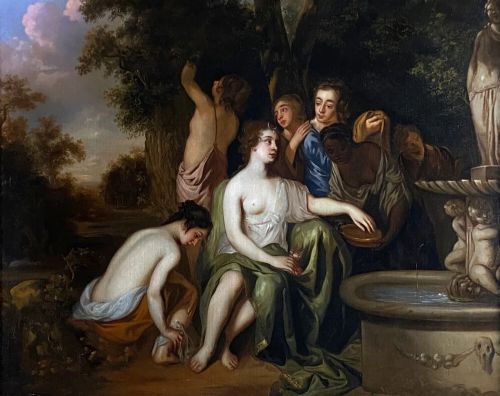
Brown woodland wall art comprises historic landscape paintings, watercolours, and prints spanning periods from the seventeenth century through to the mid twentieth century. These works capture pastoral vistas, wooded paths, and pastoral scenes using traditional mediums.
The selections available here lean heavily towards Victorian oil paintings and early twentieth century watercolours, often depicting cattle, sheep droving, and sheltered rural canopies. Buyers will encounter both framed original canvases and delicate paper studies.
Originating from British, Irish, and continental European traditions, these works reflect diverse movements from Victorian realism to traditional pastoral styles and Barbizon influences. Each piece provides a window into historical interpretations of the natural world.
How they were made
Artists utilised traditional oil on canvas and watercolour pigment on paper to build these naturalistic scenes. Canvases are stretched over wooden frames, while works on paper often sit beneath protective glass.
Brushwork ranges from fine, precise detail in Victorian realism to broader, atmospheric applications seen in Barbizon school and mid century landscape compositions.
Listings span periods from the seventeenth century through to the mid twentieth century, featuring oil, watercolour, and print mediums.
What varies in quality
Quality rests in the fidelity of the draughtsmanship and the artist's command of light within a restricted brown and earth toned palette. Masterful handling of depth separates competent decorative works from compelling cabinet pieces.
The preservation of the original medium, whether oil pigment or watercolour, dictates the visual impact of the composition. Intact canvas tension and stable paper condition anchor the enduring integrity of each artwork.
William H Myers·Sir Peter Lely·William Mellor·Alfred Grey·John Wright Oakes·Abraham Hulk Jnr·Harold Swanwick·Charles James Adams·J McIntyre·Donald Watson
The Brown Woodland Wall Art Glossary
- Oil on Canvas
- A painting medium where pigments are suspended in drying oils applied to a stretched cloth surface. This technique allows for rich colour blending and textured impasto application.
- Watercolour
- A paint consisting of water-soluble pigments applied to paper supports. It produces luminous, transparent washes ideal for delicate landscape studies.
- Barbizon School
- A nineteenth century French art movement focused on realist landscape painting and direct observation of nature. It heavily influenced later pastoral and woodland depictions.
- Victorian Realism
- An artistic approach from the nineteenth century prioritising accurate, unidealised representation of subjects. In landscapes, this manifests as meticulous botanical and topographical detail.
Brown Woodland Wall Art: Frequently Asked Questions
How do I hang heavy oil paintings safely?
Heavy oil paintings require sturdy fixings suited to the wall construction, usually anchored directly into studs or using specialist masonry plugs. Steel picture wire attached securely to the frame supports the weight evenly.
Ensure the hanging height positions the centre of the canvas at eye level for optimal viewing. Avoid locations exposed to direct sunlight or damp conditions to protect the historic canvas.
What defines a Victorian landscape painting?
Victorian landscape paintings typically emphasise narrative detail, naturalism, and a romantic engagement with the British or Irish countryside. Artists paid close attention to atmospheric lighting, seasonal markers, and rural livestock.
These works often bear the distinct framing styles and signature marks of the late nineteenth century. They reflect an era fascinated by the preservation of pastoral ideals amidst industrialisation.
Are seventeenth century oils different?
Seventeenth century oil paintings utilise classical compositions, heavier varnishes, and theological or mythological themes distinct from later pastoral watercolours. The preparation of the canvas and the layering of glazes followed traditional guild methods.
These earlier works carry a darker, richer patina developed over centuries of ageing. Their survival represents significant historical endurance compared to nineteenth century pieces.