





Woodland Landscape Artwork
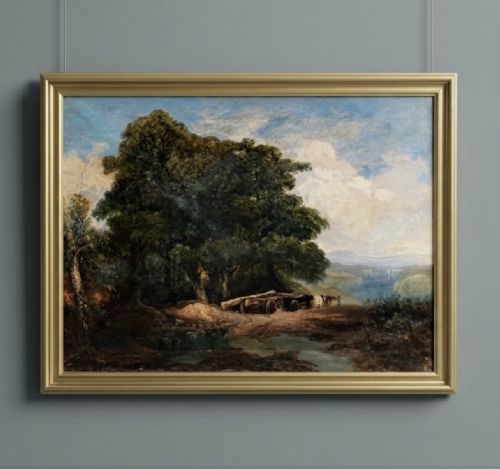
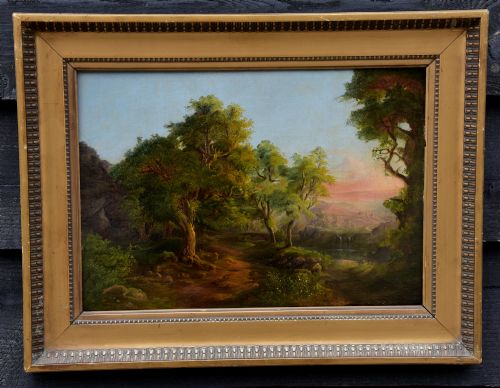
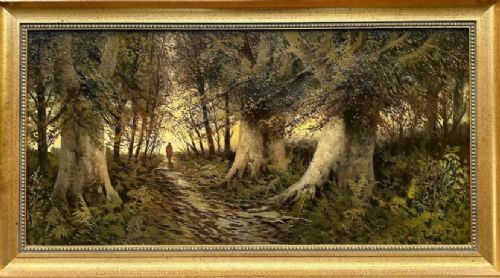
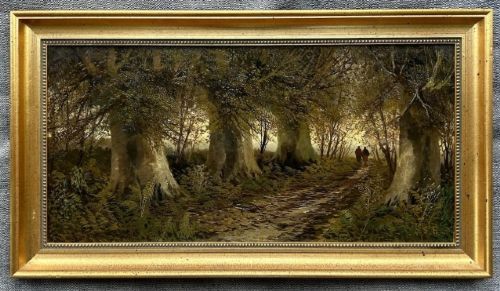
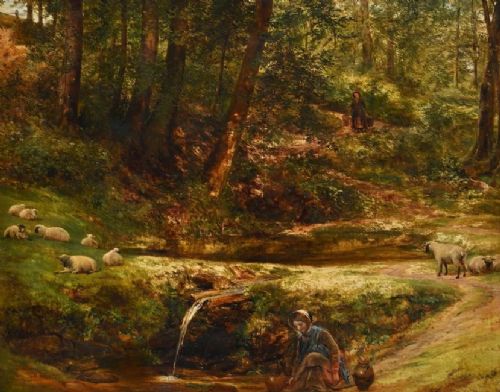
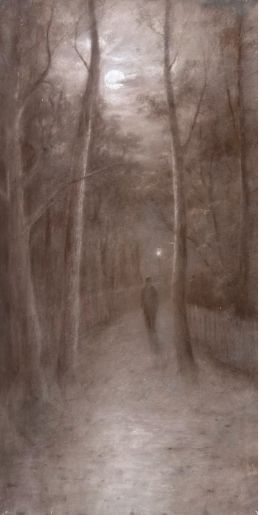
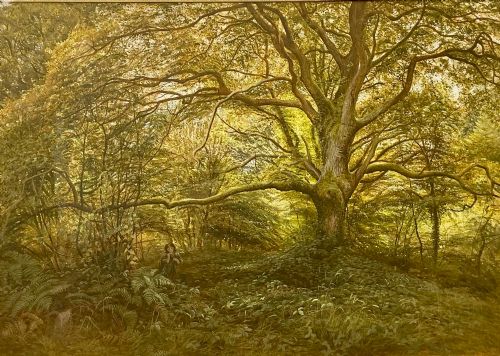
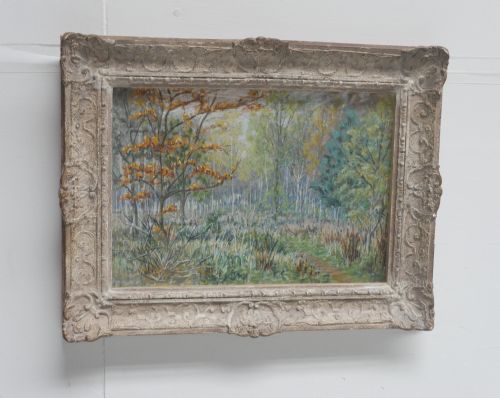
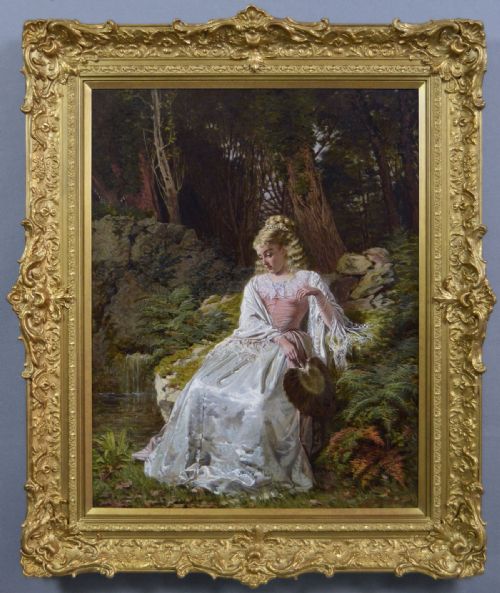
Woodland landscape artwork captures natural trees and forest scenes on canvas or paper, offering buyers a picturesque view of rural scenery.
Woodland Landscape Artwork
Woodland landscape artwork encompasses paintings and drawings depicting trees, forests, rivers, and rural paths created across the nineteenth and twentieth centuries. Buyers searching for woodland landscape artwork frequently encounter Victorian and early twentieth-century oil paintings on canvas or board, alongside watercolours and pastels.
The selections span distinct periods including Victorian, Edwardian, and mid-century modern eras, showing scenes ranging from quiet forest glades to riverbanks. These pieces use varied approaches from British impressionist techniques to nineteenth-century romanticism.
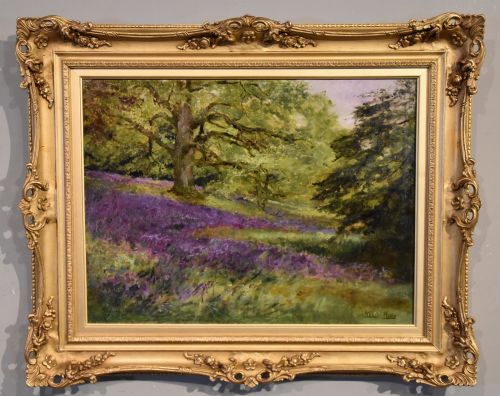
The physical formats vary widely, from large oil paintings framed in gold leaf to delicate watercolours and charcoal drawings on paper and canvas.
Materials and Methods
Artists painted these scenes using oil paint or watercolour applied to stretched canvas, wooden boards, and heavy paper, frequently incorporating gold leaf accents on frames. Charcoal, pastel, and ink served alongside oil paints to render fine botanical details and atmospheric forest light.
Support materials include traditional woven canvas stretched over wooden frames, sturdy wooden panels, and fine paper sheets suited for watercolours and drawings.
Listings feature works created across eight distinct decades, spanning from Victorian academic painting to mid-century post-war abstraction.
Judging Quality
Quality rests in the handling of light, shadow, and natural textures across the canvas, distinguishing skilled brushwork from simpler decorative output. Stronger examples display depth in foliage and water, whereas lesser pieces rely on formulaic repetition.
The sophistication of the palette and the confidence of the draughtsmanship separate accomplished regional works from standard mass-produced views.
Richard Sebastian Bond·William H Myers·Thomas W Lascelles·Richard Redgrave·Bonomi Edward Warren·Henry Yeen King·Arthur Herbert Rigg·Thomas Bromley Blacklock·Thomas Edward Roberts·James Mallard Bromley·Owen Bowen·Clarence Henry Roe·David Watts·William Mellor·Henri Joseph Harpinies·John Wright Oakes·Walter Follen Bishop·James Proudfoot·Rowland Henry Hill·Edmund George Warren·Abraham Hulk Jnr·Alfred W Parsons·Fred Lawson·William Lucas·Charles James Adams
The Woodland Landscape Artwork Glossary
- Oil on Canvas
- Pigment mixed with drying oil applied to a woven fabric support stretched over a wooden frame. This medium allowed artists to build rich textures and deep tones.
- Watercolour
- Paint consisting of transparent pigment suspended in a water-soluble binder applied to paper. It produces luminous, delicate washes of colour.
- Collograph
- A printmaking process where materials are applied to a substrate to create a textured plate. The resulting print captures varied surface details.
- Victorian Naturalism
- An art movement focusing on realistic depictions of the natural world and rural life. Painters observed outdoor subjects with careful attention to botanical accuracy.
Woodland Landscape Artwork: Frequently Asked Questions
What periods do these artworks come from?
These pieces date from the nineteenth century through the mid-twentieth century, capturing Victorian, Edwardian, and post-war aesthetics.
The majority reflect nineteenth-century romanticism and British impressionist traditions.
How should I hang these paintings?
Hang these works away from direct sunlight to protect delicate watercolours and oil pigments from fading over time.
Ensure stable indoor humidity levels to preserve the integrity of both wooden panels and stretched canvases.
What is the difference between oil and watercolour?
Oil paintings utilise thick pigments suspended in drying oil on canvas or board, offering rich texture and deep colour layering.
Watercolours use translucent pigments on paper, creating light, luminous scenes with visible paper texture beneath.
Are these pieces signed by the artists?
Many examples feature original signatures or monograms applied by the artist directly onto the paint surface or paper.
Some historical works remain unsigned while retaining stylistic attributes typical of known regional schools and periods.