
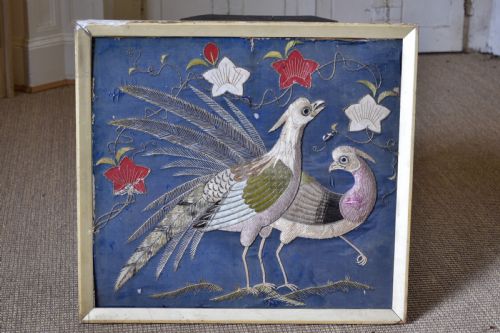
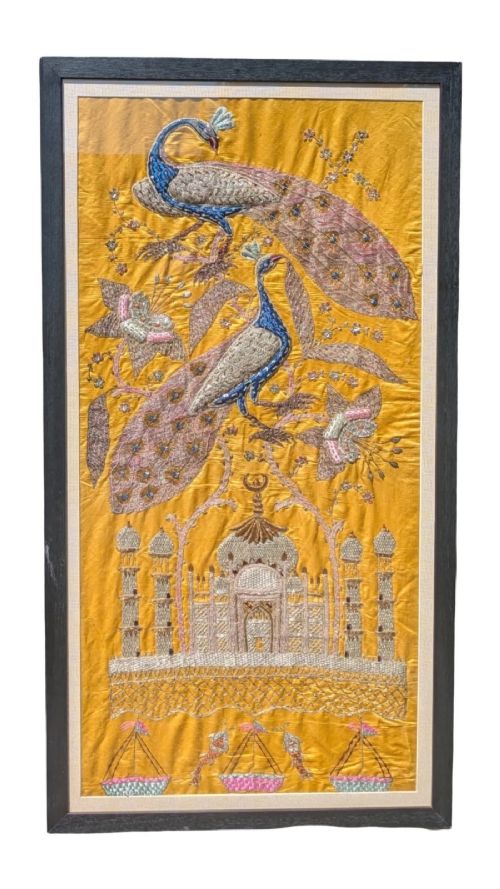
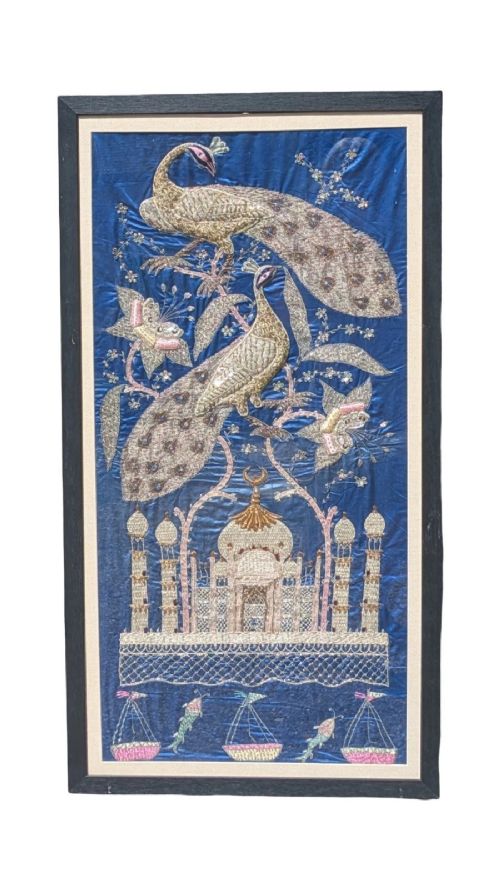
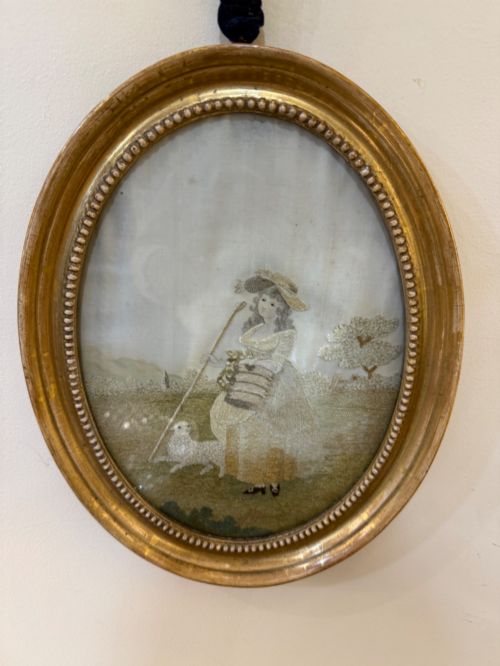


Framed Embroidered Silk
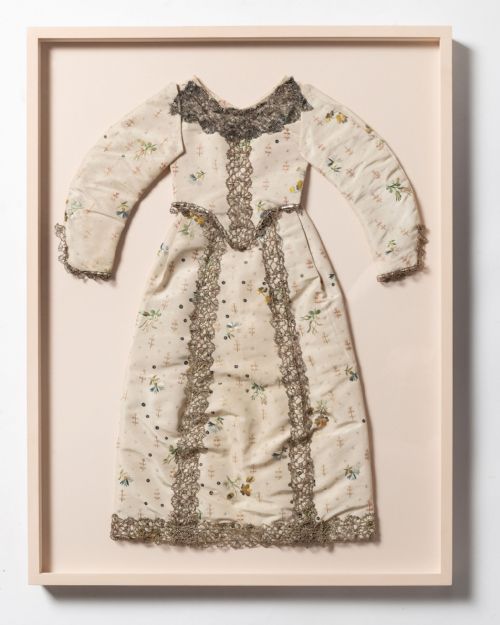
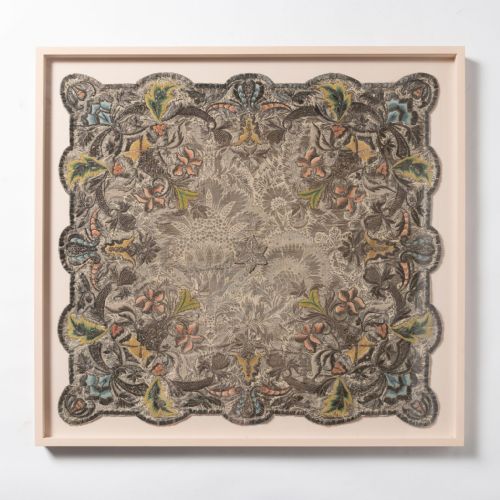
Framed embroidered silk brings needlework history to the wall, preserving detailed threads behind glass across centuries.
Framed Embroidered Silk
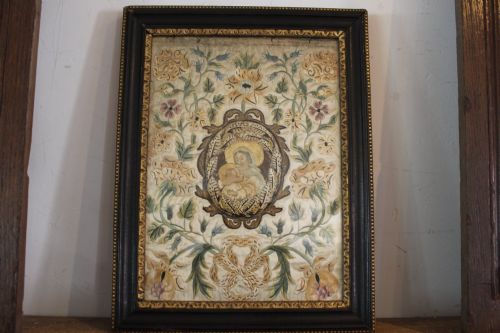
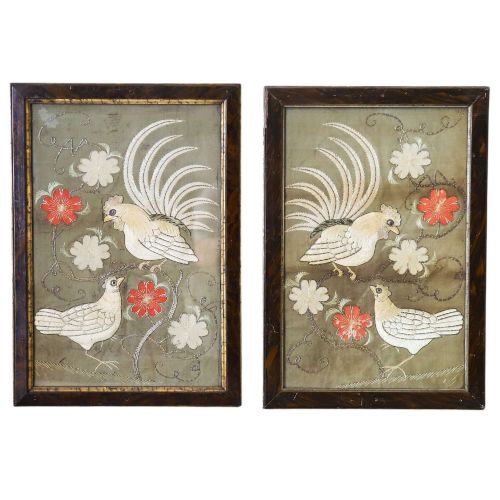
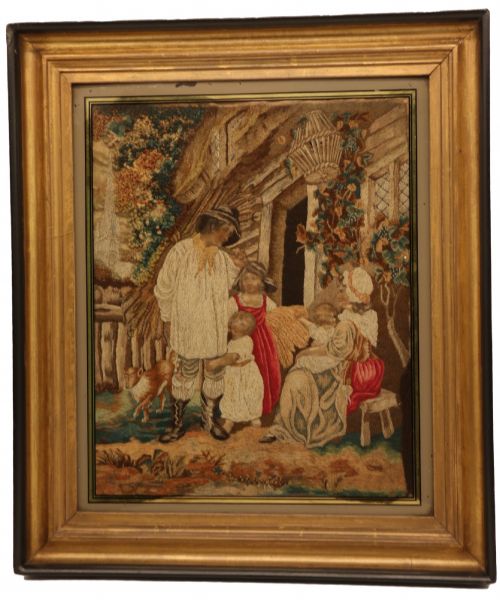
When you search for framed embroidered silk, you encounter textile art spanning several centuries of needlework traditions. The selection includes pictorial scenes, maps, and decorative panels enclosed behind protective glass.
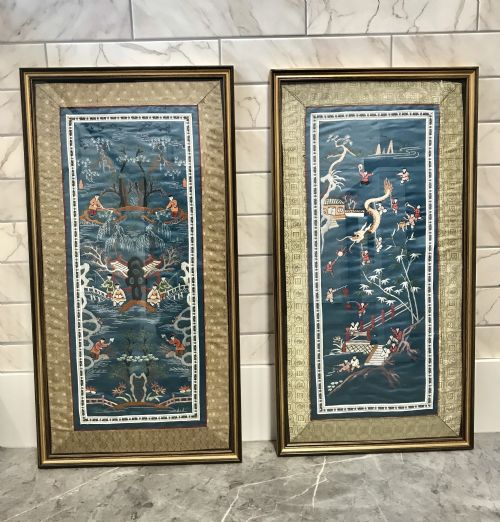
Nineteenth-century examples dominate the offerings, alongside Georgian samplers, 17th-century stumpwork panels, and Asian embroidered textiles. These wall art pieces reflect diverse cultural practices from English schoolgirl needlework to Ottoman and Chinese traditions.
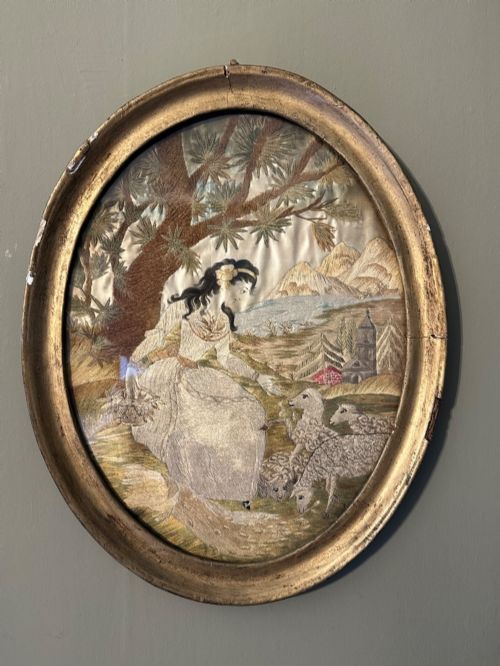
Makers utilised various mounting styles, placing fragile fabrics inside wooden, giltwood, or faux tortoiseshell frames. The resulting works range from small domestic pictures to large wall hangings.
How they were made
Artisans stitched silk, wool, and cotton threads onto linen or silk grounds, occasionally incorporating metallic thread for added lustre. Many works combine needlework with hand-painted elements on the fabric surface.
Makers applied specialised techniques such as stumpwork, long stitch, and silk floss embroidery to create textured pictorial depths. Finished textile panels received protection under glass within custom wooden or giltwood frames.
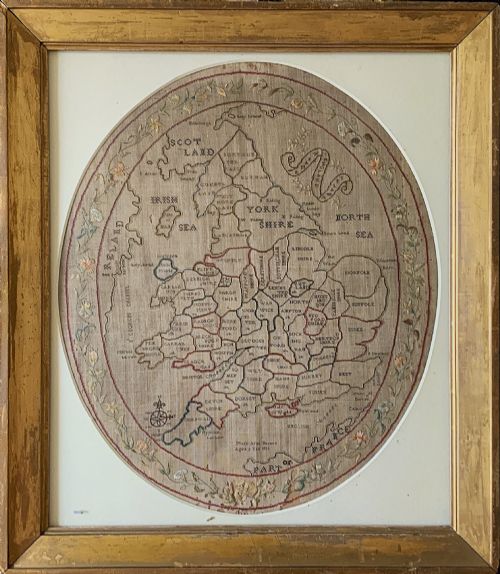
Mary Banion stitched an entire map of England and Wales at age nine, leaving permanent geography homework on silk.
What varies in quality
The degree of pictorial detail and the complexity of the stitchwork separate standard domestic examples from exceptional pieces. Superior works demonstrate meticulous execution in facial expressions, architectural elements, and botanical motifs.
Condition of the delicate silk fibres and original framing integrity heavily influence the standing of a piece. Preservation under glass often protects the textile colours from fading, maintaining the visual impact of the original needlework.
The Framed Embroidered Silk Glossary
- Sampler
- A piece of needlework produced as a demonstration or test of skill in various stitches, often featuring alphabets and maps.
- Stumpwork
- A raised embroidery style popular in the seventeenth century that utilises padded underlays to create a three-dimensional effect on figures.
- Giltwood
- Wood that has been coated with gold leaf or a gold-coloured finish, frequently seen on period picture frames.
- Verre églomisé
- A process of applying design and gilding to the rear face of glass, creating a reflective border for framed pictures.
- Rank badge
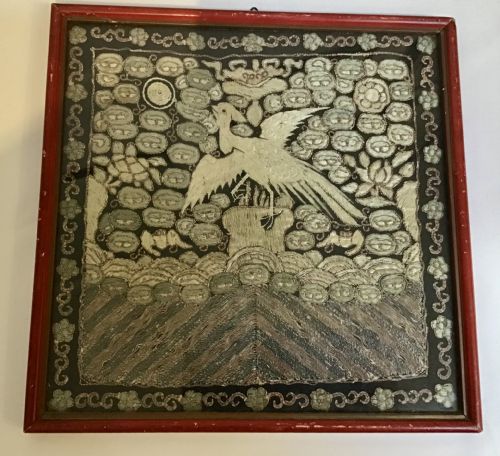
- An embroidered square insignia denoting official status in imperial China, often framed as decorative wall art.
Framed Embroidered Silk: Frequently Asked Questions
How do I date an antique silk embroidery?
Examine the materials, framing style, and subject matter to establish a chronological baseline. Needlework techniques and subject conventions often shift noticeably between the seventeenth and nineteenth centuries.
Inscriptions detailing a maker's name and age provide definitive clues for dated samplers. Comparing stitching patterns against documented period examples confirms the era of production.
Where should I hang framed silk textiles?
Position framed silk pieces away from direct sunlight to prevent the natural fibres and dyes from fading. Stable indoor humidity levels protect the delicate textiles and wooden frames from warping.
Choose walls in rooms with minimal temperature fluctuations to ensure long-term preservation. Proper hanging secures the heavy glass and frame assemblies safely against the wall.
How do I clean antique embroidered silk under glass?
Dust the exterior glass surface gently with a dry microfiber cloth without applying pressure to the frame. Avoid chemical cleaners that might seep behind the glazing and damage the fragile silk.
Professional conservators should handle any internal cleaning or restoration of the textile itself. Opening the sealed frame risks introducing environmental contaminants to the historic embroidery.
What is the difference between a sampler and a pictorial panel?
Samplers primarily record alphabets, numerals, and rudimentary motifs as exercises in needle skill. Pictorial panels depict complex narrative scenes, landscapes, or portraits for decorative display.
Samplers frequently include maker details and dates, whereas pictorial works focus on artistic composition. Both forms utilise similar silk threads and ground fabrics within protective frames.