




Botanical Silk Needlework
Botanical silk needlework pieces bring hand-worked floral and avian subjects into interior spaces, offering the texture of period textile art.
Botanical Silk Needlework
When you search for botanical silk needlework, you are looking at stitched textile art that centres on flora, birds and garden scenes, typically preserved behind glass within period frames. The examples you are most likely to meet on this page span the eighteenth century up to nineteen hundred, encompassing Georgian and Victorian styles alongside English country house and Chinese export pieces.
The objects take the form of framed wall art and textile panels, ranging from intimate octagonal gilt wood frames to larger embroidered compositions. Materials recorded in these pieces include silk, wool, linen, cotton and gilt wood, showing the variety of fabrics employed by makers to render natural subjects.
Methods and materials
Makers constructed these works using silk thread stitched onto supportive foundations of linen, cotton or wool, capturing botanical and avian details with fine needlework technique. Finished textiles were then housed within protective surrounds, including gilt wood frames fitted with glass.
The combination of dyed silk threads on woven grounds allowed artisans to achieve subtle colour shading in floral petals and bird plumage. Structural support came from traditional framing methods, often utilising gilt wood to complement the sheen of the embroidered silk.
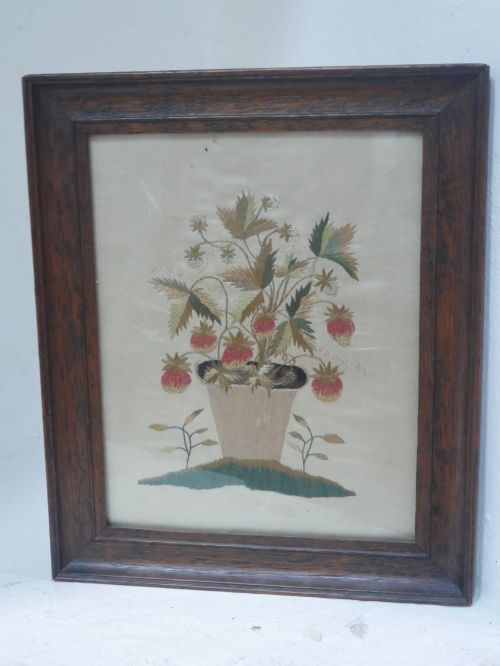
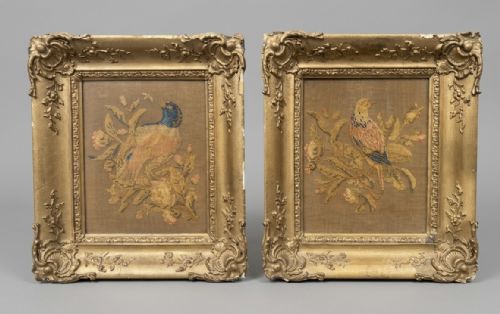
Stitched garden birds and mandarin ducks share wall space here with pots of strawberries, proving that historical needleworkers possessed a deep affection for local fauna and soft fruit.
Judging quality
Quality in these works rests upon the precision of the stitching and the finesse with which natural forms are rendered by the maker. Superior examples demonstrate accomplished handling of silk threads to create depth in floral subjects and bird plumage, whereas simpler pieces show more basic execution.
The preservation of the textile surface and the integrity of the original frame also influence the standing of a piece. Works retaining their early gilt wood frames and clean silk grounds sit at the higher end of the range.
The Botanical Silk Needlework Glossary
- Silk
- A natural protein fibre spun by silkworms, utilised in these needleworks for its lustrous sheen and capacity for fine detail.
- Gilt wood
- Timber treated with gold leaf or gold paint, frequently employed for period frames housing textile art.
- Suzani
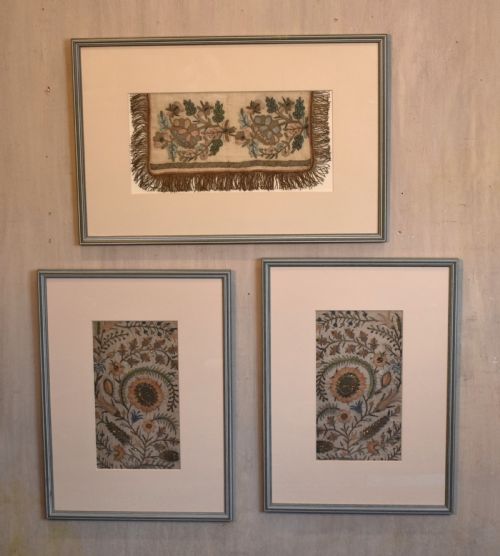
- A type of embroidered tribal textile originating from Central Asia, often executed on a cotton or linen ground.
- Needlework picture
- A framed textile composition created with thread on fabric, designed specifically to hang as wall art.
- Rococo Revival
- A nineteenth-century design style drawing on eighteenth-century ornamentation, characterised by asymmetrical scrolls and natural motifs.
Botanical Silk Needlework: Frequently Asked Questions
How should I hang botanical silk needlework?
Keep framed textile pieces away from direct sunlight to protect the silk threads and natural dyes from fading over time. Position them on interior walls with stable humidity levels.
Ensure the hanging wire and fixings match the weight of the gilt wood frame and glass securely.
What periods do these embroideries cover?
The pieces span from the eighteenth century through the nineteenth century up to nineteen hundred. Styles range from Georgian needlework pictures to Victorian botanical compositions and Chinese export embroideries.
Earlier examples often feature simpler domestic frames, while later Victorian pieces frequently employ ornate gilt wood surrounds.
Are these works glazed?
Many framed textile panels incorporate glass to shield the delicate silk and wool threads from dust and atmospheric grime. This protective barrier helps preserve the exposed fabric surface.
When cleaning the surrounding frame, take care to avoid spraying liquids directly onto the glass.
Can I identify the origin of a piece?
Origins can sometimes be deduced from the stitching style, material choices and framing conventions, distinguishing English country house work from Chinese export or Central Asian pieces. Suzani embroideries, for instance, display distinct regional patterns.
Comparing the botanical subjects and framing methods against known period examples provides further context.