




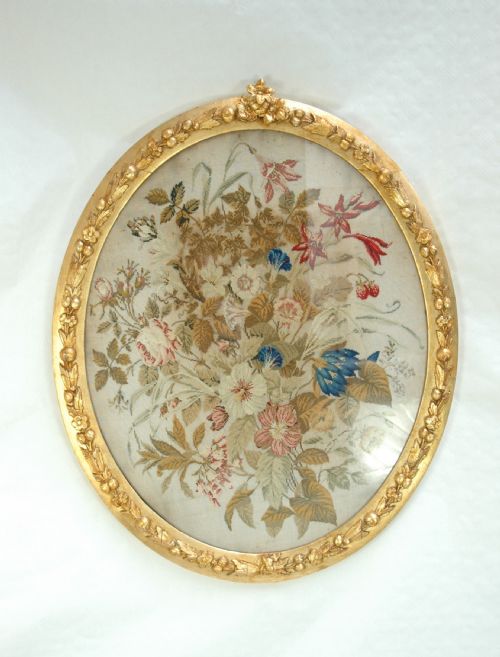


Oval Framed Textile Art
These oval framed textile art pieces bring centuries of needlework into modern rooms, offering intimate glimpses of historical craft through silk, wool, and giltwood.
Oval Framed Textile Art
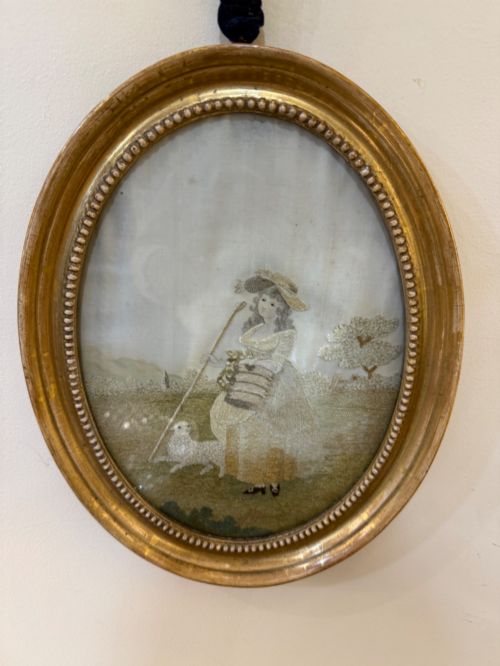
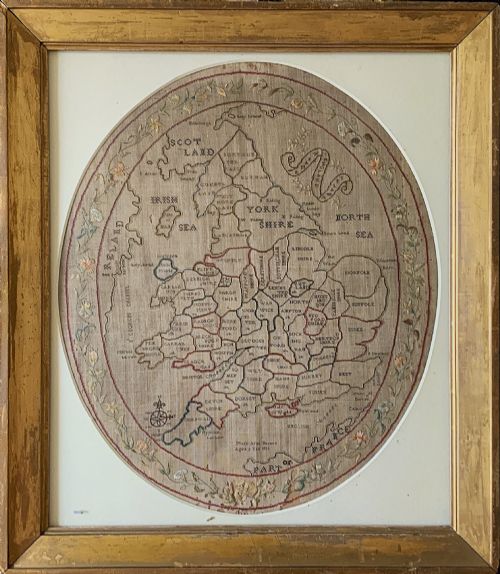
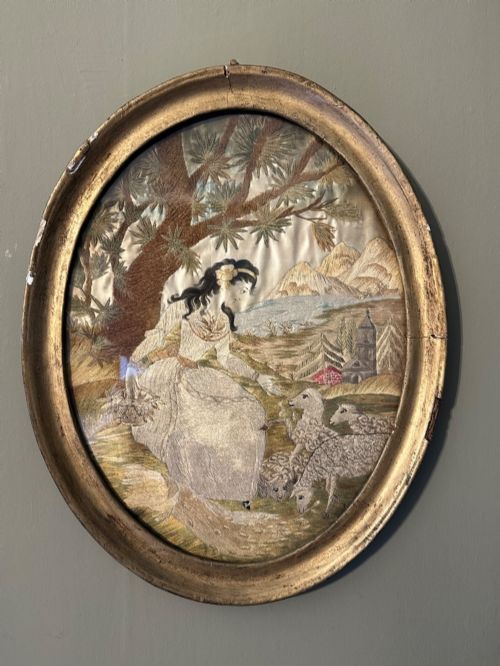
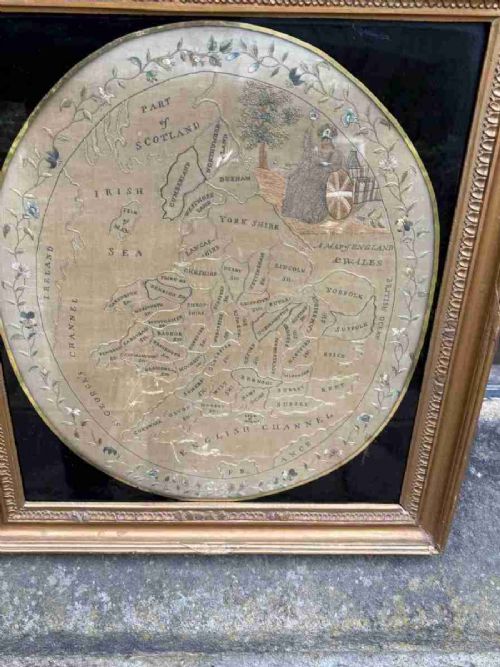
When you search for oval framed textile art, you encounter needlework pictures, map samplers, and woolwork pieces created across the Georgian, Regency, and nineteenth-century periods. These works capture historical domestic skills through detailed embroidery and needlepoint.
The versions most frequently met on this page combine delicate silk thread, felt, and wool within curved wooden or giltwood surrounds. Many pieces preserve early geographical maps, religious scenes, or pastoral depictions stitched by hand.
Originating from British and French traditions, these framed textiles range from instructional map samplers dated around eighteen-eleven to decorative silk embroidery portraying figures like an oyster seller or a girl in a garden.
How they were made
Maker execution relies on fine silk thread, wool, and felt stitched meticulously onto stretched linen grounds. Artisans formed pictorial depth through varied needlepoint and embroidery stitches before securing the textiles behind protective glass.
Frames play a structural and aesthetic role, constructed from wood, giltwood, or water-gilded surfaces. Certain examples incorporate specialised verre églomisé glass panels with gilded borders to frame the central needlework.
Listings feature materials such as silk, wool, linen, and gold leaf housed within glass and giltwood frames.
What varies in quality
Quality rests upon the precision of the needlework and the survival of the original materials. Tightly executed silk embroidery and well-preserved woolwork maintain their chromatic depth far better than faded or loose examples.
The enclosure also defines the piece, distinguishing standard wooden surrounds from water-gilded frames and verre églomisé glass panels. Original framing that complements the period of the textile elevates the overall integrity of the object.
The Oval Framed Textile Art Glossary
- Verre églomisé
- A technique involving cold painting and gilding on the reverse side of glass. This method creates a reflective, decorative border that surrounds the central textile art.
- Needlework sampler
- A piece of canvas or linen stitched to demonstrate proficiency in various embroidery techniques. Historical examples frequently feature alphabets, numerals, or maps.
- Giltwood
- Wood carved and coated with a thin layer of gold leaf or gold paint. This material provides the ornate, reflective finish seen on many period picture frames.
- Water gilding
- A traditional framing technique using gesso and liquid size to apply gold leaf. The resulting surface can be burnished to a high, brilliant shine.
- Silk work
- Embroidery executed primarily with silk threads on a fine backing fabric. This medium allows for subtle shading and detailed pictorial representation.
Oval Framed Textile Art: Frequently Asked Questions
How old are these textile pieces?
The pieces span the eighteenth and nineteenth centuries, including Georgian and Regency periods.
Specific dates appear in individual listings where makers or years are recorded on the work.
Were these always framed?
Most textile art was mounted behind glass to protect fragile silk and wool threads from dust and handling.
Water-gilded and wooden surrounds often date from the same period as the needlework itself.
How do I clean the glass?
Use a soft cloth slightly dampened with water, avoiding harsh chemicals near the antique frame edges.
Keep moisture away from the interior textile and the reverse side of verre églomisé glass.
Can I hang them in sunlight?
Direct sunlight causes natural silk and wool threads to fade over extended periods.
Positioning pieces away from bright windows preserves the original colours of the embroidery.