








Framed Coastal Seascape Art
Framed coastal seascape art brings home the salt air, shifting tides and open horizons of the shore.
Framed Coastal Seascape Art
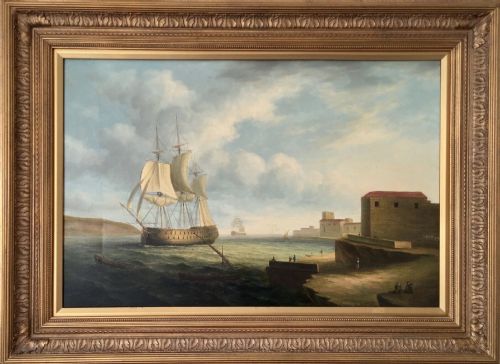
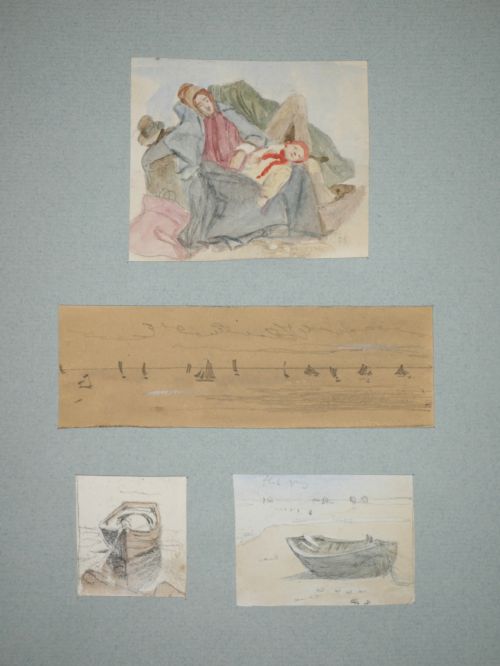
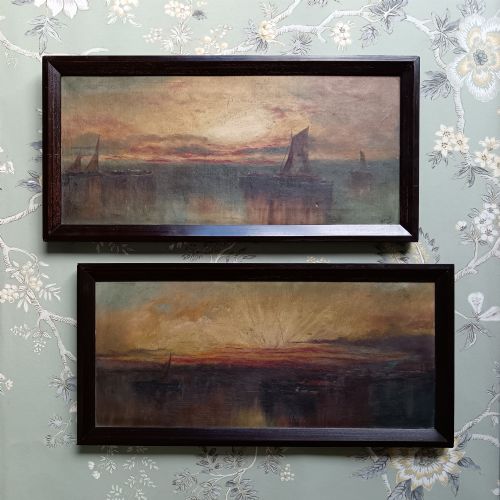
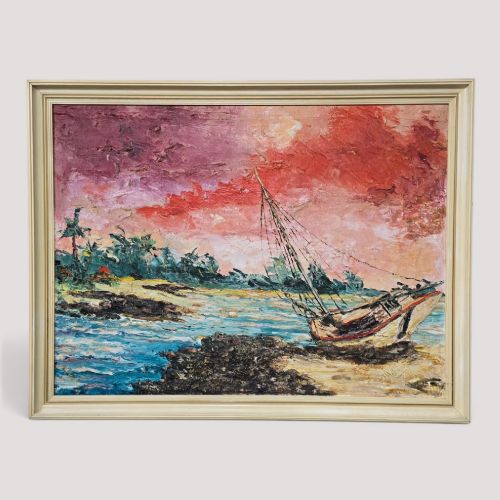
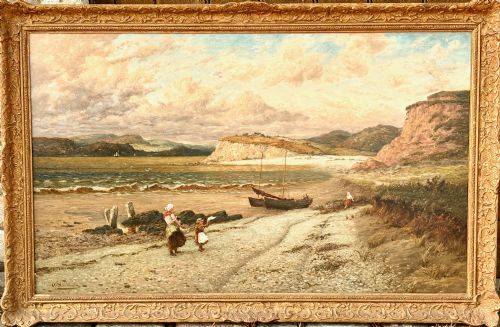
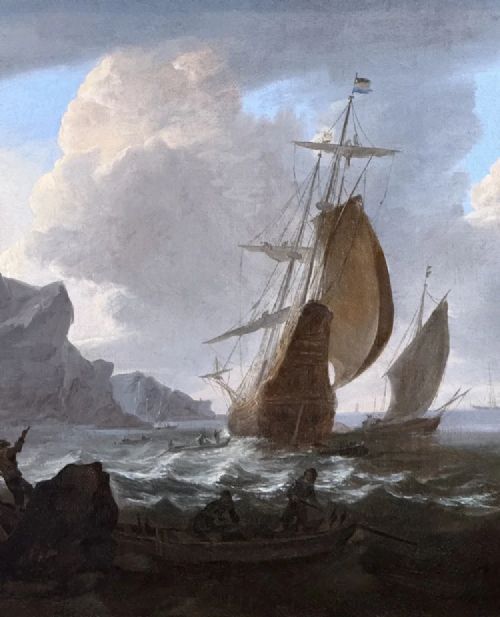
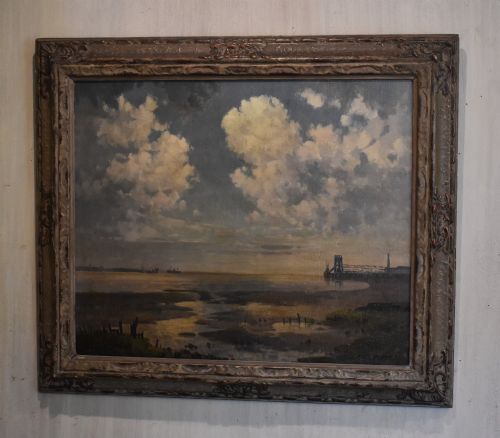
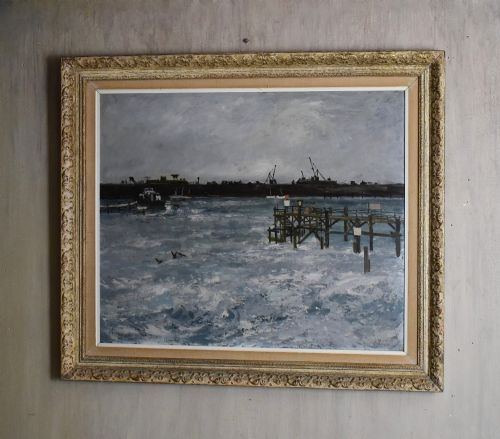
Framed coastal seascape art captures harbours, shorelines and marine views through paintings and works on paper. These pieces span the nineteenth century, the Victorian era and mid-century modern periods, reflecting shifting artistic approaches to the sea.
The selection ranges from traditional British watercolours of fishing boats in Cornwall to oil paintings on canvas depicting rugged cliffs and open waters. Works often arrive set within their original gilt wood frames, preserving the complete presentation.
Victorian maritime scenes and twentieth-century en plein air coastal landscapes dominate the offerings. Buyers will find both intimate watercolours and large-scale canvases depicting locations from Whitby to the Mediterranean.
Materials and techniques
Artists painted these seascapes using oil paint or watercolour applied to canvas, wood panels, board or paper. Oil on canvas allowed for rich surface textures and deep blues and greys, while watercolours on paper offered transparent washes for luminous skies and coastal light.
Framing played a vital structural role, utilising wood and gilt wood mouldings to protect the edges and complement the palette of the artwork. Many works bear the marks of en plein air creation, where painters captured the changing coastal atmosphere directly on site.
Listings feature works from the 17th century through the mid-20th century, executed in oil, watercolour and mixed media on canvas, wood, paper and board.
Factors of quality
Quality rests upon the artist's handling of light, atmosphere and movement in water, distinguishing spirited brushwork from rigid or formulaic composition. A successful seascape conveys the weight of the sea and the specific quality of light at a harbour or shoreline.
The preservation of the paint surface and the originality of the frame contribute significantly to a piece. Intact nineteenth-century gilt frames and well-maintained canvases retain their historical integrity better than those with heavy restoration.
James Orrock·James Smetham·Sidney A Court·Bernard Benedict Hemy·Thomas Creswick·John Moore of Ipswich·William Henry Williamson·George Stanfield Walters
The Framed Coastal Seascape Art Glossary
- En plein air
- Painting outdoors to capture direct observation of light and weather. This technique produced immediate coastal studies with visible brushstrokes.
- Gilt wood
- Wood coated with a thin layer of gold leaf or gold paint. Frames utilising this finish were standard for nineteenth-century oil paintings.
- Watercolour
- A paint consisting of pigment suspended in a water-soluble binder, used chiefly on paper. It creates transparent washes suited to marine skies and coastal atmospheres.
- Seascape
- A work of art depicting the sea, coastlines and maritime vessels. These pieces range from calm harbour views to stormy open waters.
Framed Coastal Seascape Art: Frequently Asked Questions
How do I date a coastal painting?
Examine the materials, stretcher bars and framing style alongside any signatures or inscriptions on the reverse. Victorian and nineteenth-century canvases often feature specific weave patterns and stamp marks from period suppliers.
Style also offers clues, as mid-century pieces lean towards broader brushwork and different colour palettes compared to Victorian marine traditions.
Where should I hang a seascape?
These works suit spaces with stable humidity away from direct sunlight, which can fade watercolours and discolour oil varnishes. Living rooms and hallways provide traditional settings where adequate wall space allows larger framed canvases to breathe.
Ensure the hanging height places the centre of the artwork at eye level for comfortable viewing.
Are watercolours as durable as oils?
Watercolours require glass protection and acid-free mounting to prevent paper degradation and fading from light exposure. Oil paintings on canvas or board are generally more resilient to environmental changes but still benefit from stable indoor climates.
Both mediums have survived for over a century when properly cared for in domestic collections.
What defines Victorian marine art?
Victorian marine art focuses on detailed depictions of shipping, coastal trade and dramatic sea conditions. Artists documented naval vessels, local fishing fleets and specific harbours with topographical accuracy.
These paintings frequently employ traditional oil on canvas techniques within ornate gilt wood frames.