
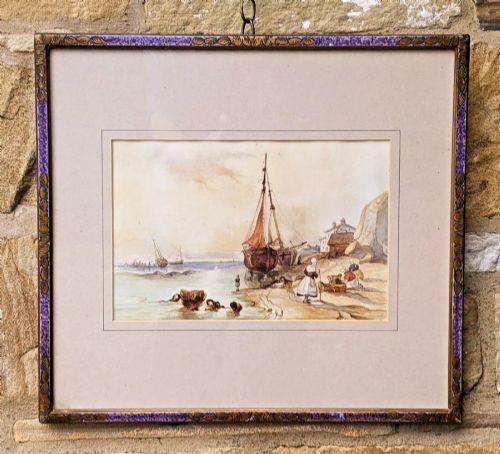


Antique Sailboat Picture
An antique sailboat picture captures maritime life on canvas or paper, offering a window into coastal history that collectors prize for its atmospheric charm.
Antique Sailboat Picture
An antique sailboat picture brings coastal and marine subjects into the interior, recording working vessels, lighthouses, and bustling harbours from past centuries. You are looking at works that range from intimate watercolours to large oil paintings created during the nineteenth and early twentieth centuries.
The most common examples on this page are nineteenth-century watercolours and early twentieth-century oil paintings. These pieces often depict British and European coastal scenes, featuring fishing boats, Venetian lagoons, and coastal towns.
Makers and artists captured these maritime moments using traditional painting methods on paper, canvas, and wood panels. The subjects span tranquil river moorings to dramatic seascapes with tall ships.
What varies in quality
Quality rests in the artist's ability to render light, atmosphere, and the precise rigging of vessels with confident brushwork. Stronger examples display a clear command of perspective and colour harmony within the marine setting.
The condition of the paper, canvas, and original frame influences the overall standing of a piece. Works that retain their vibrancy and proper preservation demonstrate superior craftsmanship from their respective period.
Several artists clearly spent hours watching boats on muddy river banks.
William Tuck·F J Aldridge·Charles Harmony Harrison·Ernest F. Hill·Jane Vivian·George Henry Knight·Frank Wasley·Thomas Bush Hardy·John William Gilroy·Henry Scott Tuke·Henry Bright
The Antique Sailboat Picture Glossary
- Watercolour
- A painting method where fine pigment is suspended in a water-based solution on paper. This medium allows for transparent washes that capture coastal light.
- Oil on Canvas
- A technique using pigments bound in a drying oil applied to stretched canvas fabric. This method provides rich texture and depth for marine scenes.
- Gilt Wood
- Wood that has been treated with a thin layer of gold leaf or metallic gilt finish. It frequently frames nineteenth-century paintings.
- Impressionist
- A style focusing on the visual impression of the moment, particularly shifting light and atmosphere. It appears in early twentieth-century marine works.
Antique Sailboat Picture: Frequently Asked Questions
How do I date an antique sailboat picture?
Dating relies on stylistic clues, artist signatures, framing materials, and the type of paper or canvas used. Nineteenth-century works often show distinct Victorian dress or vessel designs compared to later twentieth-century pieces.
Examining the back of the frame and any inscriptions can provide further confirmation of the period.
Where should I hang a marine painting?
These works suit rooms with controlled light levels away from direct sunlight to protect watercolours and oils from fading. Placing them on neutral walls allows the gilt frames and coastal colours to stand out.
Ensure the hanging height places the centre of the artwork at eye level for optimal viewing.
Are these paintings executed on paper or canvas?
The inventory includes both paper and canvas supports, with watercolours typically worked on paper and marine scenes executed in oil on canvas or wood.
Each medium offers a different texture and visual weight, influencing how the artwork is framed and displayed.
What subjects appear in these coastal artworks?
Common subjects include fishing vessels, lighthouses, Venetian lagoons, and bustling harbours from British and European locations. Artists recorded both working boats on the water and beached vessels during low tide.
Scenes range from calm river views to dramatic moonlit seascapes.