



Blue Grey Marine Painting
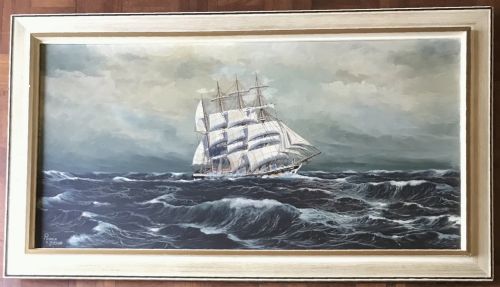
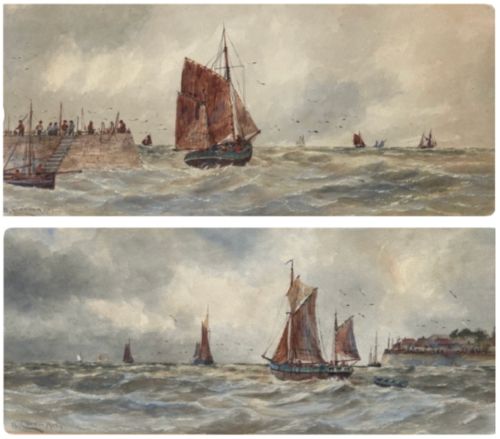
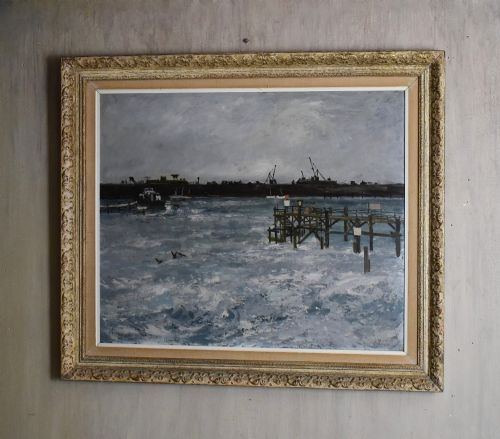
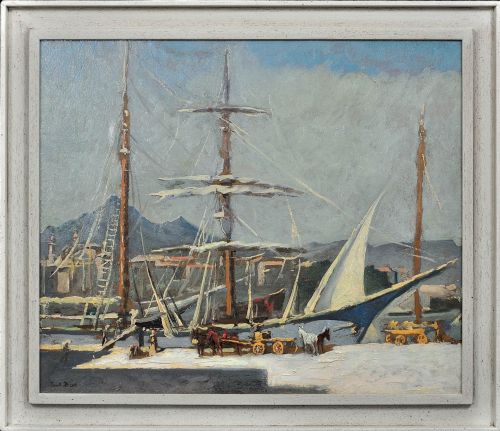
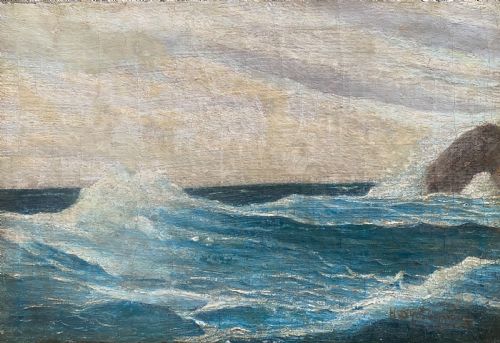
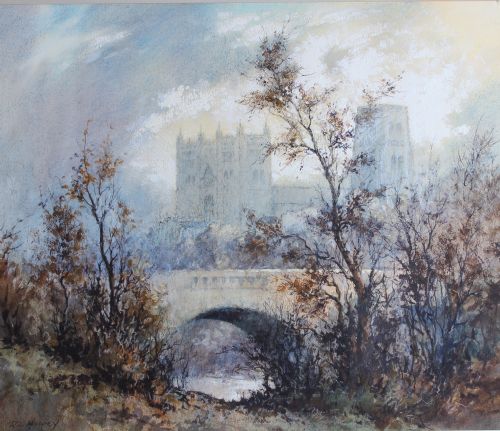
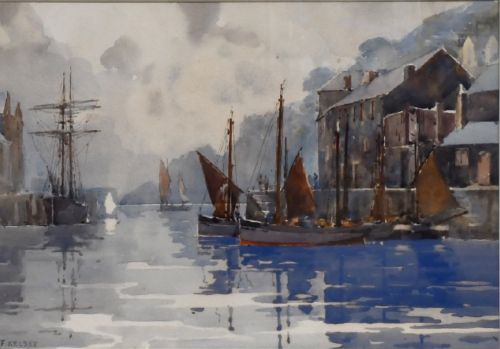
When you examine a blue grey marine painting, you encounter coastal scenes and open waters rendered in restrained, atmospheric tones.
Blue Grey Marine Painting
A blue grey marine painting depicts harbours, coastal towns, shipping lanes, and open seas executed primarily during the nineteenth and twentieth centuries. These artworks capture maritime life, including fishing boats, naval vessels, and coastal architecture along British, European, and wider shores.
The pieces you encounter span from the Victorian period through to mid-century modernism, taking the form of framed works on paper and canvas. British regional scenes feature frequently, alongside coastal views from France, Italy, and beyond.
Makers represented range from professional maritime specialists and Royal Navy commanders to regional watercolourists and continental modernists working in oil and watercolour pigment.
How They Were Made
Artists utilised traditional media including watercolour on paper and oil paint on canvas or wood panels, supported by glass framing for works on paper. These materials were handled with varying degrees of dilution and impasto to capture the movement of water and the quality of coastal air.
Techniques range from detailed illustrative watercolours to looser post-impressionist and modernist brushwork. Support structures include stretched canvas, wooden panels, and heavy artist paper housed within period frames.
Several naval commanders traded the quarterdeck for the easel, proving that salt water runs just as deep in watercolour pigment.
What Varies in Quality
Quality rests upon the artist's command of light, atmosphere, and maritime architecture, distinguishing casual sketches from accomplished works. The handling of atmospheric perspective in coastal mists and stormy seas reveals the hand of a more skilled practitioner.
The condition of the pigment and the preservation of the original support material also define the standing of a piece. Works that retain their tonal balance without excessive fading or discoloration of the paper and canvas command greater interest.
William Cannon·John E. Aitken·Peter Brannan·Paul Bret·Dubovsky·Robert Leslie Howey·Frank Kelsey·Charles William Adderton·Commander Eric Tufnell·Vincenzo D’Esposito·Ernest Dade·Edward Seago·Tom Clough·Frank H. Mason·George Hamilton Constantine·John Mitchell·Samuel Owen·Ernest F. Hill·Don Wilson·George Gregory·Frederick Stuart Richardson·Percy Brooke·William Kay Blacklock·Arthur Wilde Parsons·Paul Jean Clays
The Blue Grey Marine Painting Glossary
- Watercolour
- A paint consisting of colour suspended in a water-soluble vehicle, traditionally applied to paper to create translucent washes. It allows for rapid execution and delicate atmospheric effects.
- Oil on canvas
- Pigment bound in an oil medium, typically linseed oil, applied to a woven fabric stretched across a wooden frame. This method permits rich texture and deep colour saturation.
- Seascape
- A work of art depicting the sea, coastal views, ships, or marine engagements. It forms the primary genre for the maritime paintings found in this collection.
- Impasto
- Paint applied thickly to a canvas or panel, standing out in relief from the plane. This technique adds tactile dimension to turbulent water and cloud formations.
- Provenance
- The chronology of the ownership and exhibition history of an artwork. Documented provenance establishes authenticity and historical context.
Blue Grey Marine Painting: Frequently Asked Questions
What is a blue grey marine painting?
A blue grey marine painting is an artwork depicting coastal views, harbours, and shipping scenes executed primarily in cool, restrained tones.
These pieces range from nineteenth-century Victorian watercolours to twentieth-century oil paintings by British and European artists.
How should I care for an antique watercolour?
Watercolours on paper require protection from direct sunlight to prevent the pigments and paper from fading over time.
Keep them in stable environmental conditions away from excessive moisture to preserve the integrity of the paper and framing.
How do I identify the period of a marine painting?
The period can often be deduced from the clothing of figures in the scene, the types of ships depicted, and the framing style.
Signatures, dates inscribed on the reverse, and known biographical dates of the artist provide further chronological certainty.
Where were these maritime scenes painted?
These scenes originate from various coastal locations, including British ports such as Whitby, Scarborough, and St Ives, as well as European harbours.
Artists frequently travelled to active fishing ports and naval stations to capture authentic maritime activity.