


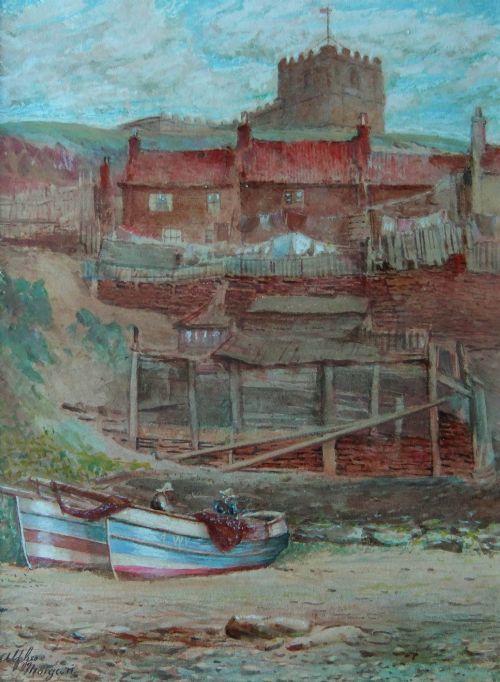
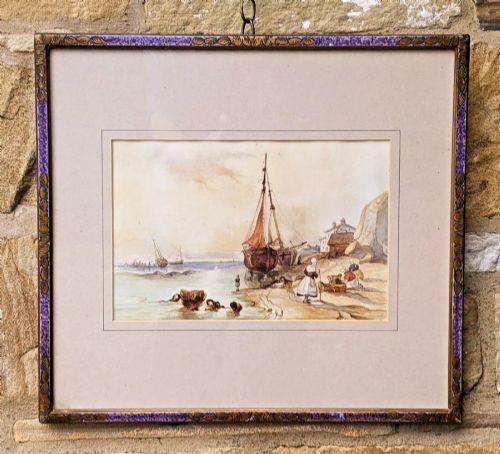
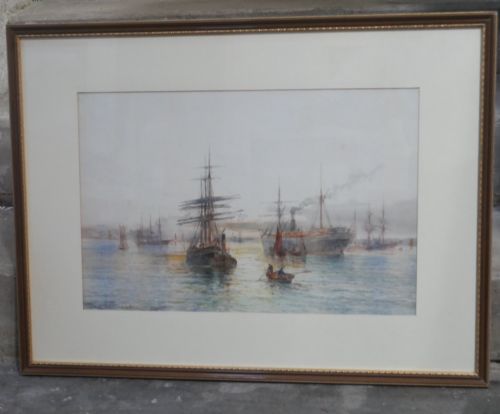
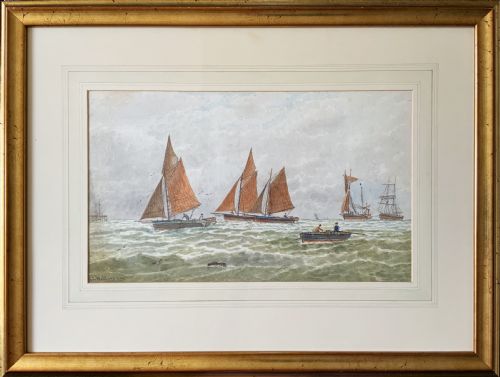



Victorian Maritime Watercolour
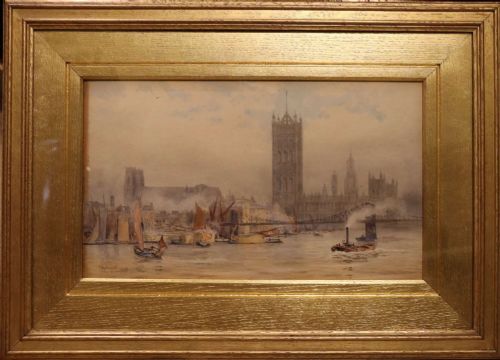
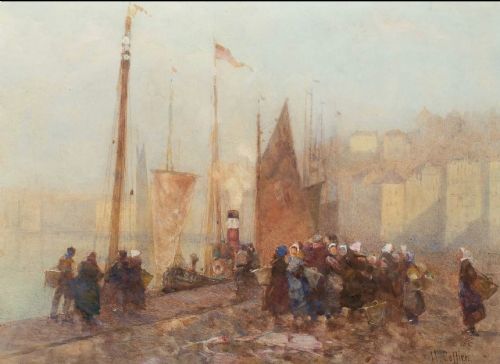
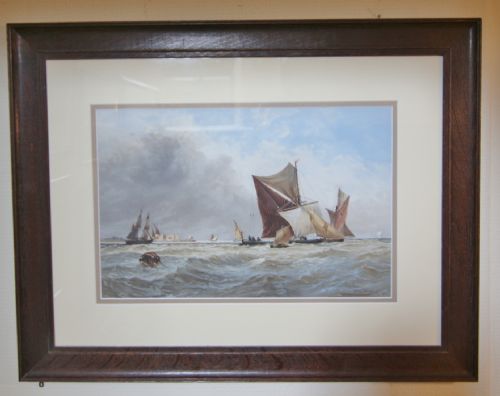
These works capture harbour life, coastal shipping and open seas in fluid pigments on paper, offering a direct view into nineteenth-century maritime history.
Victorian Maritime Watercolour
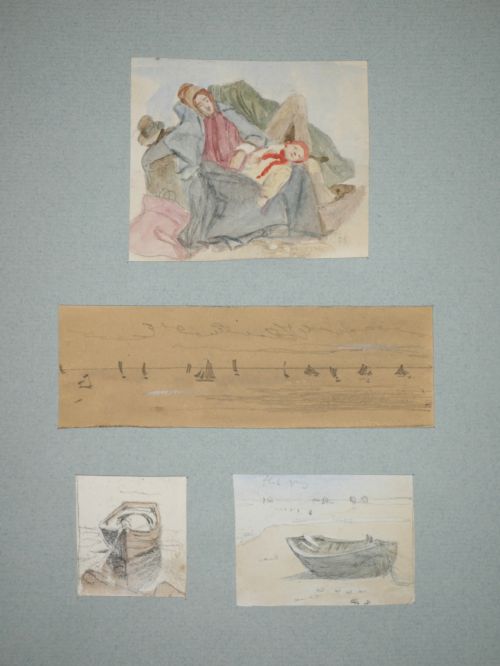
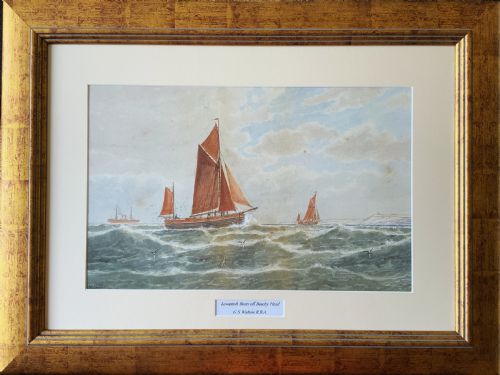
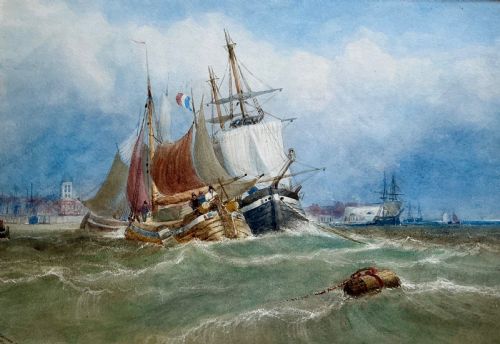
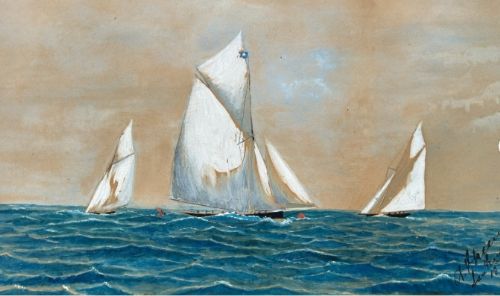
A victorian maritime watercolour records coastal views, fishing harbours, and sailing ships across the nineteenth and early twentieth centuries. These works appear as framed fine art paintings, wall art, and smaller works on paper.
The subjects range from busy English harbours like Whitby and St Ives to international scenes in Venice and Holland. Most examples date from the Victorian period through to the early decades of the twentieth century.
Materials and Technique
Artists painted on paper supports using water-soluble pigments and ink, often adding body colour to heighten light on sails and breaking waves. Works are typically presented behind glass within timber and gilt wood frames.
Meticulous brushwork records the rigging of clippers and barques, while looser washes capture atmospheric skies and shifting coastal tides.
A young midshipman stands ready for duty on shore while sailors navigate bustling harbours from the Thames to Venice.
Evaluating Quality
Quality rests upon the artist's command of perspective and atmospheric light, particularly in rendering moving water and complex shipping. Stronger pieces convey motion and maritime detail with precision.
Condition of the paper surface and pigment stability also influence standing, as exposure to light can alter delicate tones over time.
H Medlycott·James Orrock·James Smetham·William Banks Fortescue·Hector Caffieri·TB Hardy·Alfred G Morgan·George Stanfield Walters·Henry Barlow Carter·William Frederick Settle·Charles William Adderton·Ernest Dade·F J Aldridge·Frederick William Hattersley·James Thomas Watts·John Mitchell·Charles Harmony Harrison·Kate E Booth·Jan van Couver·Clara Montalba·William Wyld·John McDougal·Walter Duncan·Ralph Todd
The Victorian Maritime Watercolour Glossary
- Watercolour pigment
- Finely ground colour mixed with a water-soluble binder. It creates translucent washes that let the reflective quality of the paper shine through.
- Gilt wood
- Timber framing coated with a thin layer of gold leaf or metallic gilt. It provides a traditional decorative border common to nineteenth-century framing.
- Works on paper
- A collective term for artistic creations executed on paper supports. This includes drawings, sketches, and finished paintings.
- Impressionism
- An artistic style focused on capturing the visual impression of the moment. It emphasises shifting light and unblended brush strokes rather than strict academic detail.
Victorian Maritime Watercolour: Frequently Asked Questions
What subjects do these paintings show?
The compositions record coastal harbours, fishing boats, racing yachts, and heavy shipping vessels on rivers and open seas. Many focus on specific British coastal towns alongside European destinations like Venice.
Scenes range from calm anchorages with moored barques to turbulent waters with vessels navigating rough weather.
How should I frame and hang them?
These works on paper require protection behind glass to prevent atmospheric damage and fading from direct sunlight. Traditional timber or gilt frames complement the nineteenth-century origins of the paintings.
Keep them away from direct heat sources and strong sunlight to preserve the watercolour pigments.
How do I date a maritime watercolour?
Dates often appear in the signatures or inscriptions left by the artist, sometimes noting specific years of execution. Stylistic clues, such as the transition from wooden sailing ships to steel hull vessels, also help narrow the period.
Clothing styles on figures near the shoreline provide further chronological context.
Are these works signed by the artists?
Many examples feature artist signatures, monograms, or studio inscriptions written directly onto the paper. Documentation on the reverse of the frame sometimes records additional provenance and titles.
Unsigned pieces rely on stylistic attribution and known recording of the artist's exhibited subjects.