


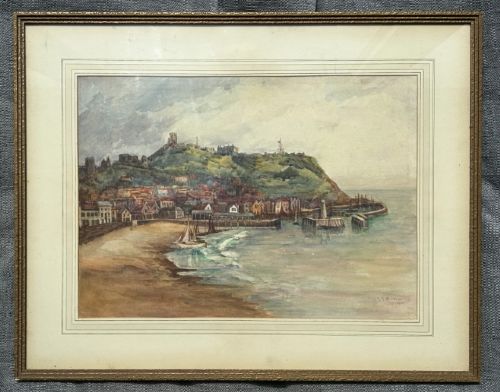


Beach Landscape Painting
A beach landscape painting captures the shifting light and expansive air of the coast, bringing the atmosphere of the shore directly into an interior.
Beach Landscape Painting
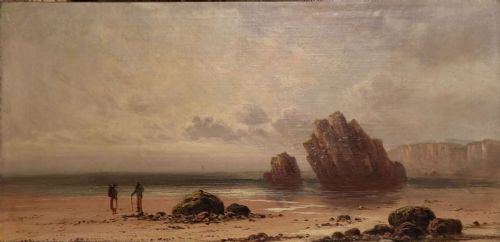
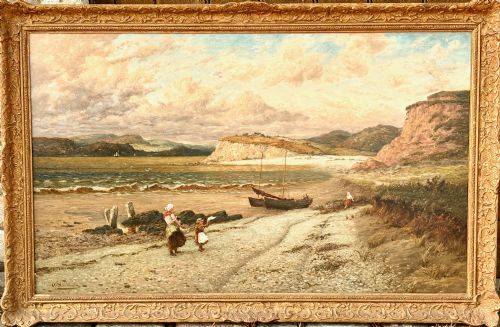
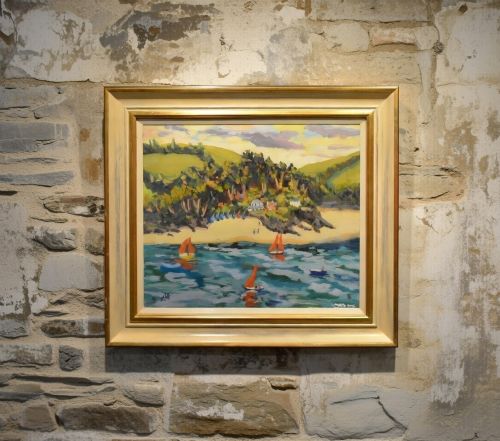
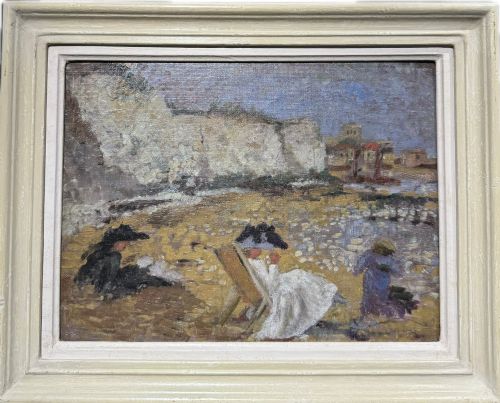
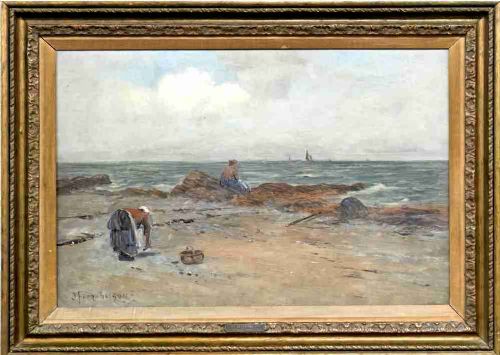
A beach landscape painting records the British and European coastline through the shifting medium of maritime art, spanning traditional Victorian scenes to mid-century modern interpretations. These works capture specific shores, harbours, and fishing communities, preserving historical views of places like St Ives, Scarborough, and the Scottish coast.
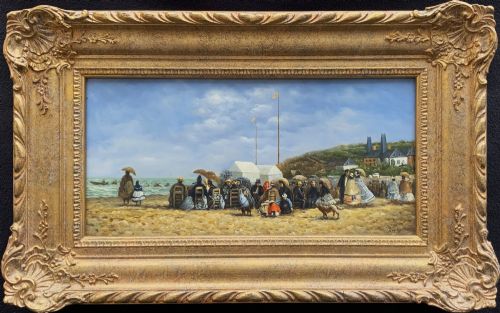
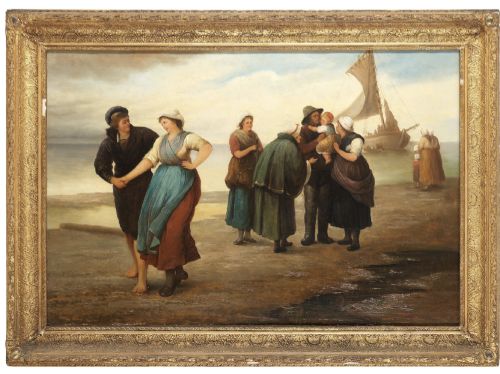
Most pieces encountered on this page originate from the nineteenth and early twentieth centuries, reflecting the period's fascination with marine subjects and seaside leisure. The selection ranges from detailed watercolour studies of local harbours to expressive oil paintings on canvas depicting figures on sandy stretches.
Subjects vary from quiet coastal inlets and working beaches with seaweed carts to dramatic depictions of sea stacks and shipwrecks. Buyers typically find works executed in oil or watercolour, framed in period giltwood or ebonised settings that complement the coastal subject matter.
Materials and technique
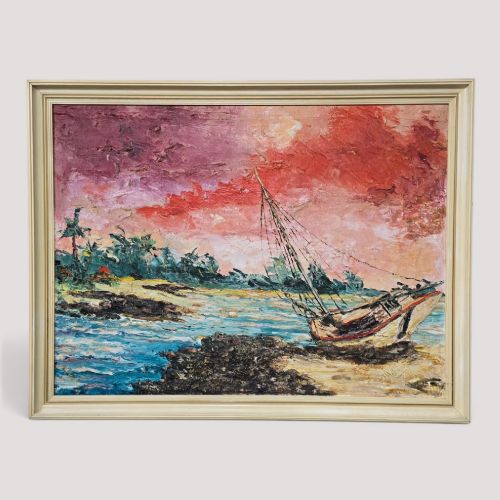
Artists working on these coastal scenes relied primarily on oil paint applied to canvas or wood panels, alongside transparent and bodycolour watercolours on paper. Oil mediums allowed for thick impasto to render churning waves and sandy textures, while watercolours offered fluidity for capturing atmospheric skies and coastal haze.
Supports were frequently prepared with gesso layers, providing a stable foundation for pigments exposed to changing studio conditions. Framing played an integral role, utilising carved giltwood or hand-enamelled frames to protect the delicate paint surfaces and enhance the visual depth of the landscape.
Listings feature works spanning the eighteenth to the mid-twentieth century, executed in oil, watercolour, and gouache.
Distinctions in quality
The distinction between ordinary coastal works and exceptional pieces rests upon the artist's handling of atmospheric light and spatial depth. Superior paintings demonstrate a confident command of tone, where the interaction of sea, sky, and shore feels observed rather than formulaic.
Provenance and condition further elevate a piece, particularly when signatures, dates, and original framing remain intact. Works that successfully convey the specific atmosphere of a named location possess greater artistic weight than generalised coastal scenes.
James Orrock·William Banks Fortescue·Joseph Farquharson·James Webb·Sir David Murray·Albert Starling
The Beach Landscape Painting Glossary
- Watercolour painting
- A work executed with water-soluble pigments on paper, valued for its luminous transparency and immediacy.
- Gesso
- A plaster-like mixture applied to wood or canvas to create a smooth, absorbent surface for painting.
- Impressionism
- A style characterised by relatively small, thin, yet visible brush strokes and an emphasis on accurate depiction of light.
- Giltwood
- Wood that has been decorated with a thin layer of gold leaf, commonly found on period frames.
- Seascape
- A work of art that depicts the sea, representing a primary subgenre of marine painting.
Beach Landscape Painting: Frequently Asked Questions
How should I hang a beach painting?
Position the artwork at eye level on a wall with stable ambient light, avoiding direct, harsh sunlight that could degrade watercolour pigments or discolour oil varnishes over time.
Ensure the hanging hardware matches the weight of the frame, particularly for heavy nineteenth-century giltwood or large oil canvases.
What periods do these paintings cover?
The selections span from the eighteenth century through the Victorian era and into the mid-twentieth century, capturing shifting artistic movements from realism to post-impressionism.
Nineteenth-century works dominate the selection, offering detailed topographical records alongside romantic marine interpretations.
Are these works signed by the artists?
Many pieces feature visible signatures, monograms, or period inscriptions identifying the creator or the specific coastal location depicted on the reverse or front.
Unsigned works are typically attributed through stylistic comparisons to known schools or contemporaries working within the same geographic region.
How do I care for antique watercolours?
Keep works on paper behind glass with conservation-grade mount board to prevent direct contact between the pigment and the glazing.
Display watercolours away from humid environments like kitchens and bathrooms to protect the paper support and prevent foxing.