


Blue Ochre Watercolour
These blue ochre watercolour pieces capture landscapes, townscapes and coastal scenes on paper from the nineteenth and twentieth centuries.
Blue Ochre Watercolour
When you search for blue ochre watercolour, you encounter works on paper spanning from the Victorian era through to the mid-twentieth century. The selection ranges from nineteenth-century marine realism and classical compositions to Edwardian townscapes and mid-century British school abstractions.
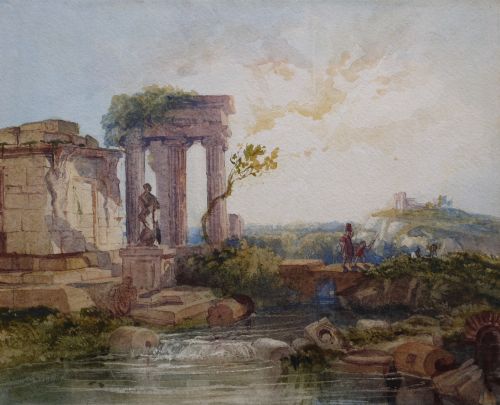
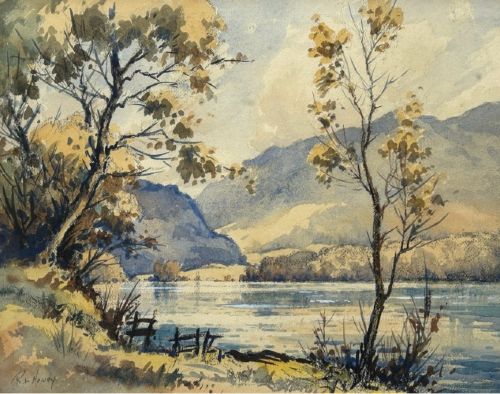
Most pieces you meet on this page are landscape, coastal or townscape paintings executed on paper using watercolour pigment, often accompanied by ink or pastel. Artists record scenes ranging from Venetian lagoons and Cumbrian lakes to bustling market mornings and Welsh valleys.
The periods represented stretch from the late nineteenth century, through the Edwardian years and the interwar period, up to the nineteen-sixties. British Impressionism and expressionist styles also appear amongst these works on paper.
How blue ochre watercolour pieces were made
Artists applied watercolour pigment and paint directly onto paper supports, sometimes combining the medium with ink or pastel to build depth and line. The interaction between the water-based pigments and the paper surface defines the tactile quality of each painting.
Protective framing behind glass frequently preserves these watercolours, shielding the absorbent paper and pigment layers from atmospheric moisture and handling damage.
Listings span from eighteen-eighty to nineteen-sixty, utilising paper, glass, pigment, ink and pastel across various British and European schools.
What varies in quality in blue ochre watercolour
The skill of the brushwork and the confidence of the composition distinguish the finest examples from simpler student or amateur efforts. Master painters command perspective, light and atmosphere with economy and precision.
The preservation of the paper and the vibrancy of the pigments determine the condition tier. Works that retain their original tonal depth without heavy fading or paper discolouration stand at the upper end of the range.
Richard Principal Leitch·Robert Leslie Howey·Gen Paul·Ernest Dade·Rowland Henry Hill·Adrian Heath·Benedetto Salviati·Joseph W. Milliken·Frederick Mayor·Alfred Robert Quinton·David Woodlock·Madeline Hughes·John J. Hamer·Tom Dudley·Arthur Severn·Robert Thorne Waite·Joseph West
The Blue Ochre Watercolour Glossary
- Watercolour
- A painting method in which the paints are made of pigments suspended in a water-based solution. The paper surface often shows through the translucent washes.
- Pigment
- The natural or synthetic coloured powder that gives watercolour paint its hue. These materials determine the baseline colour stability of the artwork.
- Pastel
- A dry art medium in stick form consisting of powdered pigment and a binder. Artists occasionally used pastel alongside watercolour to add opaque highlights or texture.
- British Impressionism
- A painting style characterised by visible brushstrokes and an emphasis on accurate depiction of light. Practitioners of this style captured outdoor scenes with rapid, observant marks.
- Expressionism
- A modernist movement where artists sought to express emotional experience rather than physical reality. These works utilise distorted forms and bold colours to evoke a specific mood.
Blue Ochre Watercolour: Frequently Asked Questions
How should I frame a watercolour?
Watercolours require framing behind glass with a mount that prevents the paper from touching the glazing directly. This separation protects the delicate pigment and paper from condensation.
Keep these paintings out of direct sunlight to prevent the watercolour pigments from fading over time.
What subjects do these paintings show?
The subjects focus heavily on landscapes, coastal views, townscapes and marine scenes. You will find depictions of Venetian lagoons, Welsh valleys, Cumbrian lakes and market squares.
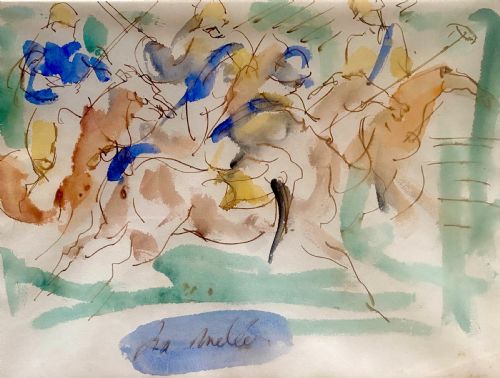
Some pieces also venture into equestrian sports and abstract compositions from the mid-twentieth century.
How can I tell the period of a watercolour?
Dating relies heavily on the paper type, framing style, signatures and the artistic movement evident in the brushwork. Victorian works often feature detailed classical or marine realism, while twentieth-century pieces lean towards impressionism or abstraction.
Artist signatures and recorded exhibition dates also provide clear chronological anchors for attribution.
Are these paintings executed on canvas?
No, these works are executed on paper supports using watercolour pigment, paint, ink or pastel. The absorbent nature of paper distinguishes watercolour practice from oil painting on canvas or wood panels.
Glass is traditionally used to protect these paper-based works rather than leaving the surface exposed.