


Norwich School Painting
A Norwich School painting captures the distinctive light and flatlands of Norfolk through the vision of Britain's first provincial art movement.
Norwich School Painting
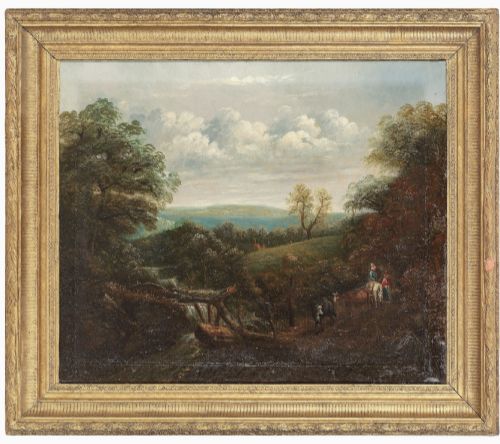
A Norwich School painting centres on the landscapes, rivers, windmills and coastal scenes of Norfolk, executed by artists working within this regional tradition. The pieces available span oil on canvas, oil on wood panel and watercolour on paper, capturing both expansive rural views and intimate rural figures.
The objects take the form of framed oil paintings and watercolours dating from the late eighteenth century through the Victorian period. Collectors encounter works by foundational figures as well as pieces created within their immediate circles.
Assessing Quality and Hand
Quality rests in the assuredness of brushwork and the artist's command of natural light, separating routine topographical recording from evocative atmospheric observation. Stronger examples display confident handling of skies, foliage and water reflections.
The relationship between the artist and the established circle of the school influences desirability, alongside the preservation of the original gilt wood frame and the stability of the canvas or wood panel.
Listings feature paper, canvas and wood panel supports, spanning eighteenth-century origins through the Victorian period.
Thomas Lound·Joseph Clover·John Joseph Cotman·Henry Bright·John Thirttle·Joseph Paul·John Berney Crome·James Stark·L B Ladrooke·George Vincent
The Norwich School Painting Glossary
- Panel
- A thin sheet of wood used as a rigid support for oil painting, common in early nineteenth-century landscape works. It provides a smooth, stable surface for detailed brushwork.
- Watercolour
- A painting method utilising water-soluble pigments on paper supports. This medium allowed artists to record rapid atmospheric changes outdoors.
- Gilt Wood
- Wood carved and coated with a thin layer of gold leaf, forming the traditional frames associated with period paintings. These surrounds often date to the original execution of the artwork.
- Staithe
- A landing stage or wharf alongside a river, frequently depicted in Norfolk landscape scenes as a focal point for loading timber and local trade.
Norwich School Painting: Frequently Asked Questions
What subjects appear in these works?
The works primarily depict Norfolk landscapes, rivers, windmills, coastal views and rural cottages. Figures on bridges or paths often provide scale to the expansive flatlands.
Portraits of local figures also feature occasionally within the regional body of work.
How do oils and watercolours differ?
Oils utilise canvas or wood panel supports, offering rich texture and deep tonal contrast. Watercolours employ paper supports to capture lighter, more translucent atmospheric effects.
Both mediums document the distinct topography of the region during the nineteenth century.
How should I display these frames?
Period gilt wood frames complement the oil and watercolour works by maintaining the aesthetic of their era. Placement should avoid direct sunlight to protect pigments and paper supports from fading.
Stable indoor humidity preserves both the wooden panels and the canvas grounds.
How do I identify the period?
Stylistic markers and framing materials help determine whether a piece originates from the late eighteenth century or the Victorian era. Biographical dates of artists such as Henry Bright or John Thirttle offer firm chronological parameters.
Support materials like wood panels also point toward early nineteenth-century working methods.