


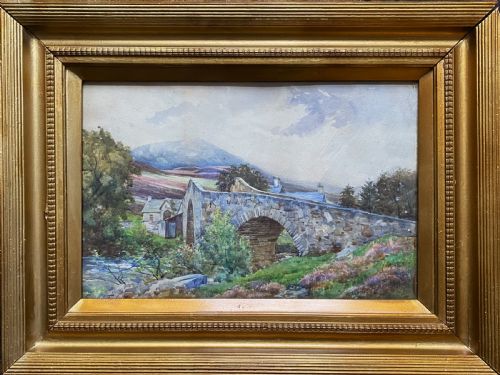

Stone Bridge Artwork
Stone bridge artwork brings historic crossings onto your wall through Victorian landscapes and early twentieth-century views.
Stone Bridge Artwork
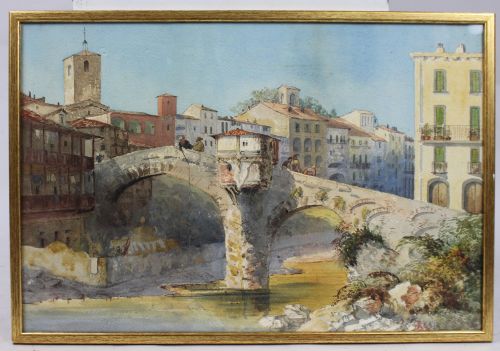
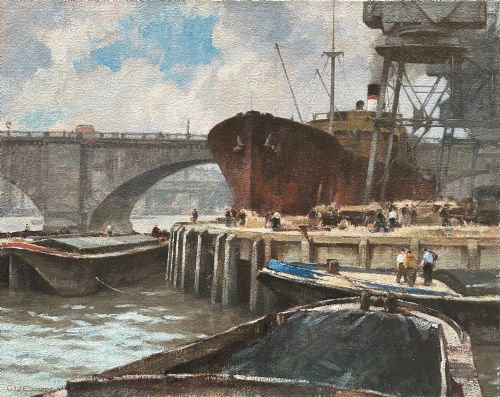
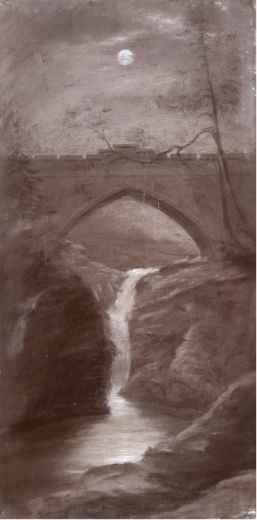
Stone bridge artwork encompasses paintings, watercolours, drawings and original prints depicting masonry crossings in rural and urban settings. When you search for this phrase, you find pieces spanning the nineteenth century up to the nineteen-thirties, reflecting diverse regional topography from Scotland to Italy.
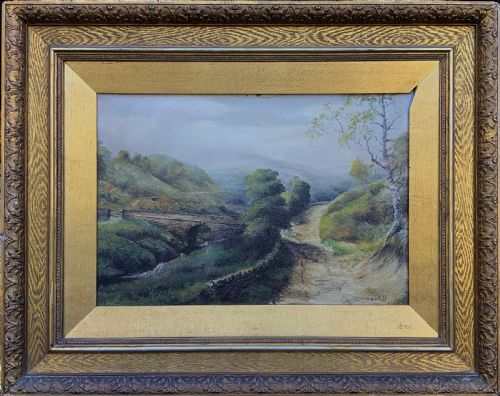
The version you are most likely to meet on this page is a nineteenth-century oil painting or watercolour on paper, canvas or wood panel. British and European schools dominate the selection, often featuring rivers, mountain streams and historic townscapes.
Materials and methods
Artists employed oil paint and watercolour paint applied to canvas, paper, wood panels and charcoal surfaces. Gilt framing frequently accompanies these works, preserving the delicate pigments and paper supports.
Brushwork ranges from detailed Victorian academic execution to looser British Impressionist strokes, depending on the period and the specific regional school of the artist.
Artists frequently added small figures to bridges solely to demonstrate the immense scale of the stonework.
Judging the work
Quality rests in the confidence of the draughtsmanship and the handling of light around the masonry structure of the bridge. A superior composition balances the architectural weight of the stone against the fluid movement of the water beneath.
The handling of atmospheric perspective and the integration of figures into the landscape distinguish accomplished professional output from simpler amateur records.
Florence Adelina Hess·Thomas Lound·Noel Harry Leaver·Charles Edmund Rene His·Franz Reder-Broili
The Stone Bridge Artwork Glossary
- Oil on Canvas
- Pigment bound in drying oil applied to a stretched woven fabric support. This combination allowed artists to build rich surface textures and deep tonal ranges.
- Watercolour Paint
- Water-soluble pigment applied in translucent washes to paper. It required swift, decisive brushwork because corrections were difficult to conceal.
- Wood Panel
- A rigid wooden support used primarily for smaller oil paintings before stretched canvas became universal. Panels offered a smooth, stable surface for fine detail.
- British Impressionism
- A late nineteenth and early twentieth-century painting style focusing on transient effects of light and rapid brushwork. Artists shifted outdoors to capture natural illumination directly.
Stone Bridge Artwork: Frequently Asked Questions
What periods do these artworks cover?
The listings span from the nineteenth century through the nineteen-thirties, capturing the shift from Victorian romanticism to twentieth-century British modernism.
Most pieces date from the Victorian era up to the interwar period.
How do I identify a watercolour on paper?
Watercolours use thin, translucent washes of pigment where the white of the paper often provides the highlights. They lack the raised brush texture found in oil paintings.
protective glass typically covers these works to prevent moisture and surface damage.
Where were these bridge scenes painted?
Artists recorded locations across Britain, including Scotland, Wales and northern England, alongside European views in Italy and Switzerland.
Local bridges served as focal points for topographical studies and romantic landscape compositions.
How should I frame historic paintings?
Period gilt frames complement nineteenth-century canvases and watercolours by echoing the traditional aesthetic of the era. Simple conservation mounting protects delicate paper works from direct contact with glass.
Stable indoor humidity preserves both the wooden supports and the paint layers.