



Blue Mountain Watercolour
Blue mountain watercolour works capture rugged peaks and valley lakes, offering buyers a lasting window into nineteenth and twentieth century landscape traditions.
Blue Mountain Watercolour
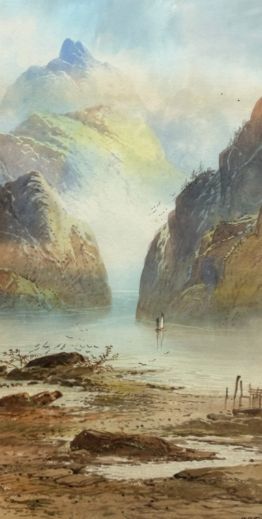
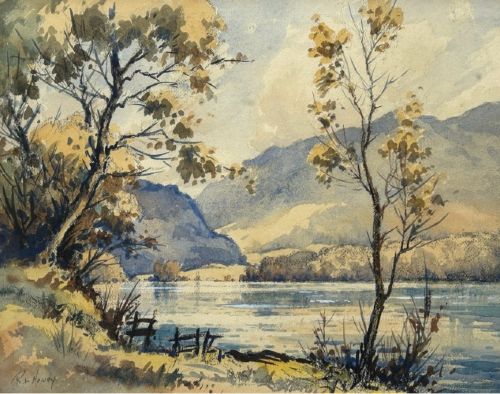
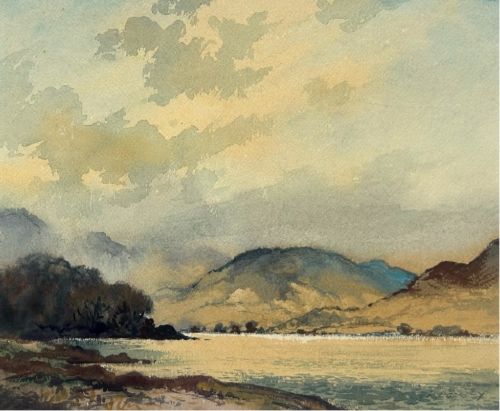
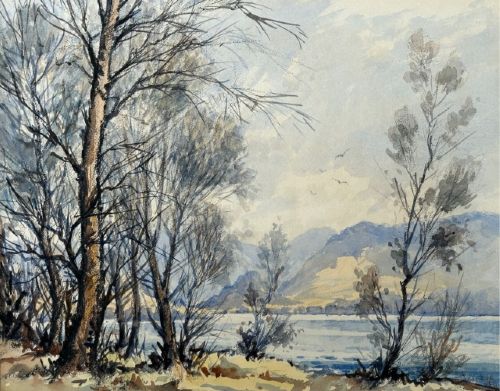
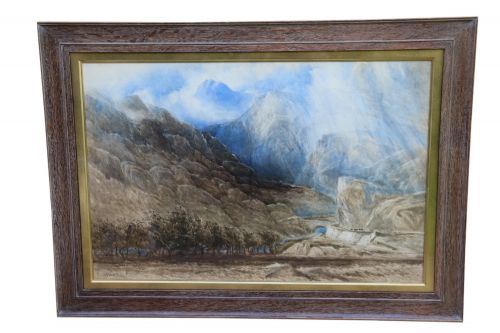
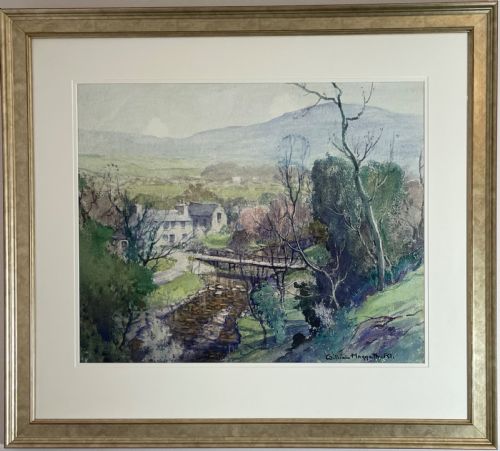
A blue mountain watercolour presents sweeping vistas of highlands, lakes, and craggy summits rendered in delicate pigment on paper. These original paintings frequently depict British and European topography, ranging from Scottish lochs and Welsh passes to Swiss torrents.
Most examples encountered here span the nineteenth century and the mid twentieth century, encompassing Victorian romanticism, British impressionism, and mid-century modern art. Buyers frequently find framed landscape paintings complete with traditional wooden mouldings and glass protection.
The selection includes individual signed sheets alongside collected albums containing multiple ink and watercolour sketches. Each piece records topography through pigment washes, capturing atmospheric weather across mountain ranges.
Materials and Technique
Artists applied watercolour pigment and gouache to paper sheets, often utilising the white of the ground to create luminosity in skies and water. Pigments were brushed over pencil or ink underdrawings to define crags, trees, and figures.
Surviving works are preserved behind glass and housed within wooden frames, frequently constructed from oak or finished with gilt details. These traditional mountings protect delicate paper supports from atmospheric moisture and handling.
Listings feature works executed on paper using watercolour pigment, gouache, and ink across nineteenth and twentieth century periods.
Evaluating Quality
Quality rests in the fluency of the brushwork and the artist's command of atmospheric depth across the landscape. Stronger examples use transparent washes to convey the shifting light of mountainous terrain with confidence.
Condition of the paper and vibrancy of the pigments separate finer works from faded or foxed examples. The harmony between the original frame, glass, and watercolour painting also influences the overall integrity of the piece.
William Henry Earp·Robert Leslie Howey·Henry Martin Pope·William Hoggatt·John Syer·Thomas Lound·James H Hulse·Hirst Walker·Noel Harry Leaver·Samuel Towers·Milton Drinkwater·Willie Stephenson
The Blue Mountain Watercolour Glossary
- Watercolour paint
- A medium composed of colour pigments suspended in a water-soluble vehicle, applied to paper to create translucent washes.
- Gouache
- An opaque water-based paint containing pigment mixed with a binding agent and white filler, used alongside watercolour to add solid highlights.
- Gilt
- A gold leaf or gold-coloured finish applied to wooden frames to enhance the decorative presentation of the painting.
- Impressionism
- A style of painting emphasising transient effects of light and spontaneous brushwork rather than meticulous detail.
- Romanticism
- An artistic movement focusing on emotion, individualism, and the awe-inspiring power of untamed nature and dramatic mountain scenery.
Blue Mountain Watercolour: Frequently Asked Questions
What periods do these watercolours cover?
The works span from the mid nineteenth century through the early and mid twentieth century. They encompass Victorian romanticism and later mid-century British art.
Most pieces date between eighteen-fifty and nineteen-sixty, reflecting evolving landscape painting traditions.
How should I frame and display them?
Display watercolours away from direct sunlight to prevent the pigments from fading over time. Ensure they remain protected behind glass with adequate spacing from the paper.
Original wooden and gilt frames often accompany these pieces, preserving their period character.
Are these works original paintings?
The listings consist entirely of original hand-painted watercolours and gouache works on paper. Many bear the signatures of known British and European landscape artists.
Some offerings include bound albums containing multiple original sketches rather than single framed sheets.
What subjects typically appear in these scenes?
Common subjects include Scottish lochs, Welsh mountain passes, Cumbrian lakes, and Swiss alpine streams. Figures such as farm workers or travellers occasionally inhabit the expansive landscape.
Artists also captured Mediterranean views and remote rural encampments across Britain and Europe.