


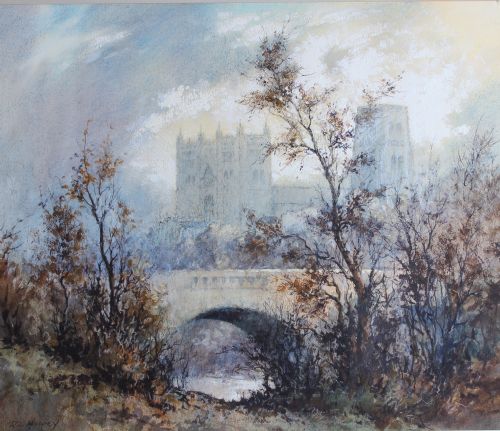
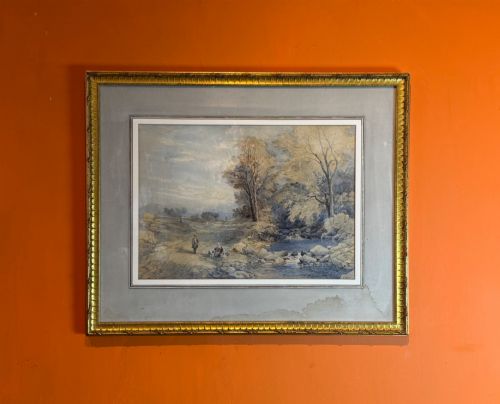
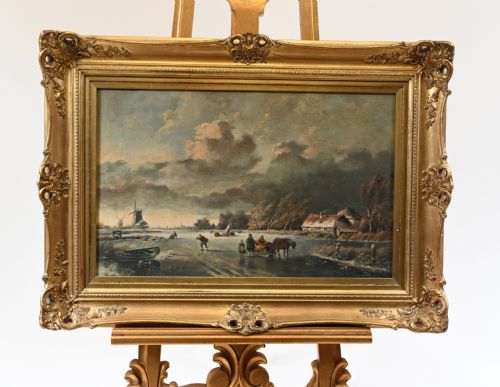
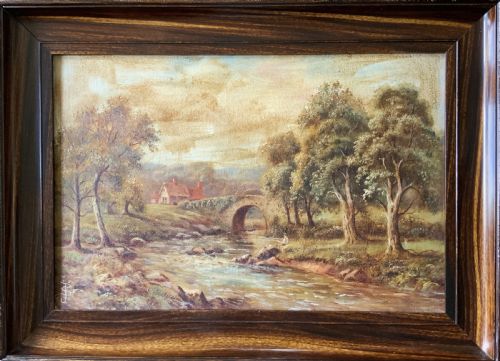


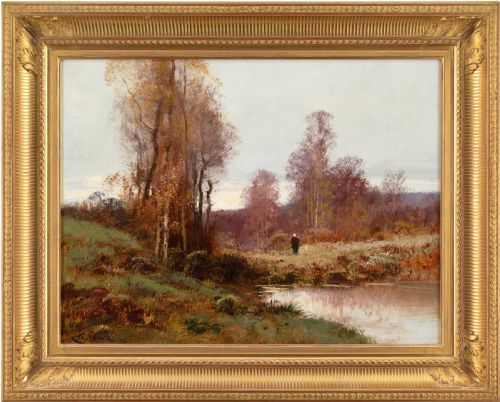


Vintage River Landscape Picture
A vintage river landscape picture brings the calm of moving water and open banks onto an interior wall.
Vintage River Landscape Picture
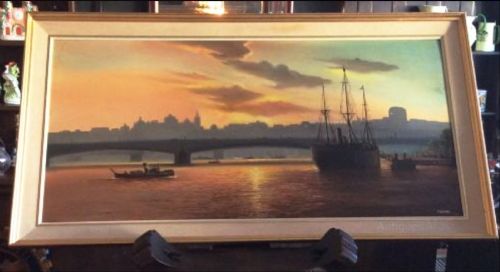
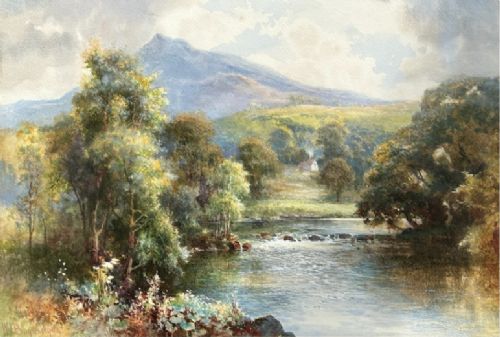
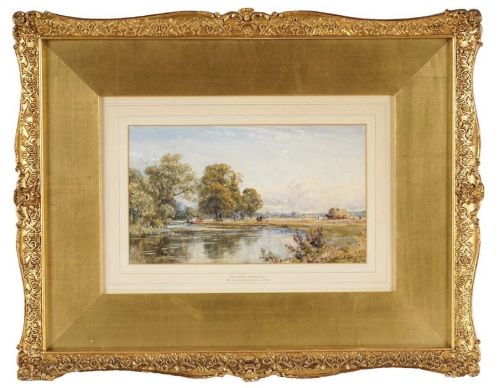
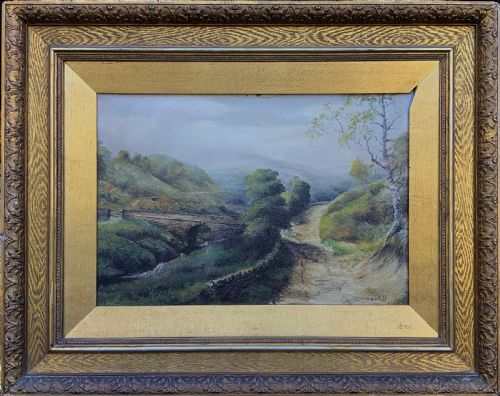
A vintage river landscape picture encompasses framed works on paper, canvas, and wood panel depicting waterways, bridges, banks, and marine scenes. These water-themed works span from the nineteenth century through the mid-twentieth century, capturing rural streams, city rivers, and coastal estuaries.
The selection on this page relies heavily on British and European schools, ranging from Victorian watercolours to mid-century oil paintings. Buyers will find works executed in oil, watercolour, pastel, and acrylic, often housed in original gilt wood frames.
How they were made
Painters utilised oil on canvas or wood panel for rich, textured scenes, building up pigment to catch the light on water and foliage. Watercolours on paper offer a lighter, translucent quality, frequently employed to capture atmospheric river mist and open skies.
Supports varied according to the period and medium, with artists selecting stretched canvas, heavy watercolour paper, or wooden boards. Many works retain their period frames constructed from wood and finished with gilt leaf.
Materials recorded across the selection include canvas, paper, wood panel, and gilt wood framing.
What varies in quality
Quality rests in the artist's handling of light, depth, and movement within the watery setting. Stronger pieces demonstrate a confident command of tone and perspective, making the river surface and surrounding banks feel immediate and convincing.
The preservation of the pigment and support dictates the longevity and visual impact of the work. Unfaded watercolours and stable oil canvases with minimal craquelure represent the higher end of the range.
Kenneth Cozens·Alfred Young Nutt·William Joseph Boyes·Robert Thorne Waite·Robert Leslie Howey·Sydney Yates Johnson·Hubert Wellington·Charles Clair·William Frederick Settle·Arthur Herbert Rigg·Ron Folland·Frank Hider·Maud Raphael Jones·Leslie Rackham·Charles Harmony Harrison·Berthe des Clayes·John Hobson Nicholson·Claude Cardon·Abraham Hulk Junior·Reginald Grange Brundrit·Pieter Cornelis Steenhouwer·Frank W. Scarborough
The Vintage River Landscape Picture Glossary
- Watercolour
- A painting method where fine pigment is suspended in a water-based, translucent solution. It is typically applied to heavy paper to create luminous river scenes.
- Oil on Canvas
- Pigment bound in drying oil applied to a woven fabric stretched across a wooden frame. This technique allows for deep colour saturation and visible brushwork.
- Gilt Wood
- Timber framing finished with a thin layer of gold leaf or metallic gilt paint. These frames frequently accompany nineteenth-century landscape works.
- Impressionist
- A style focusing on the accurate depiction of light and its shifting qualities. Artists often used rapid, visible brushstrokes to capture transient weather over water.
Vintage River Landscape Picture: Frequently Asked Questions
What is a vintage river landscape picture?
A vintage river landscape picture is a painted or worked depiction of a waterway, stream, or river scene created during the nineteenth or twentieth century.
These works utilise media such as oil, watercolour, and pastel on canvas, paper, or wood panel, capturing rural or urban aquatic settings.
How were these landscape pictures originally framed?
Many period river paintings are housed in wooden frames finished with gilt leaf or painted moulding. These surrounds complement the tonal qualities of the artwork within.
Original frames often show minor age-related wear, which contributes to the historic character of the piece.
Where do these river landscape scenes originate?
The pieces originate primarily from British and European artistic traditions, depicting recognizable waterways such as the Thames, Tees, and Seine. Artists often travelled to specific rivers to capture local topography and shipping.
Regional schools, including the Dutch School and British Impressionism, heavily influenced the creation of these views.
How should I care for an antique watercolour?
Watercolours on paper require placement away from direct sunlight to prevent the fading of delicate pigments. Glazing helps protect the paper surface from airborne dust and moisture.
Maintaining stable indoor humidity levels ensures the paper support remains flat and undamaged over time.