




Four Fold Draught Screen
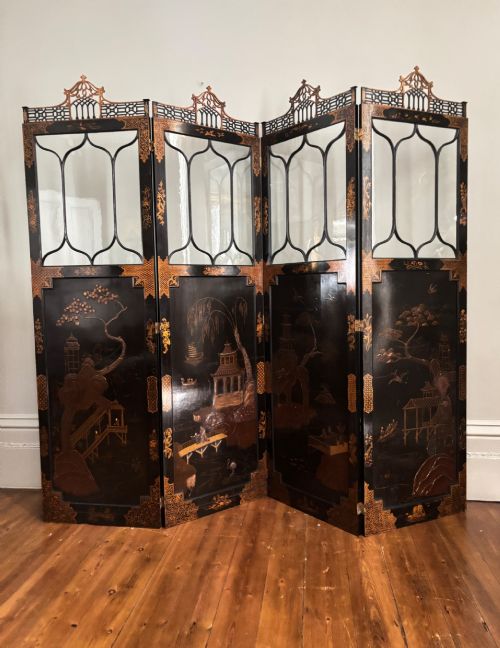
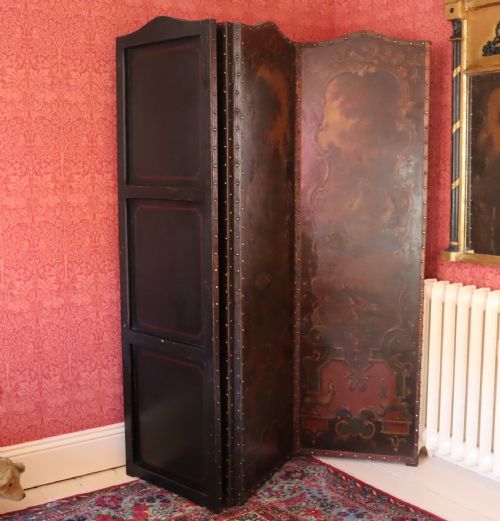
A four fold draught screen divides a room with presence, offering painted leather, carved wood, or needlepoint to shelter a corner.
Four Fold Draught Screen
A four fold draught screen provides an architectural division of interior space, shielding a room from breezes and creating private zones. When you search for a four fold draught screen, you encounter pieces spanning the eighteenth century through to the early twentieth century.
The selection here encompasses diverse regional origins and decorative traditions, including Chinese Chippendale, Chinoiserie, Dutch and Spanish leatherwork, Arts and Crafts ebonised oak, and French hand-painted designs. Most examples found on this page utilise four panels linked by hinges to form a continuous barrier.
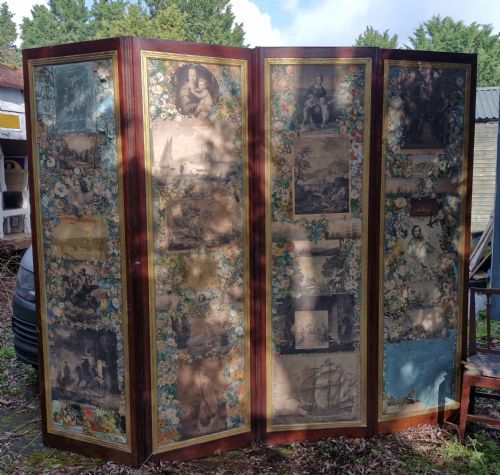
Forms range from tall country house mahogany frames to scrap work folding screens and intricate fretwork Indian panels. Each variant serves the fundamental purpose of partitioning a space while introducing texture and historical style to an interior.
Markers of quality
Quality rests in the execution of the surface artistry, whether hand-painted chinoiserie, gilt embossed leather, or detailed needlework. The depth of carving in the wooden framework and the integrity of the joinery distinguish finer pieces.
Substantial scale combined with balanced proportions elevates a screen, particularly in grander formats designed for country houses. The preservation of original painted surfaces and traditional materials dictates the standing of an individual piece.
Listings feature four fold screens spanning the eighteenth, nineteenth, and twentieth centuries, utilising materials from painted leather and brass to ebonised oak.
Paul Sormani·William Morris
The Four Fold Draught Screen Glossary
- Coromandel
- A dense dark timber often associated with Chinese folding screens, valued for its weight and rich dark grain. It provides a robust ground for incised lacquer decoration.
- Chinoiserie
- European decorative style reflecting Chinese artistic motifs, frequently seen in painted leather and lacquer panels. This style brings intricate garden scenes and figurative motifs to folding screens.
- Scrap work
- The Victorian practice of applying paper cutouts and engravings onto a surface before varnishing. On screens, this creates a dense, collaged narrative across the panels.
- Needlepoint
- Stitched textile work using canvas as a foundation, employed to cover screen panels with pictorial or geometric designs. It adds tactile warmth and softened acoustics to a room.
- Fretwork
- Openwork carving in wood that creates decorative patterns of intersecting lines. This technique appears on panels to introduce light and intricate geometric shadow play.
Four Fold Draught Screen: Frequently Asked Questions
How do I place a four fold screen in a modern room?
Position the screen across an unused corner to soften hard architectural lines, or use it to create a functional dressing area within a bedroom. The four-panel format allows you to angle the leaves sharply or stretch them wider depending on the space.
Ensure the panels receive even indirect light to protect delicate painted leather, lacquer, or needlepoint surfaces from fading over time.
Were these screens originally used for warmth or privacy?
Historically, draught screens served both purposes by blocking cold air currents moving across large rooms and by screening specific seating areas from doorways. Their folding nature made them adaptable to changing seasonal layouts in large houses.
Over time, their decorative qualities became equally important, evolving from purely utilitarian barriers into significant focal points of interior design.
How do I distinguish an 18th-century leather screen from later copies?
Examine the weight and suppleness of the hide alongside the depth and patina of the gilt embossing and hand-painted details. Eighteenth-century Dutch and Spanish examples display authentic tool work and organic wear consistent with age.
Look closely at the reverse of the panels and the joining hardware to understand the construction methods employed during the period.
How should I clean and maintain antique screen panels?
Dust wooden frames and painted surfaces gently with a soft, dry cloth, avoiding liquid cleaners that might damage aged leather, paper, or lacquer. Keep screens away from direct heat sources and strong sunlight to prevent warping and cracking.
Check the hinges periodically to ensure the weight of the panels hangs evenly without straining the wood.