


Oriental Black Lacquer Screen
An oriental black lacquer screen brings deep dark tones and intricate surface work into a room, serving as a striking divider or focal wall piece.
Oriental Black Lacquer Screen
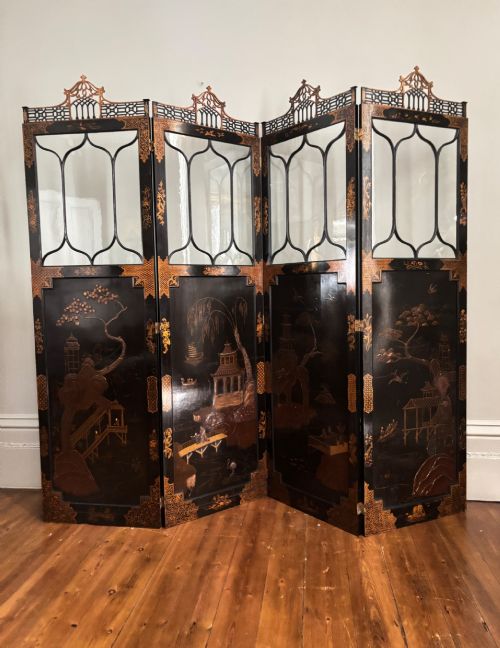
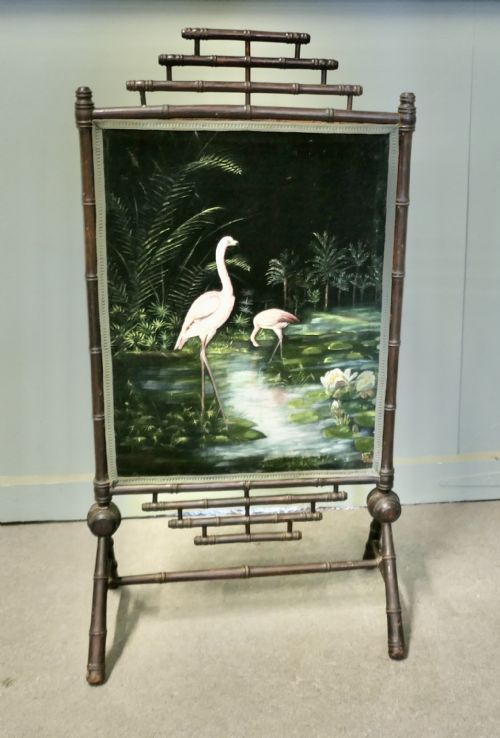
An oriental black lacquer screen encompasses folding room dividers, freestanding dressing panels, and smaller fire screens created across the nineteenth and twentieth centuries. Buyers encounter Chinese coromandel designs alongside Japanese folding pieces and Regency Chinoiserie variations.
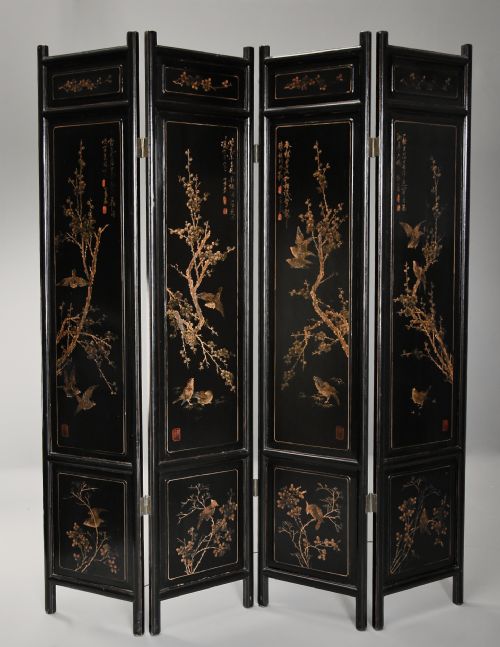
The multi-fold room divider stands as the most common format met on this page, often featuring four to eight panels linked together. These pieces function practically to divide interior spaces while displaying detailed painted or inlaid surfaces.
How oriental black lacquer screen pieces were constructed
Craftsmen built these items from wood, hardwood, or papier-mâché, applying multiple coats of lacquer to achieve a dark, lustrous foundation. Surfaces then received painted decoration, gold leaf highlights, or applied motifs.
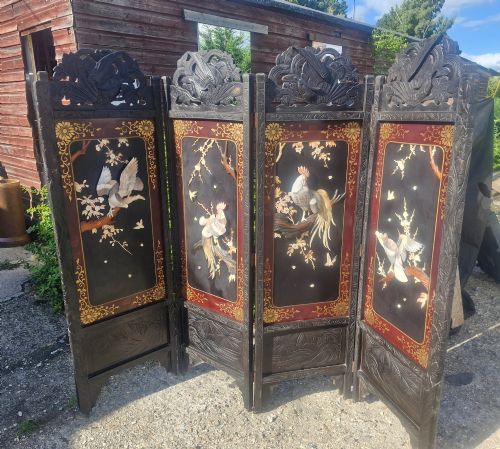
Detailing often incorporated bone, mother of pearl, abalone, hardstone, and brass components set directly into the lacquer. Carved relief work, particularly in the coromandel style, added physical depth to the panels.
Design styles represented include Chinoiserie, Chinese Chippendale, Japanese Meiji, and Chinese Qing.
What varies in quality across oriental black lacquer screen examples
Depth of detail and complexity of inlay distinguish superior examples from simpler decorative items. Pieces featuring deeply carved bone, hardstone mounts, or extensive mother of pearl require greater technical skill than flat painted surfaces.
The integrity of the structural hinges and the stability of the wood panels dictate the overall durability of the piece. Superior construction ensures the multi-fold sections hang true and withstand regular repositioning.
The Oriental Black Lacquer Screen Glossary
- Coromandel
- A type of Chinese incision lacquer work where designs are cut into a dark ground and filled with colours or left natural. This technique creates a rich, textured surface across large folding panels.
- Chinoiserie
- European artistic styles reflecting Chinese artistic traditions, popular in various British periods. This aesthetic appears frequently on Regency and Victorian fire screens and dressing screens.
- Papier-mâché
- A composite material made from paper pulp mixed with glue and oil, pressed and dried into shape. It provided a lightweight base for Victorian black lacquer items.
- Mother of pearl
- The iridescent inner layer of certain mollusc shells, shaped and embedded into lacquer surfaces. It catches the light to depict birds, foliage, and figures.
Oriental Black Lacquer Screen: Frequently Asked Questions
How do I use an oriental black lacquer screen at home?
Multi-fold panels work effectively to divide large open-plan living areas or create private dressing spaces in bedrooms. Smaller fire screens and wall panels function as focal art pieces against plain walls.
Position folding screens where they receive moderate indirect light to protect the lacquer finish while highlighting inlaid bone or gold leaf details.
What is the difference between Chinese and Japanese screens?
Chinese examples often utilise coromandel incision work or hardstone mounts depicting elaborate court or landscape scenes. Japanese pieces frequently showcase delicate painted motifs alongside carved bone and textile panels.
Both traditions employ dark lacquer grounds, but the specific carving depths and inlay materials typically distinguish their origin.
How do I care for antique lacquer surfaces?
Maintain the finish by dusting gently with a dry, soft microfibre cloth to prevent scratching the delicate surface. Avoid commercial polishes, chemical cleaners, and direct sunlight.
Keep the panels away from extreme temperature fluctuations and moisture sources to protect the underlying wood and prevent the lacquer from cracking.
How do I date an oriental black lacquer screen?
Dating relies on examining the construction methods of the wooden framework, hinge types, and stylistic indicators such as Regency Chinoiserie or Victorian papier-mâché. Nineteenth-century examples often feature hand-carved coromandel work, while twentieth-century pieces show distinct mechanical hinge fixings.
Comparing the specific inlay materials, such as abalone or hardstone, against established period techniques helps narrow the timeline of manufacture.