




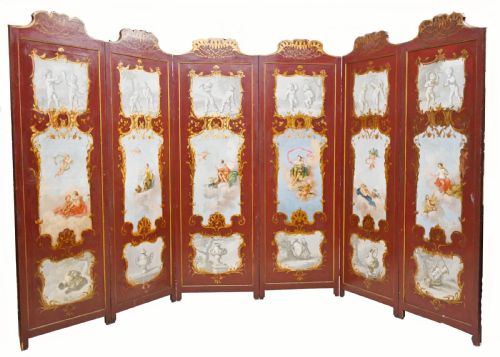
Chinoiserie Folding Room Divider
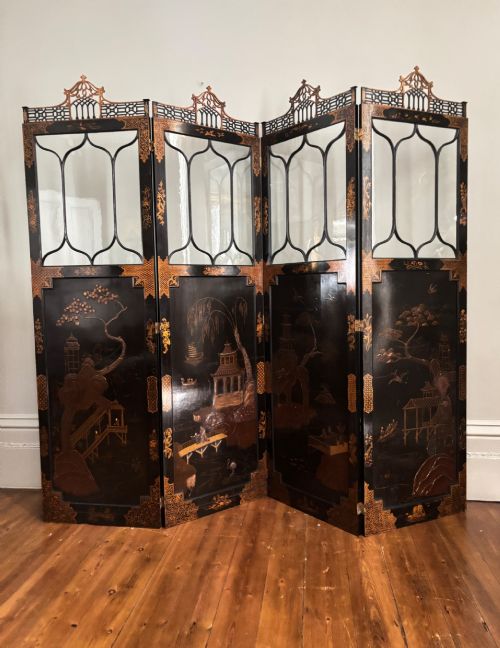
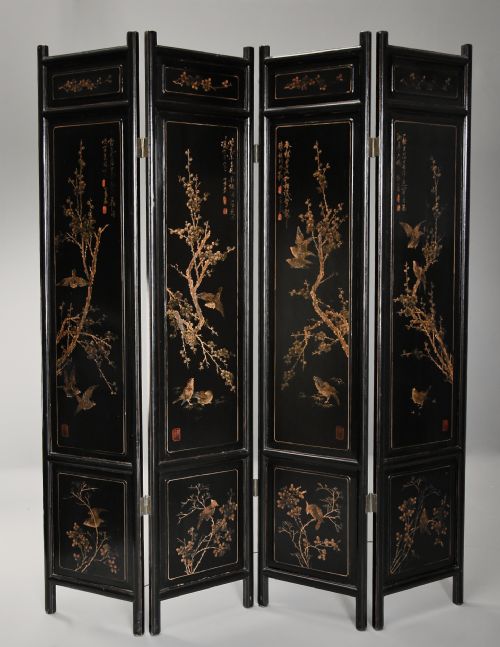
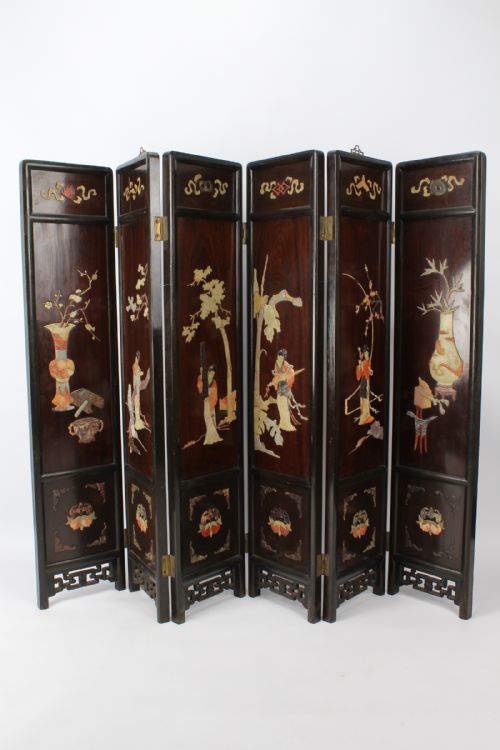
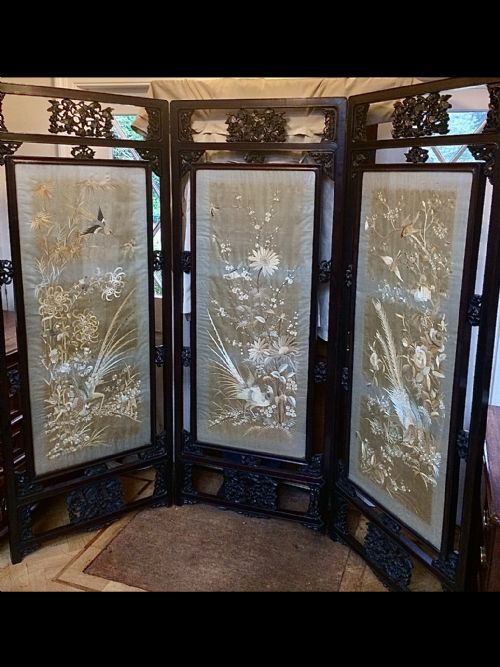
These chinoiserie folding room divider panels bring dramatic painted storytelling and rich lacquer into a room, offering height and architectural division.
Chinoiserie Folding Room Divider
A chinoiserie folding room divider partitions space with articulated panels, appearing across this page in formats ranging from grand eight-fold screens down to intimate three-leaf dressing screens. The selection includes domestic room dividers, privacy screens, and smaller fire screens designed for hearth placement.
Makers constructed these pieces across multiple eras, representing eighteenth-century examples alongside nineteenth-century Victorian interpretations and twentieth-century decorative pieces. They employ traditional Oriental aesthetics, Chinese Chippendale motifs, and Regency styling to create functional partitions.
The physical scale spans from compact three-panel dressing screens to expansive six-fold and eight-fold panels. Surviving pieces incorporate distinct configurations of hinges that allow the leaves to fold in alternate directions for freestanding placement.
Materials and construction methods
Craftsmen built the core structure primarily using wood, hardwood, and papier-mâché, mounting panels onto hinged frames that support multiple folds. Surfaces received coats of lacquer to form a smooth foundation for subsequent decoration.
Makers applied gold leaf, paint, and mother-of-pearl inlay to build up intricate scenes and border patterns across the dark grounds. Certain examples integrate hardstone mounts and carved dragon details into the wooden framework, adding physical relief to the flat lacquer surfaces.
Several screens hide fierce carved dragons within their delicate floral lacquer panels, keeping watch over your parlor.
Distinctions in craftsmanship
The depth and execution of surface decoration dictate the visual impact, separating simple painted motifs from complex incised Coromandel lacquer work and detailed mother-of-pearl inlay. The precision of the joinery along the hinges and the stability of the core wood panels also govern how well a multi-fold screen stands over time.
Materials elevate certain pieces, particularly those utilising genuine gold leaf, hardstone mounts, or heavy hardwood frames rather than lighter constructed bases. The presence of hand-painted artistry across multiple folds ensures greater visual continuity from panel to panel.
The Chinoiserie Folding Room Divider Glossary
- Coromandel lacquer
- A Chinese incised lacquer technique where artisans carve designs into a built-up dark ground and fill the recesses with pigments or gold. This method creates a textured, multi-layered surface often seen on large screens.
- Chinoiserie
- European interpretation and imitation of East Asian artistic traditions, prominent in decorative arts and furniture. It relies on fanciful motifs of figures, pavilions, and landscapes.
- Dressing screen
- A portable folding partition traditionally used in bedchambers for privacy during dressing. These typically feature three to four folds.
- Hardstone
- Naturally occurring semi-precious stones such as jade, agate, or soapstone used in relief mounts on lacquer panels. They provide tactile contrast and three-dimensional depth.
- Fire screen
- A small freestanding panel placed before an unlit fireplace to block drafts or decorate the hearth. They share folding mechanics with larger room dividers but exist on a miniature scale.
Chinoiserie Folding Room Divider: Frequently Asked Questions
How do I place a multi-fold screen in a room?
Position the panels in a gentle zig-zag configuration to ensure the screen stands securely without needing wall attachments. This arrangement allows the hinged sections to support one another while displaying the painted artwork across the room.
Consider placing the divider against plain walls to highlight the lacquer work or use it to delineate zones within an open-plan space. Ensure clearance around the folds so the panels move freely without scraping flooring.
What is the difference between coromandel and lacquer?
Coromandel refers specifically to an incised lacquer technique where artisans carve into thick layers of dark lacquer to expose contrasting underlayers. Standard lacquer work relies on painted, gilt, or inlaid decoration resting flat upon the surface without deep carving.
Both finishes require a wooden substrate, but coromandel pieces yield a distinct tactile depth through their incised channels. You will find this technique frequently on eighteenth- and nineteenth-century Chinese panels listed on this page.
Can these screens be used as permanent room dividers?
These folding pieces function effectively as movable partitions to separate functional areas within larger rooms. Their hinged construction means you can alter their position or fold them flat when floor space is needed elsewhere.
Keep in mind that while they offer visual privacy and block sightlines, they do not function as soundproof structural walls. Position them away from heavy foot traffic to protect the painted surfaces from accidental bumps.
How are different periods identified on these screens?
Dating relies on examining the construction materials, hinge types, and stylistic vocabulary used in the painted or carved decoration. Eighteenth-century examples often feature deep coromandel work, while Victorian pieces incorporate papier-mâché or specific European interpretations of Chinese motifs.
Twentieth-century items frequently show machine-made hardware alongside traditional hand-finishing techniques. Comparing the core wood and the wear patterns on the lacquer helps anchor the piece to its era of manufacture.