




Antique Asian Partition Screen
An antique asian partition screen brings architectural division and decorative richness to a room, using folding panels of wood, lacquer, and silk.
Antique Asian Partition Screen
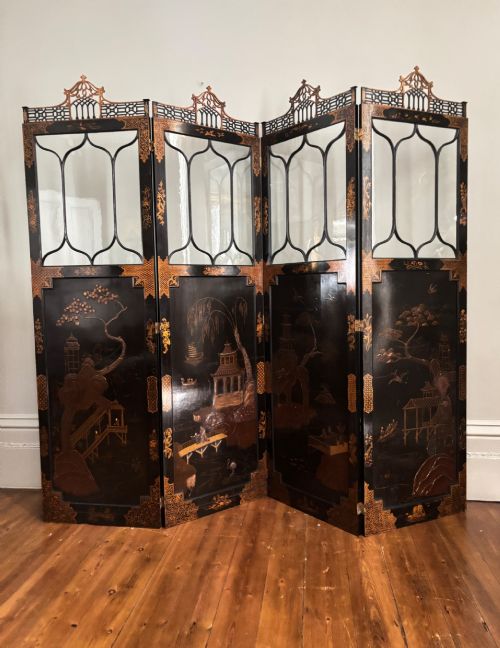
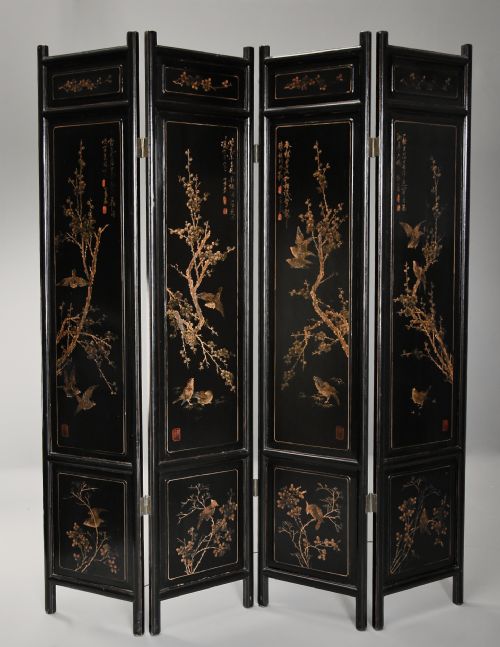
When you search for an antique asian partition screen, you encounter folding panels designed to divide interior spaces or decorate a room. The most common forms on this page are four-fold and multi-panel folding screens and room dividers.
The selection spans origins from China, Japan, and Burma, moving through periods such as the nineteenth century, the Victorian era, and the early decades of the twentieth century. Forms range from large floor-standing room dividers to smaller table screens and photographic props.
Styles vary widely across the inventory, encompassing Chinoiserie, Chinese Qing Dynasty, Chinese Chippendale, Chinese Export Art Deco, and Japanese Export. Buyers select these pieces to section off living spaces or introduce traditional East Asian craftsmanship into an interior.
How they were made
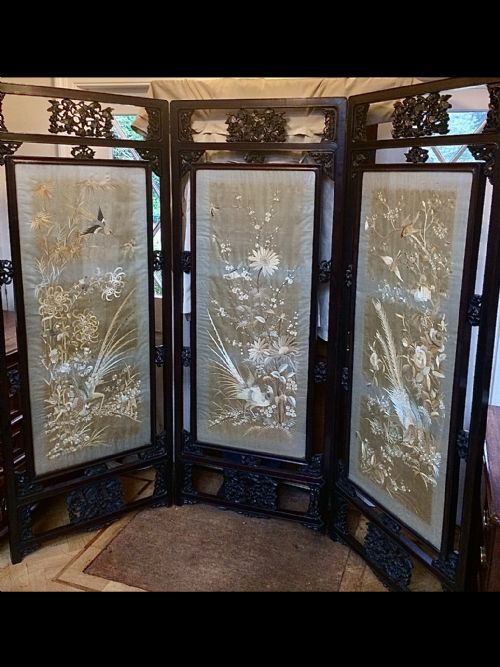
Construction relies heavily on timber frames using wood and denser hardwood, supporting panels of lacquered wood, silk, and silk cotton. Artisans applied successive coats of lacquer to build up deep surfaces, frequently employing Coromandel techniques to incise and colour the decoration.
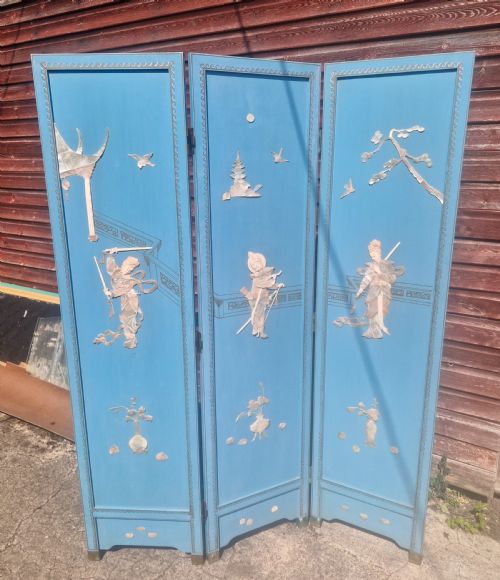
Surface ornamentation incorporates intricate hand painting, mother-of-pearl inlay, and detailed carving depicting motifs such as dragons. Metal elements like brass fixtures provide structural support and hinges, while glass occasionally appears in specific panel designs.
One unexpected Victorian entry served life on the other side of the lens as a photographic prop before joining the screen lineup.
What varies in quality
Quality differences emerge in the depth and precision of the carving across the wooden panels, alongside the richness of the lacquer work. Pieces with complex Coromandel incisions or hand-painted silk display a higher degree of artisan skill than simpler constructions.
The choice of materials also dictates the standing of a piece, with dense hardwoods, substantial mother-of-pearl embellishments, and finely cast brass hardware marking out the upper tier of the range. The cohesion of multi-fold hinges and the preservation of original painted surfaces further separate standard examples from finer works.
The Antique Asian Partition Screen Glossary
- Coromandel lacquer
- A Chinese incised lacquer technique where layers of dark lacquer are carved away to reveal coloured grounds beneath. It is frequently seen on large folding screens from the nineteenth and twentieth centuries.
- Chinoiserie
- A European artistic style reflecting Chinese motifs and decorative traditions. This aesthetic appears in British interpretations of Asian design, such as Chinese Chippendale.
- Table screen
- A smaller decorative screen mounted on a stand rather than standing directly on the floor. These pieces were traditionally placed on desks or tables for display.
- Export art deco
- A hybrid style combining traditional Asian motifs with the geometric lines of the Art Deco movement. Pieces in this category date from the early twentieth century.
- Four-fold screen
- A room divider constructed from four hinged panels that allow the object to be angled or flattened. This format dominates the folding screens recorded in the inventory.
Antique Asian Partition Screen: Frequently Asked Questions
How do I use a folding screen at home?
A folding screen acts as a flexible room divider to separate areas within an open plan space. You can also place one flat against a wall as a decorative backdrop behind furniture.
Because many examples feature painted or lacquered surfaces on both sides, they work effectively when viewed from multiple angles in a room.
What is the difference between Chinese and Japanese screens?
Chinese screens often feature deep wood carving, Coromandel lacquer, and elaborate motifs like dragons or court scenes. Japanese examples frequently emphasise painted silk, delicate lacquer work, and minimalist compositions.
Both traditions utilise folding panel construction, but the surface textures and decorative vocabularies reflect their distinct origins.
How do I date an antique screen?
Dating relies on examining the construction materials, hinge types, and stylistic indicators such as Art Deco geometry or Qing Dynasty motifs. Nineteenth-century pieces generally show heavier timber frames and traditional hand-applied lacquer.
Twentieth-century examples often incorporate transitional design elements or lighter structural woods typical of the 1920s and 1930s.
Are these screens heavy?
Weight varies according to the materials used in the panels and the underlying timber frame. Solid hardwood and multi-fold lacquer screens are substantially heavy and require careful positioning.
Lighter versions featuring silk panels or fewer folds are easier to move and adjust within a domestic setting.