


Antique Lacquered Privacy Screen
An antique lacquered privacy screen brings rich hand-finished surface detail and moveable division to a room, offering both visual theatre and practical enclosure.
Antique Lacquered Privacy Screen
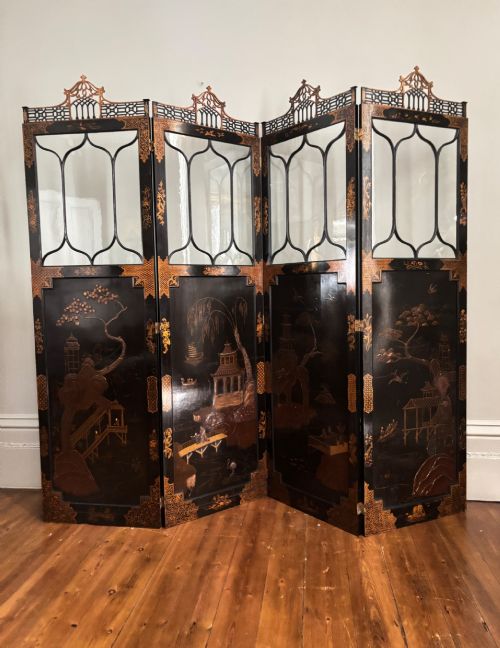
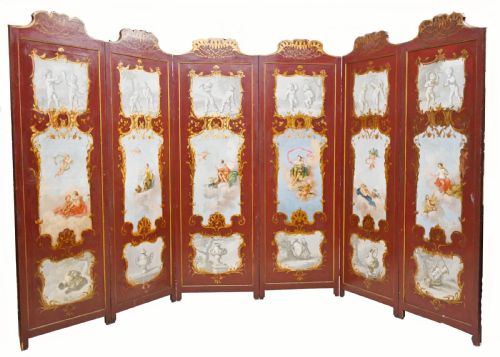
When you search for an antique lacquered privacy screen, you encounter folding panels designed to divide a space while introducing a deeply worked decorative surface into an interior. These panels serve as both architectural partitions and substantial artworks, historically used to shield areas from draughts or create secluded zones within larger rooms.
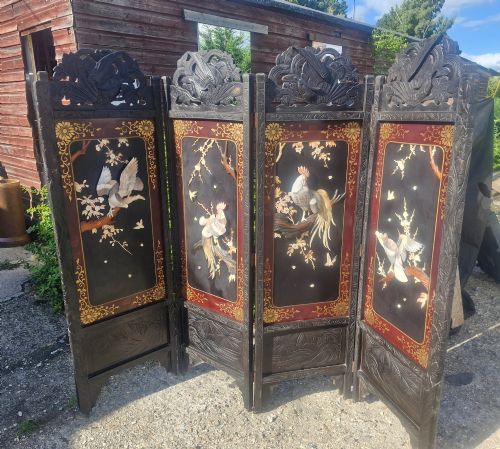
The versions most commonly met across these listings span from late Victorian interpretations through early twentieth-century Chinese and Japanese export pieces to mid-century Burmese examples. Forms range from towering fourfold Coromandel screens and black lacquer papier-mâché dressing screens to multi-panel room dividers mounted with hardstone or carved bone figures.
Origins stretch across diverse stylistic traditions including Chinese Chippendale, Japanese Meiji, Victorian Chinoiserie, and Regency aesthetics. Each piece demonstrates how makers adapted traditional lacquer work into portable hinged formats suited to Western domestic architecture.
How they were made
The construction of these pieces relies on sturdy wooden foundations or hardwood frames built to support multiple hinged folds without warping under tension. Craftsmen applied successive layers of lacquer to build up a deep, durable ground, which was then polished smooth to receive painted, gilded, or incised decoration.
Surface ornamentation involved specialised techniques such as deep carving into thick lacquer layers, known as Coromandel work, alongside the application of contrasting elements like carved bone and hardstone. Gilding and detailed hand-painting further enriched the panels, while brass hardware often provided the structural hinges connecting the individual folds.
The selection includes styles ranging from Victorian Chinoiserie and Chinese Chippendale to Japanese Meiji and Burmese traditions.
What varies in quality
Quality in these screens is determined by the depth and precision of the lacquer work and the complexity of the surface ornamentation. Superior examples display crisp, deeply incised carving and meticulously applied hardstone or bone details that remain firmly secured to the dark ground.
The structural integrity of the timber frame and the quality of the joining between folds dictate how well a heavy multi-panel screen stands over time. Finer pieces maintain balanced proportions across all folds, with consistent surface polish and harmonious hand-painting that rewards close inspection.
The Antique Lacquered Privacy Screen Glossary
- Lacquer
- A durable resin finish applied in multiple layers to a wooden substrate to create a smooth, glossy surface. It protects the wood while providing a rich ground for painting and carving.
- Coromandel
- A style of Chinese incision where lacquer is carved away to reveal contrasting layers beneath, often finished with colour. This technique creates a textured, low-relief surface across large folding panels.
- Chinoiserie
- European artistic styles reflecting Chinese decorative motifs and techniques. It appeared frequently in British furniture and screen design during the Victorian and Regency periods.
- Hardstone
- Minerals such as jade or agate cut and polished for decorative inlay. These stones add tactile dimension and subtle colour variation to the dark lacquer background.
Antique Lacquered Privacy Screen: Frequently Asked Questions
How were antique lacquered privacy screens used?
These screens served primarily to divide large rooms into smaller, more intimate areas or to shield occupants from draughts near doors and windows. They also functioned as dressing screens in bedrooms, providing a temporary private space for changing clothes.
In period interiors, their folding nature allowed them to be repositioned easily according to the season or the specific social requirements of the household. Their substantial height and decorated surfaces meant they acted as major decorative focal points rather than purely utilitarian partitions.
How do I care for an antique lacquered surface?
Maintaining lacquer requires keeping the piece away from direct sunlight and sudden shifts in temperature or humidity, which can cause the wood beneath to move and the finish to crack. Dusting should be done gently with a soft, dry cloth without chemical polishes.
Because the surface layers can be sensitive to moisture and abrasion, placing screens in stable environments preserves the integrity of the gilding, paint, and inlaid elements. Careful handling of the hinges when folding or moving the panels prevents structural strain.
How do I tell Chinese export screens apart from Japanese examples?
Chinese export pieces, particularly those in the Coromandel style, often feature deep incision work into dark lacquer grounds depicting court scenes, landscapes, or floral motifs. Japanese folding screens frequently incorporate distinct decorative elements such as deep carved bone figures or refined painted motifs associated with the Meiji period.
The choice of wood and the specific treatment of the lacquer ground also offer clues to the regional workshop traditions. Comparing the style of the figures and the framing details helps clarify the geographic origin of the piece.
What is the difference between a dressing screen and a room divider?
Dressing screens were traditionally scaled for use in private chambers to create a secluded changing area, often featuring portable dimensions and specific surface decoration suited to intimate spaces. Room dividers were generally larger multi-panel structures intended to partition public entertaining areas within a house.
Both types share the same folding construction and lacquered finishes, but their original domestic placement influenced their scale and the thematic focus of their artwork. Surviving examples often blur these distinctions as modern interiors find new uses for them.