

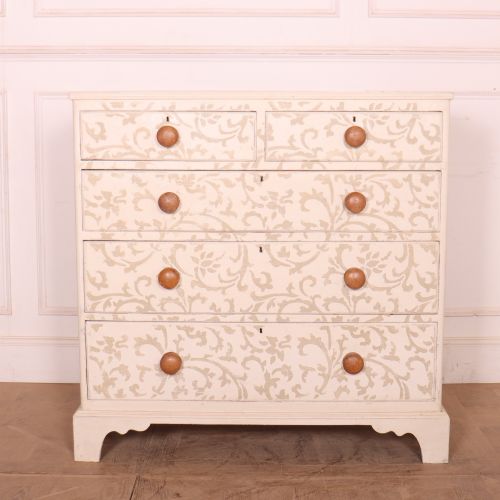

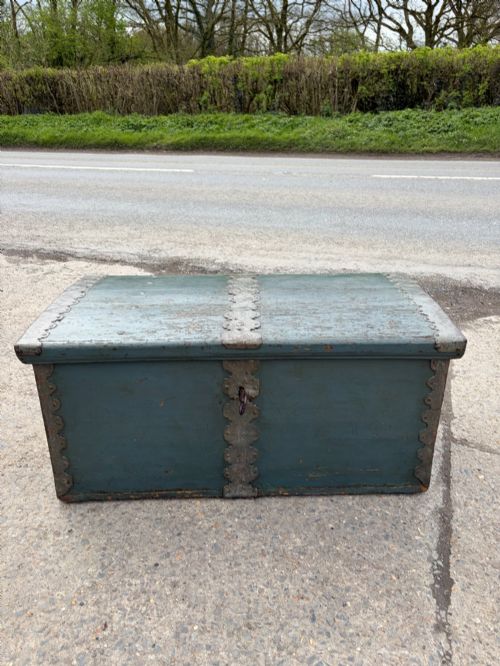

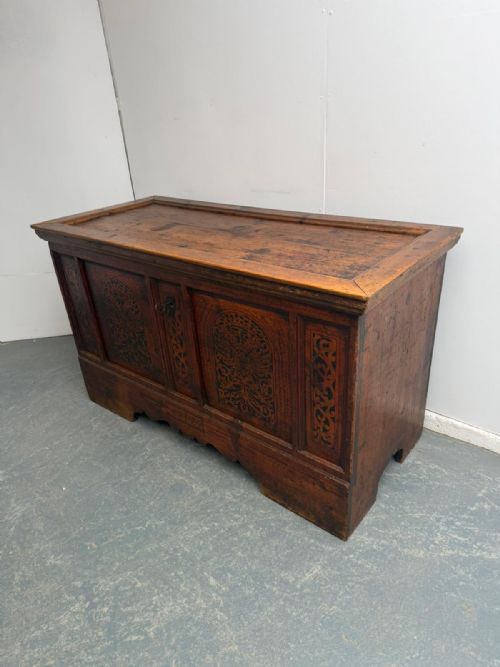


Folk Art Painted Chest
These folk art painted chests bring raw character into a room, offering robust storage layered with generations of pigment.

What folk art painted chests are
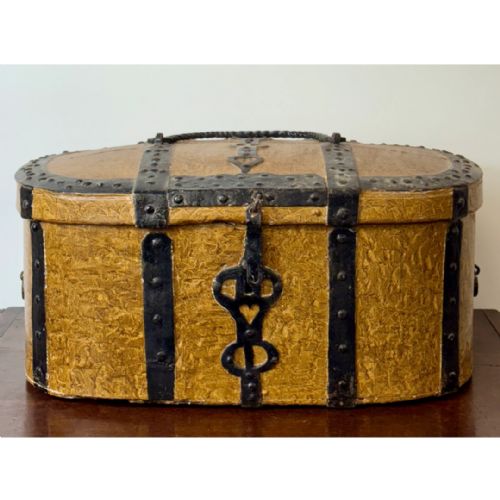
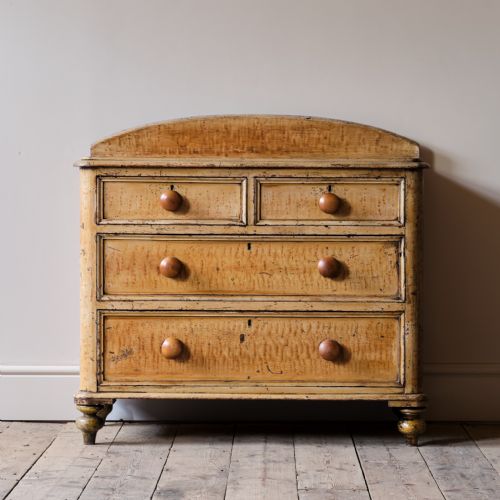
A folk art painted chest represents a deeply practical storage vessel transformed by regional decoration and hand-applied colour. When you search for this phrase, you encounter utilitarian boxes, blanket chests, dome top trunks and chests of drawers that have received expressive surface treatments.
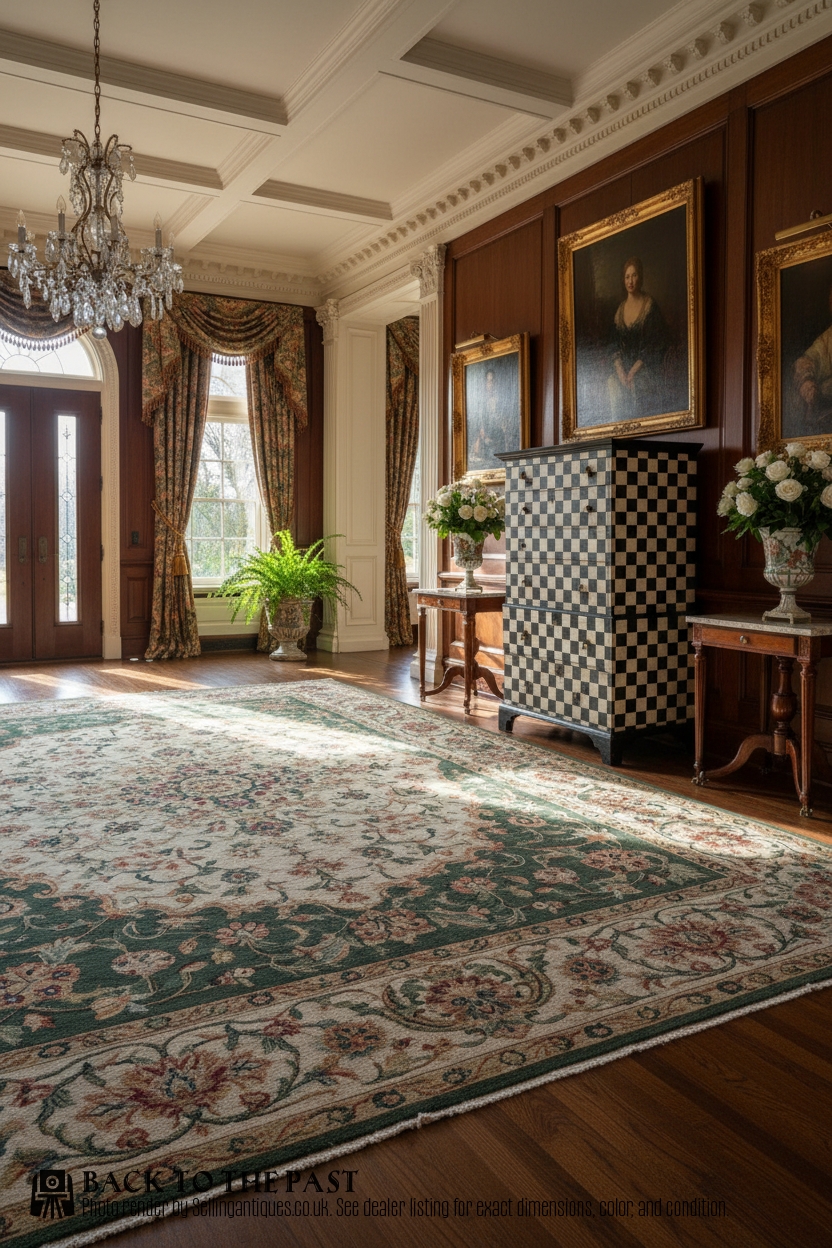
The pieces appearing here lean heavily towards nineteenth-century examples in pine, spanning simple country boxes to more ambitious chequered chest on chest configurations. Many retain their original paint, showing how domestic furniture was personalised long before mass production standardities took hold.
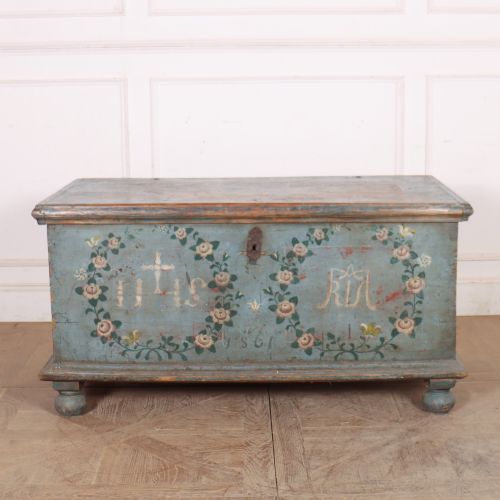
Origins stretch from English country workshops to broader European traditions, taking in dome top marriage chests and heavy-strapped trunks. Each object balances raw utility with naive or deliberate decorative schemes that tell a story of its domestic life.
How they were made
Construction relies primarily on solid timber, with pine serving as the dominant base material alongside occasional uses of mahogany. Workshops built these boxes to withstand heavy domestic use, employing solid board construction joined by traditional methods.
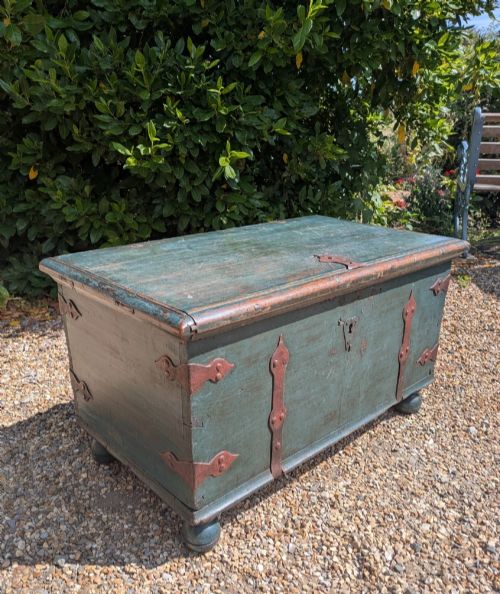
Surface decoration involves hand-applied paint, sometimes laid over earlier layers, creating patinated finishes that record decades of wear. Metalwork is integral to the build, utilising hand-forged iron strapwork, wrought iron fittings and occasional brass or leather elements to reinforce corners and lids.
Retail Price Guide 2026
Typical UK retail prices for folk art painted chest, calculated from the Sellingantiques database of over a million retail prices indexed since 2003. This retail price guide relies exclusively on Sellingantiques data; no external sources or auction records are used, so the figures do not describe the wider market.
Listings for folk art painted chests span the nineteenth century, featuring pine bodies finished with paint, iron, wrought iron, timber and brass.
What varies in quality
Quality in these pieces rests entirely in the integrity of the surface and the ambition of the decoration. A chest retaining its untouched original paint scheme carries significantly more visual weight than one stripped or heavily restored in later centuries.
The sophistication of the joinery and hardware also separates standard utility boxes from superior examples. Finely executed hand-forged iron strapwork or complex forms like a painted chequered chest on chest demonstrate a higher grade of craftsmanship from the maker.
The Folk Art Painted Chest Glossary
- Strapwork
- Ornamental metal bands fixed across the exterior of a chest for structural reinforcement. These are often hand-forged in iron to protect vulnerable corners and lids.
- Dome top
- A rounded lid construction designed to shed water and increase internal storage capacity. This profile appears frequently on marriage chests and travel trunks.
- Original paint
- The initial decorative or protective pigment layer applied when the piece was made. Surviving original paint is prized for its authentic patination and colour.
- Chequered
- A decorative pattern arranged in alternating squares of contrasting colours. This geometric scheme adds visual complexity to country furniture surfaces.
- Marriage chest
- A specially commissioned box created to mark a wedding, often bearing dates, initials or symbolic motifs. These pieces frequently feature distinctive folk art decoration.
Frequently Asked Questions
What is a folk art painted chest?
A folk art painted chest is a utilitarian storage box or trunk decorated with hand-applied pigments by local makers. These pieces combine robust timber construction with expressive, often naive surface designs.
They served essential storage roles in nineteenth-century homes, housing blankets, linens or personal possessions while adding colour to domestic spaces.
How were these chests used originally?
These chests functioned as secure household storage for textiles, garments and valuables before fitted wardrobes became common. Their sturdy construction allowed them to double as benches or travel trunks.
Dome top variants and marriage chests often held dowry items or important family documents, travelling with owners through their lives.
How do I care for original paint?
Preserving original paint requires keeping the chest away from direct sunlight and maintaining stable indoor humidity. Avoid harsh chemical cleaners or modern polishes that can lift historic pigment layers.
A soft, dry cloth is usually sufficient for dust removal, allowing the natural patination of the painted surface to stabilise safely.
How can I tell the period of a painted chest?
Dating relies on examining construction marks, timber preparation methods, hardware styles and pigment characteristics. Nineteenth-century examples often feature hand-forged iron strapwork and distinctively worn paint layers that indicate age.
Comparing the form, such as dome tops or chest on chest configurations, against documented regional styles helps narrow down the decade of manufacture.