
Folding Top Console
A folding top console provides a versatile surface that expands from a slim wall table into a full table for cards, tea or dining.
Folding Top Console
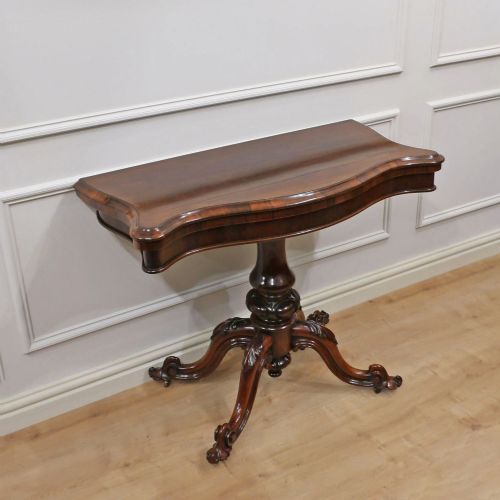
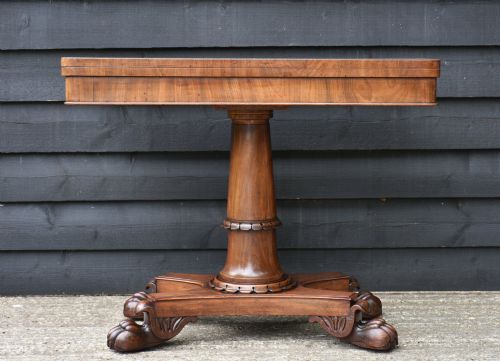
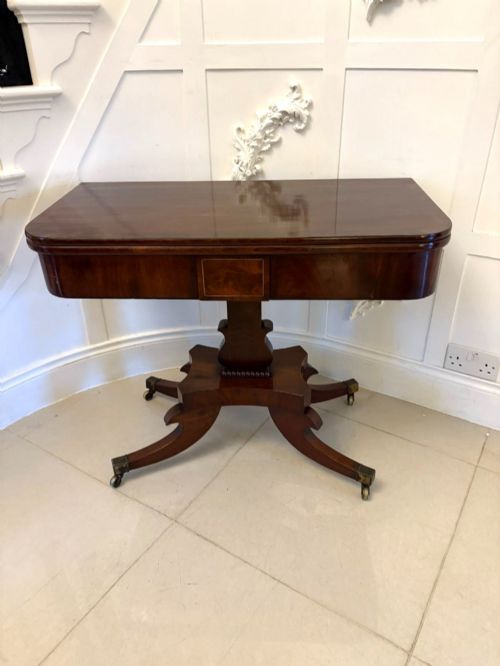
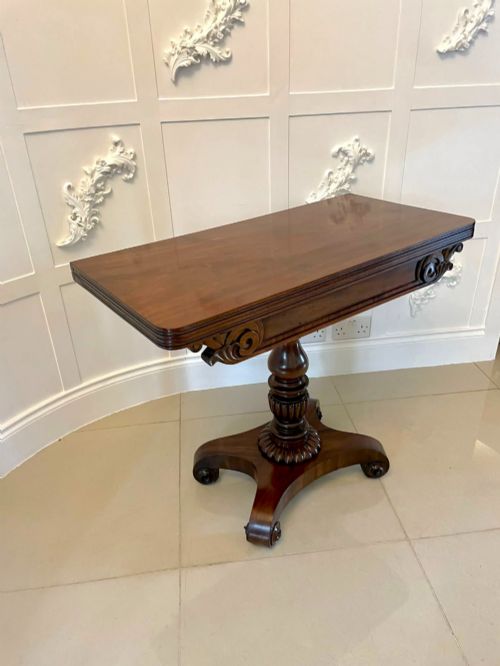
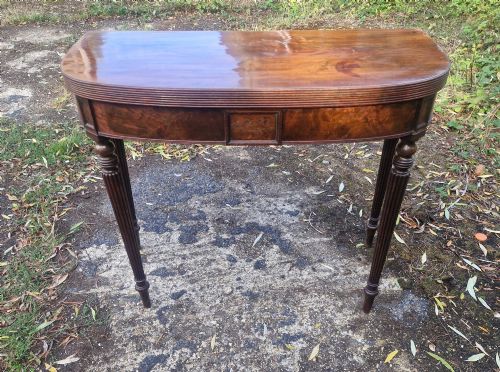
A folding top console combines the slim profile of a wall table with the practical top of a card, tea or games table. These pieces function as decorative side furniture until the hinged top opens to reveal a larger surface supported by a swinging leg or pivoting frame.
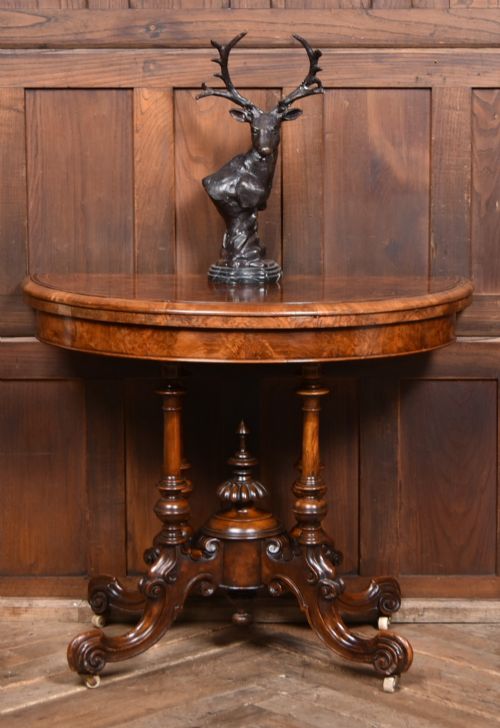
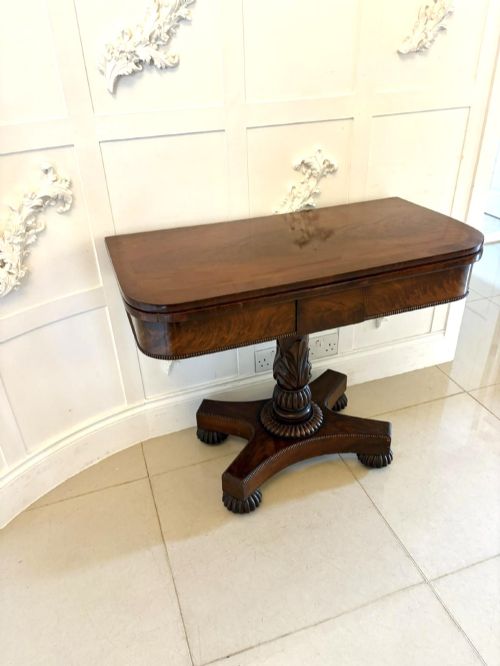
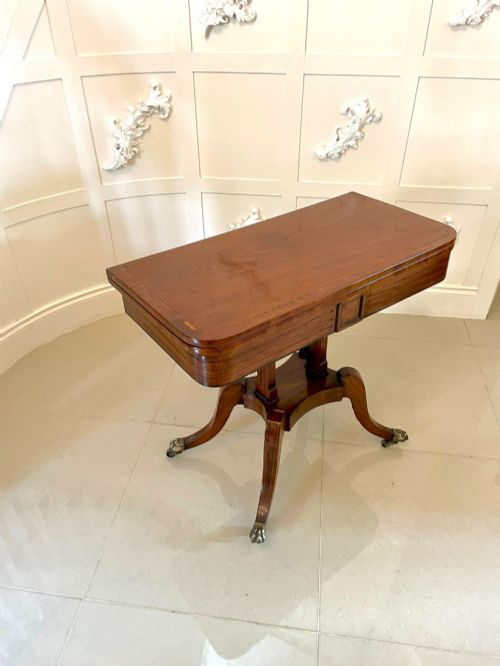
The pieces on this page span several key eras, with Regency, Georgian and Victorian examples appearing most frequently. Buyers will encounter forms ranging from demilune and D-shaped tables to rectangular card and tea tables in various woods.
How they were made
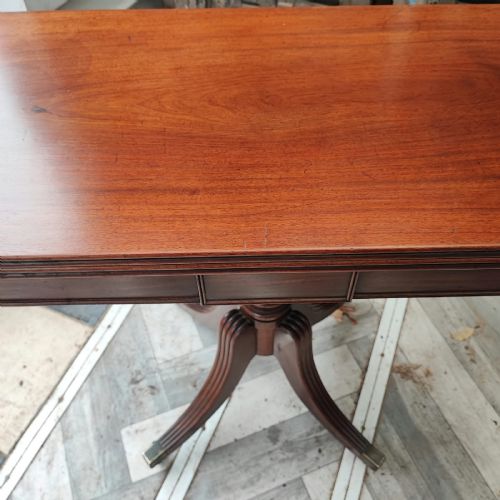
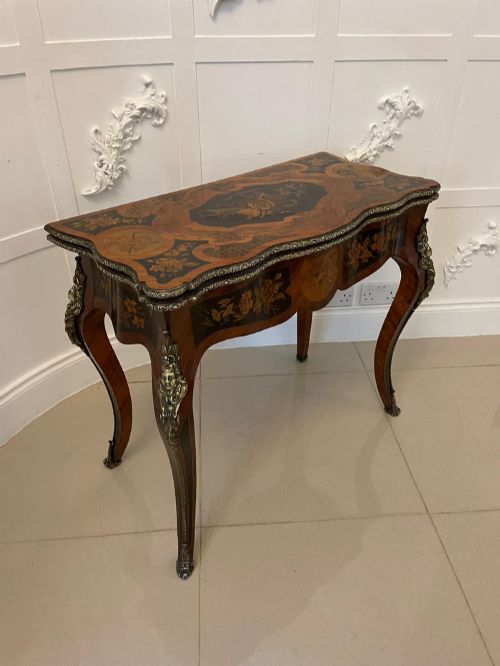
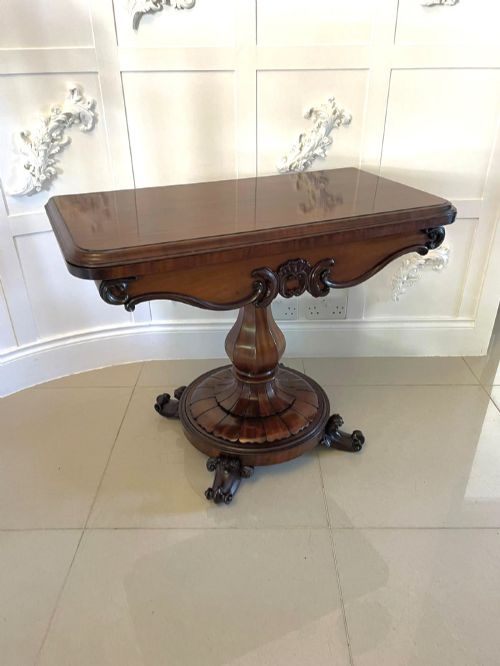
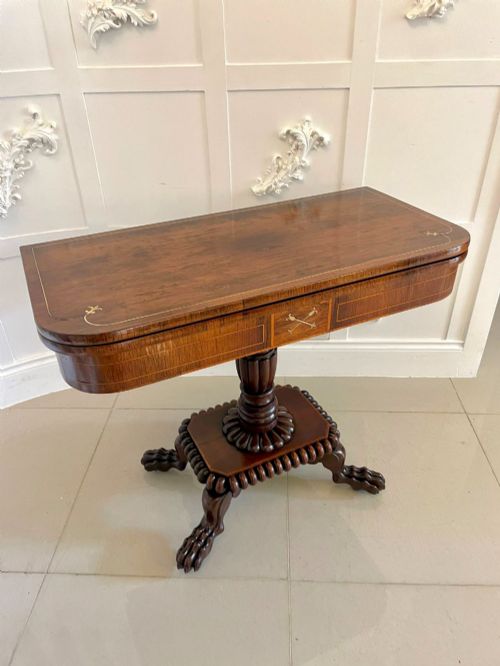
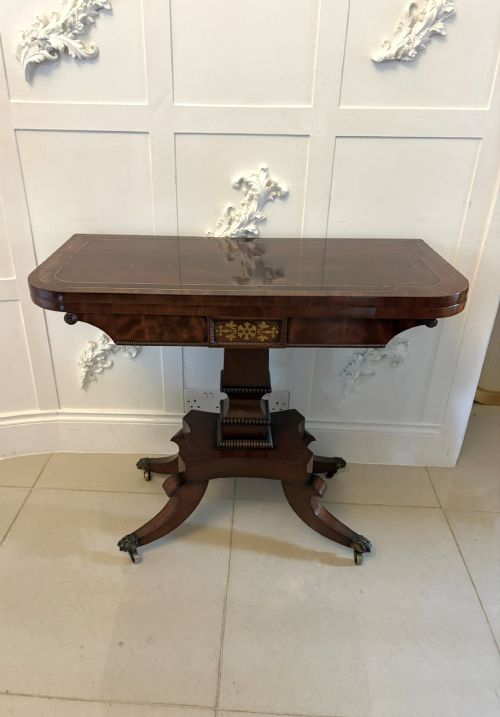
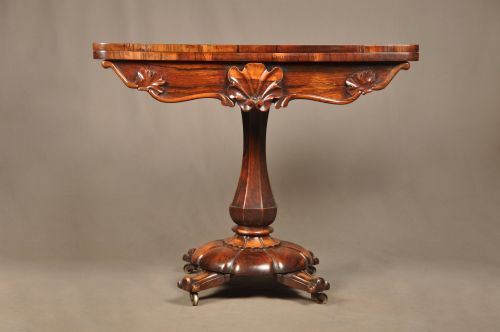
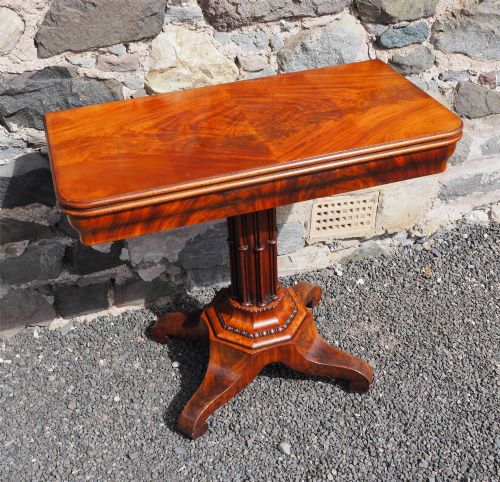
Cabinet makers utilised dense timbers such as mahogany, rosewood and walnut, frequently selecting figured veneers and flame mahogany for the primary surfaces. Crossbanding in contrasting woods and delicate wood inlay further defined the borders of the folding tops.
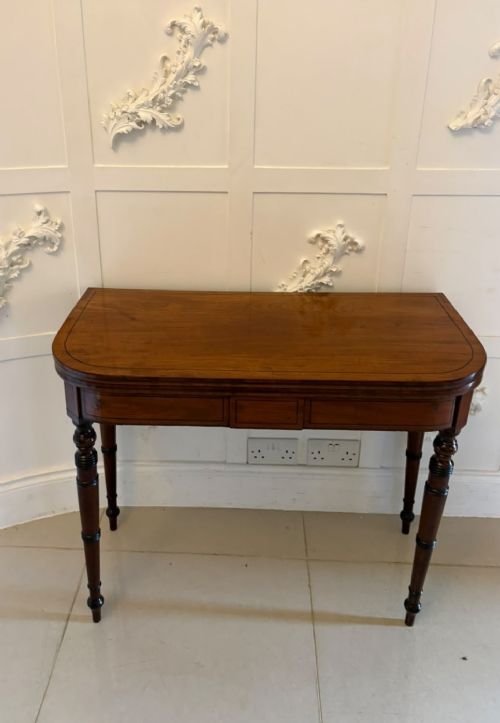
Metal components played a structural and decorative role, with brass inlay tracing geometric lines along friezes and ormolu mounts embellishing Victorian interpretations. Turned, carved or sabre legs provided stable support when the heavy turnover leaves were deployed.
The listings show a strong preference for mahogany and rosewood across Georgian, Regency and Victorian periods.
What varies in quality
The degree of refinement in the timber figure and the precision of the marquetry or brass inlay distinguish standard examples from exceptional ones. Finer pieces display carefully matched grain across the fold-over top and sophisticated carving on the frieze and legs.
The integrity of the hinge mechanism and the smoothness of the pivoting action reflect the original maker's skill. Solid construction that keeps the extended top level without excessive play in the gateleg or swinging support indicates superior cabinet work.
The Folding Top Console Glossary
- Fold-over top
- A hinged table surface that doubles in area when opened and laid flat upon the frame.
- Crossbanding
- A narrow strip of veneer applied to the border of a table top with the grain running perpendicular to the centre.
- Ormolu
- Gilded bronze mounts cast and chased to decorate the corners, friezes and legs of nineteenth-century furniture.
- Demilune
- A half-moon shape popular for console and card tables designed to sit flush against a wall.
- Sabre leg
- A concave-tapered leg curving outward and upward, frequently seen on Regency tables.
Folding Top Console: Frequently Asked Questions
How were folding top consoles used?
These tables stood against drawing room walls holding decorative objects when closed. Owners opened them when guests arrived for card games, tea service or social assemblies.
The clever dual purpose allowed households to maximise floor space without sacrificing surface area during gatherings.
How do I date a folding top console?
Cabinet design, timber choice and leg style offer the clearest chronological clues. Georgian and Regency pieces often feature mahogany with brass inlay or sabre legs, while Victorian examples lean towards burr walnut and heavy carved rosewood.
Secondary woods inside the frame and the construction of the hinge mechanism also help pinpoint the manufacturing era.
What is the difference between a console and a card table?
A console table primarily functions as a decorative side piece placed against a wall, whereas a card table specifically incorporates a baize-lined interior designed for gaming.
Many pieces on this page combine both functions by featuring a folding top that works as a console when closed and a card or tea table when opened.
How do I care for a mahogany or rosewood top?
Maintain polished wood surfaces by dusting regularly with a soft, dry cloth and avoiding direct sunlight or excessive heat. Protect the antique finish from moisture by using coasters under cups and glasses.
Occasional applications of appropriate wax nourish the grain and preserve the historic sheen without harming the timber.